⚡ عاجل: كريستيانو رونالدو يُتوّج كأفضل لاعب كرة قدم في العالم●⚡ أخبار عاجلة تتابعونها لحظة بلحظة على خبر●⚡ تابعوا آخر المستجدات والأحداث من حول العالم●
AI اقتراحات ذكية
AI مباشر|--مشاهد مباشر
849,458مقال404مصدر نشط224قناة مباشرة4,862خبر اليوم
آخر تحديث:منذ ثانيتين
Iran’s Hormuz tolls defy global law, set dangerous precedent
Dubai: Iran’s move to impose and reportedly collect tolls from ships passing through the Strait of Hormuzmarks a direct challenge to international law and a dangerous escalation in its confrontation with the United States and its allies.
A senior Iranian parliament official has claimed that Tehran has already received its first revenue from ships transiting the vital waterway — one of the world’s most critical oil corridors — even as global powers warn that such actions violate long-standing maritime norms.
If confirmed, the development would signal not just defiance, but a fundamental breach of the rules governing international waters — rules that have underpinned global trade and energy security for decades.
Why Iran’s Hormuz tolls matter
Illegal under global norms: Free transit through straits is protected under international law
20% of global oil at stake: Hormuz is the world’s most critical energy chokepoint
First tolls claimed: Iran says revenue has already been received
No enforcement mechanism: Global law relies on compliance, not force
Risk of copycat actions: Other countries may impose similar tolls
Shipping disruption rising: Traffic down, costs and risks increasing
Escalation threat: US warns against vessels paying Iran
A direct violation of maritime law
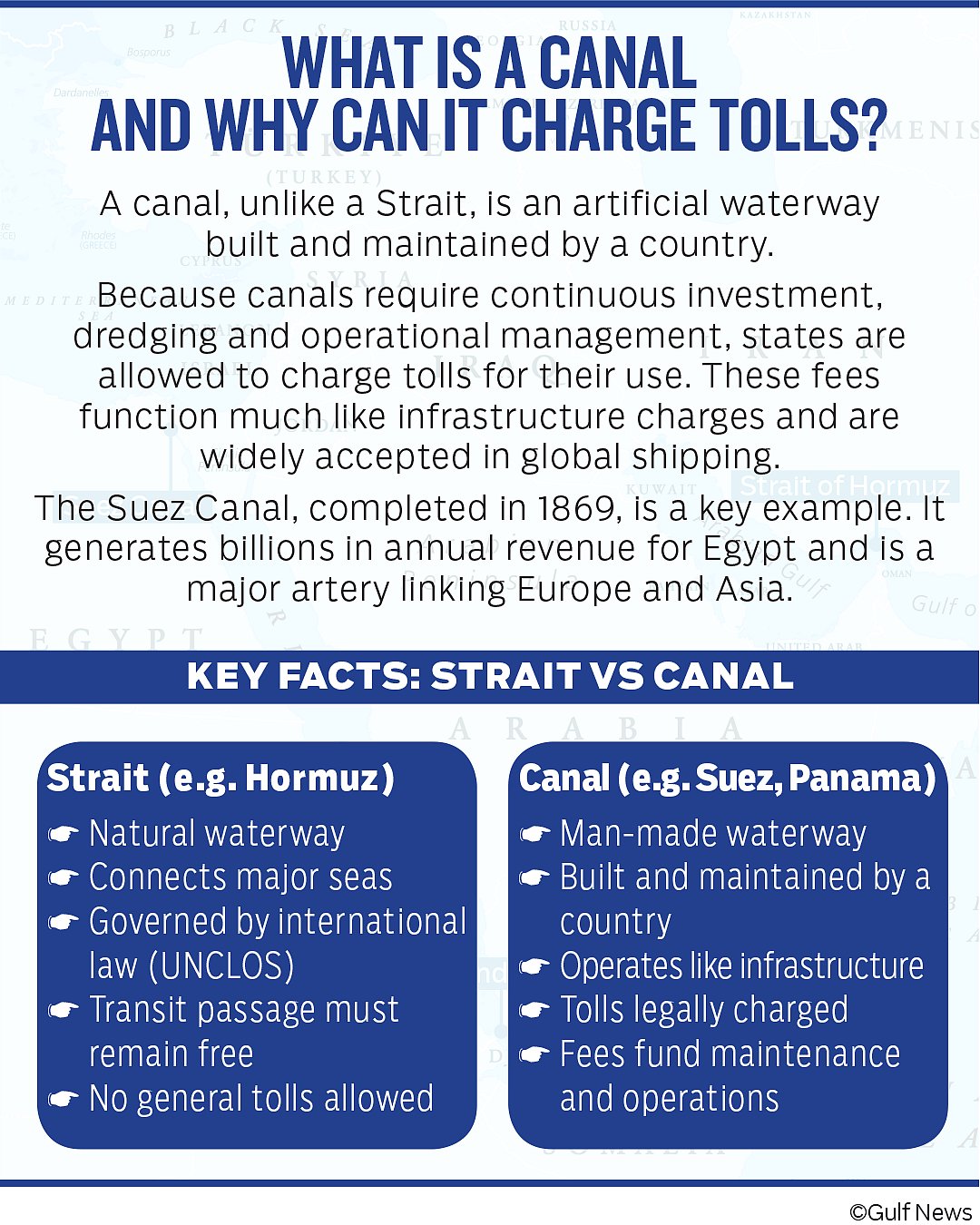
At the heart of the controversy is the United Nations Convention on the Law of the Sea, which guarantees the right of “transit passage” through key international chokepoints like the Strait of Hormuz.
Under these rules, ships must be allowed to pass freely and without interference. Charging tolls — effectively monetising passage through a shared global waterway — is widely seen by legal experts as illegal.
Even though Iran has not formally ratified the treaty, its principles are broadly accepted as customary international law, meaning they apply regardless of formal adoption.
That makes Tehran’s actions not just controversial, but a direct assault on a system that relies heavily on mutual compliance rather than enforcement.
What does international law say on Hormuz?
Free passage guaranteed: Under the United Nations Convention on the Law of the Sea, ships have the right of unimpeded “transit passage” through key straits like Hormuz.
No tolls allowed: Coastal states cannot charge tolls or interfere with vessels simply passing through international straits.
Hormuz is a global waterway: Despite lying within Iranian and Omani territorial waters, it is classified as an international strait open to all shipping.
Customary law applies: Even countries that have not ratified UNCLOS are widely expected to follow its rules as customary international law.
Limited control: States can regulate safety and navigation—but cannot block, tax, or condition passage.
Weak enforcement: International courts can issue rulings, but there is no direct enforcement mechanism—compliance depends on global pressure.
Weaponising a global chokepoint
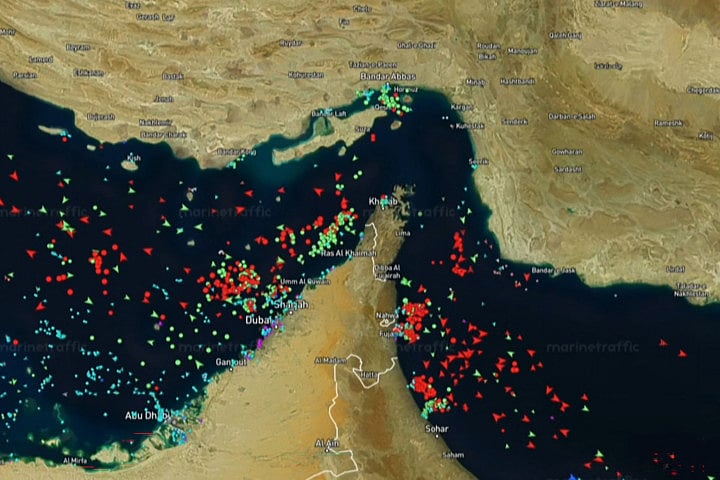
The Strait of Hormuz is no ordinary waterway. Roughly 20% of the world’s oil supply passes through its narrow shipping lanes, making it one of the most strategically sensitive routes on the planet.
The UAE has been at the forefront of calls not to weaponise Hormuz, with Sultan Al Jaber, Minister of Industry and Advanced Technology, stating the strait “has never been Iran’s to close or restrict.”
By demanding tolls — reportedly enforced alongside its Revolutionary Guard — Iran is effectively weaponising geography, turning a global trade artery into a bargaining chip in its conflict with Washington and its allies.
The move follows weeks of disruption in the strait, where attacks on vessels and military escalation have already sent shipping traffic plunging and oil markets into volatility.
Now, toll collection risks formalising that disruption — converting a temporary crisis into a structured system of coercion.
Global norms under strain
The implications go far beyond the Gulf.
For decades, even countries that did not formally sign UNCLOS — including Iran and the United States — largely adhered to its rules, reinforcing stability in international waters.
That fragile consensus is now under threat.
Experts warn that if Iran succeeds in imposing tolls, it could trigger a domino effect, encouraging other countries controlling strategic chokepoints to follow suit.
Such a shift would fundamentally alter global shipping, increasing costs, disrupting supply chains and introducing new geopolitical risks into maritime trade.
Hormuz disruption by the numbers
Traffic collapse: Ship crossings down over 96% from normal peacetime levels
Daily transits plunge: From about 120 ships/day to just 4–5 vessels/day
Sharp drop: Only 18 ships crossed between April 19–22 (≈4.5/day)
Pre-war levels: Around 9 ships/day earlier in April — already reduced
Security incidents surge:
7 attacks/incidents reported since Saturday
5 confirmed by the International Maritime Organization
38 incidents total since the war began
Recent flashpoints:
Tankers Epaminondas (Liberian flag) and Euphoria (Panamanian flag) targeted
Iran’s Revolutionary Guards claim interception of one vessel
Strategic impact:
Strait handles about 20% of global oil and gas flows
Now effectively choked by blockades and military activity
Limited enforcement, rising risks
One of the key challenges is enforcement.
International maritime law lacks strong policing mechanisms. Bodies like the International Court of Justice or maritime tribunals can issue rulings — but cannot compel compliance.
That leaves enforcement largely dependent on political will.
Countries could respond through sanctions, naval escorts, or coordinated pressure on companies not to pay tolls. But each option carries risks of escalation, particularly in an already volatile region.
The United States has already warned it could target vessels that comply with Iran’s toll demands — a move that could further militarise commercial shipping lanes.
Economic fallout looming
Beyond legality, the economic consequences are significant.
Even modest tolls would increase shipping costs, feeding into higher oil and gas prices globally. But analysts say the bigger impact lies in uncertainty — with companies rerouting shipments, delaying cargo, or avoiding the strait altogether.
That disruption is already visible, with traffic sharply reduced and energy markets reacting to each new development.
A test of global order
At its core, Iran’s toll move is about more than revenue.
It is a test — of how far a country can push against international norms, and how willing the world is to respond.
If left unchecked, it risks normalising the idea that strategic waterways can be controlled, priced and leveraged for political gain.
For a global system built on open seas and predictable rules, that would mark a profound and potentially lasting shift.
ملاحظة تحريرية | Editorial Note:
نُشر هذا المقال في الأصل بواسطة Gulf News.
خبر (Khabr) هي منصة إعلامية أردنية مرخّصة تعمل بالذكاء الاصطناعي.
نضيف قيمة تحريرية من خلال: تحليل ذكي للأخبار، ملخصات تلقائية، رواية صوتية بالذكاء الاصطناعي، ترجمة متعددة اللغات، وتدقيق الحقائق.
هدفنا جعل الأخبار أكثر وضوحاً وسهولةً للقارئ العربي.
This article was originally published by Gulf News.
Khabr is a licensed Jordanian AI-powered news platform (Registration #82086).
We add editorial value through: AI-powered news analysis, automated summaries, AI audio narration, multi-language translation (Arabic, English, French, Turkish), and AI fact-checking.
Our mission is to make news more accessible and understandable for Arabic-speaking audiences worldwide.
هذا الخبر ضمن تغطية خبر لقسم سياسة.
نقدّم لك تحليلات ذكية وملخصات يومية لأهم الأخبار من مصادر موثوقة متعددة.
المصدر: Gulf News.
يوجد 6 مقالات مرتبطة بهذا الموضوع.
This article is part of Khabr's coverage of Politics.
We provide AI-powered analysis, summaries, and multi-source aggregation to keep you informed.
Source: Gulf News.
Tags: Hormuz, international law, tolls.
🍪 نستخدم ملفات تعريف الارتباط لتحسين تجربتك وعرض الإعلانات المخصصة. باستخدامك للموقع، فإنك توافق على سياسة ملفات تعريف الارتباط وسياسة الخصوصية.
We use cookies to enhance your experience and show personalized ads. By using this site, you agree to our Cookie Policy and Privacy Policy.
FREEFree 1GB Internet + Free International Calls
$1 trial — eSIM in 190+ countries — No roaming charges