Iran calls on Houthis to prepare to cut off Red Sea gateway — can the terror group do it?
•Iran has instructed the Houthis to prepare for potential actions to close the Bab el-Mandeb Strait in response to U.S. attacks.
•Experts warn that even partial disruptions by the Houthis could significantly affect global shipping and increase costs.
•The Bab el-Mandeb Strait is a critical maritime chokepoint, and renewed attacks could escalate tensions and provoke military responses from the U.S. and Israel.
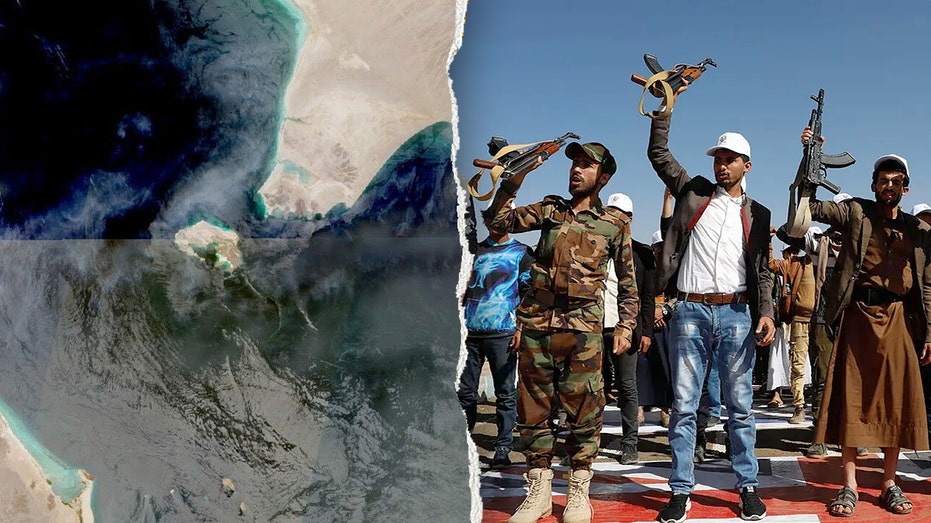
المصدر: Fox News | Source: Fox NewsIran has reportedly instructed Yemen’s Houthi terrorists to prepare to close a critical Red Sea gateway if the United States attacks Iranian power infrastructure Reuters reported, a threat experts warn could sharply disrupt global shipping even if the group cannot completely seal the waterway.
"This threat should be taken seriously," Nadwa Al-Dawsari of the Middle East Institute told Fox News Digital. "With recent escalation and U.S. strikes on Iran, Tehran has already signaled that the Bab al-Mandab could become part of its response."
Three sources told Reuters on Thursday that Iran’s leadership had discussed using the Houthis to shut the Bab el-Mandeb Strait and recently conveyed the request to the group. A source close to the Houthis said missiles and drones had been deployed near the waterway and that the group was awaiting an order to begin attacking shipping.
IRAN-BACKED TERROR PROXY HOUTHIS THREATEN FRESH ATTACKS AFTER YEMEN AIRPORT STRIKE
Edmund Fitton-Brown, a former British ambassador to Yemen and senior fellow at the Foundation for Defense of Democracies, warned in a recent Fox News Digital report that a full resumption of the Houthi maritime campaign could trigger wider fighting.
"It will be interesting if the Houthis do go all in, and resume their campaign against Red Sea shipping with full intensity," Fitton-Brown said. "This will draw international anger and likely result in Israeli and U.S. strikes on Sana’a and Hodeida."
"There is potential for a general escalation if this happens, albeit one in which the allies have a clear military advantage," he added.
Al-Dawsari said the Houthis have continued developing the weapons needed to threaten the narrow shipping corridor despite largely refraining from maritime attacks over the past year.
"While the Houthis have largely refrained from attacking shipping for about a year, they have continued to advance their maritime capabilities, including missiles, drones and sea mines," she said. "They may not be able to fully close the strait, but they could significantly disrupt shipping and raise costs and risks for commercial traffic," she said.
US CLAWS BACK KEY CONCESSION TO IRAN AFTER FRESH ATTACKS ON COMMERCIAL SHIPS IN STRAIT OF HORMUZ
But the group would not necessarily need to physically control the waterway. Its previous missile and drone campaign demonstrated that repeated attacks — or even a credible threat of them — can push major shipping companies to reroute vessels around Africa, driving up insurance, fuel and freight costs.
The Bab el-Mandeb connects the Gulf of Aden to the Red Sea and Suez Canal, making it one of the world’s most important maritime chokepoints. The consequences of renewed attacks would be especially severe because Iran has already disrupted shipping through the Strait of Hormuz, historically the principal route for roughly one-fifth of global energy supplies.
A substantial volume of Gulf oil has consequently been redirected through Saudi Arabia to the Red Sea port of Yanbu. Reuters reported that the Bab el-Mandeb route now carries approximately 7% of global energy supplies and that Saudi Arabia has shifted about 70% of its energy exports through Yanbu.
The reported instructions also raise new questions about how much control Tehran exercises over major Houthi military decisions.
"Any decision to escalate in the Bab al-Mandab would be strategic and tied more to the interests of Iran and the Axis of Resistance than to Houthi interests alone," Al-Dawsari said. "Decisions of this magnitude are likely coordinated through the Axis’s joint operations room under IRGC oversight."
A source close to the Houthis claimed representatives of Iran’s Islamic Revolutionary Guard Corps in Yemen would control the timing of any move against the strait, Reuters reported.
The latest warning follows earlier Houthi threats against maritime traffic. In the June 12 report, Fox News Digital reported that the group had announced a complete ban on Israeli-owned ships in the Red Sea and declared them "legitimate targets."
EXPERT WARNS OF 'GENERAL ESCALATION' OF FIGHTING IF HOUTHIS RESUME RED SEA CAMPAIGN
A State Department spokesperson told Fox News Digital at the time that the actions of Iran and the Houthis were "unacceptable" and "dangerous," warning that they could inflame regional tensions and further disrupt global supply chains.
U.N. Secretary-General António Guterres has "repeatedly condemned" Houthis attacks against ships in the Red Sea and called on all parties Thursday to avoid further escalation, his spokesperson, Stéphane Dujarric, told Fox News Digital.
"Any disruptions or attacks would endanger the safety and security of seafarers, freedom of navigation and the stability of global supply chains and have a negative impact on the economic and humanitarian situation in Yemen and beyond," Dujarric said. "The Secretary-General underscores that U.N. Security Council Resolution 2722 (2024) must be fully respected in its entirety," he said on the resolution condemning at least two dozen Houthis attacks on commercial vessels since November 2023 and demanding an immediate end to the attacks.
The emerging threat has also renewed scrutiny of the Iranian weapons networks that helped build the Houthis’ missile and drone arsenal.
Amr Al-Bidh, foreign affairs chief of the Southern Arabian Transitional Council, said that the reported threat also exposed broader failures in the handling of Yemen’s security crisis. "The fact that individuals convicted of trafficking Iranian weapons to the Houthis and leading terrorist operations are now being released under a U.N.-brokered deal only underscores how poorly the Yemen crisis is being managed," he said, "the main beneficiary of this vacuum is Iran, as seen in its credible threat to close the Bab al-Mandab Strait."
In a July 15 letter obtained by Fox News Digital, the Southern Arabian Transitional Council formerly known as the Southern Transitional Council, a southern Yemeni separatist movement that seeks greater autonomy or independence for the territory of the former South Yemen, warned U.N. Special Envoy for Yemen Hans Grundberg that a U.N.-facilitated detainee agreement may include people the council says were convicted of assisting Iranian weapons transfers to the Houthis.
An annex identifies individuals the council alleges were members of a cell that smuggled drones, aviation fuel and heavy and medium weapons from Iran to Sanaa.
The Office of the U.N. Special Envoy for Yemen said it received the letter only after the agreement had already been signed and stressed that it does not determine which detainees are released.
"We have received the letter after the agreement was signed," spokesperson Ismini Palla told Fox News Digital. "The United Nations – as well as the International Committee of the Red Cross (ICRC) – do not decide who is released and who remains in detention. Our role is limited to mediating the negotiations and ICRC leads on the implementation of the release operation."
Palla added that "the names of those released are proposed and agreed between the parties under the framework of the Stockholm Agreement on prisoners’ exchange of 2018."Fox News Digital reached out to the State Department and the Iranian Mission to the United Nations on the latest developments.
Fox News' Paul Tilsley and Reuters contributed to this report.
→Iran has instructed the Houthis to prepare for potential actions to close the Bab el-Mandeb Strait in response to U.S. attacks.
→Experts warn that even partial disruptions by the Houthis could significantly affect global shipping and increase costs.
ملاحظة تحريرية | Editorial Note: نُشر هذا المقال في الأصل بواسطة Fox News. خبر (Khabr) هي منصة إعلامية أردنية مرخّصة تعمل بالذكاء الاصطناعي. نضيف قيمة تحريرية من خلال: تحليل ذكي للأخبار، ملخصات تلقائية، رواية صوتية بالذكاء الاصطناعي، ترجمة متعددة اللغات، وتدقيق الحقائق. هدفنا جعل الأخبار أكثر وضوحاً وسهولةً للقارئ العربي.
This article was originally published by Fox News. Khabr is a licensed Jordanian AI-powered news platform (Registration #82086). We add editorial value through: AI-powered news analysis, automated summaries, AI audio narration, multi-language translation (Arabic, English, French, Turkish), and AI fact-checking. Our mission is to make news more accessible and understandable for Arabic-speaking audiences worldwide.