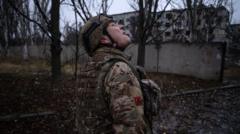
Inside the 'kill-zone' on Ukraine's front line, where new weapons have transformed war
•Inside the 'kill-zone' on Ukraine's front line, where new weapons have transformed war39 minutes agoShareSaveAdd as preferred on GoogleAbdujalil AbdurasulovEastern Ukraine93rd brigade, UAFA member of...
•His commanders had tried five times to swap him with another soldier - but they could never reach him.
•Rotating soldiers on the front line in eastern Ukraine is extremely difficult because of the constant threat of drones.This area near Kostyantynivka is currently one of the most dangerous hotspots and...
هذا الخبر من BBC News. خبر يقدم أدوات ذكاء اصطناعي للتلخيص والترجمة والاستماع.
ملاحظة تحريرية | Editorial Note: نُشر هذا المقال في الأصل بواسطة BBC News. خبر (Khabr) هي منصة إعلامية أردنية مرخّصة تعمل بالذكاء الاصطناعي. نضيف قيمة تحريرية من خلال: تحليل ذكي للأخبار، ملخصات تلقائية، رواية صوتية بالذكاء الاصطناعي، ترجمة متعددة اللغات، وتدقيق الحقائق. هدفنا جعل الأخبار أكثر وضوحاً وسهولةً للقارئ العربي.
This article was originally published by BBC News. Khabr is a licensed Jordanian AI-powered news platform (Registration #82086). We add editorial value through: AI-powered news analysis, automated summaries, AI audio narration, multi-language translation (Arabic, English, French, Turkish), and AI fact-checking. Our mission is to make news more accessible and understandable for Arabic-speaking audiences worldwide.