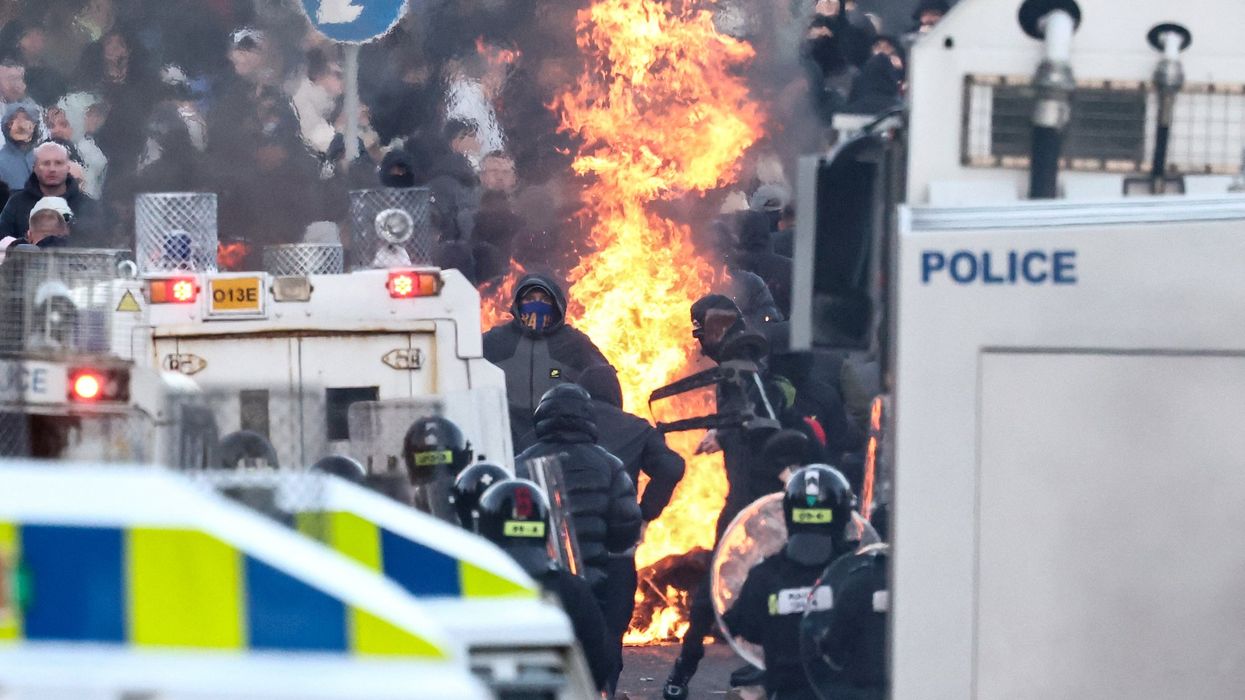
To anyone under the age of 30, the Troubles of Northern Ireland are – mercifully – something from the history books.
But for the rest of us, even those of us who have never been to Ulster, the Province was – for decades – an exporter of woe.
The sectarian strife of Northern Ireland spilt over the Irish Sea and into settings as varied as a pub in Birmingham, a hotel in Brighton and a department store in London.
All scenes of horrific bombings by the IRA. Almost 200 victims of late 20th-century militant Irish nationalism died in England.
But the vast majority of the 3,000 soldiers, police officers and civilians whose lives were claimed by the Troubles died in Northern Ireland itself.
It was a terrorist campaign which had global recognition but, unlike later acts of terror, was highly localised when it came to body bags.
I first went there in 1992. The local newspaper where I’d found my first job as a journalist was read in North Yorkshire and Teesside, an area from which a now disbanded regiment, the Green Howards, happened to draw its infantrymen.
For a few days, I joined them on patrol in the heavily nationalist West Belfast enclave of the Ardoyne.
From the moment I arrived, I was utterly spellbound and frequently appalled.
The urban landscape felt recognisably British. The street signs and terraced houses were like those on the mainland. But so much else was alien.
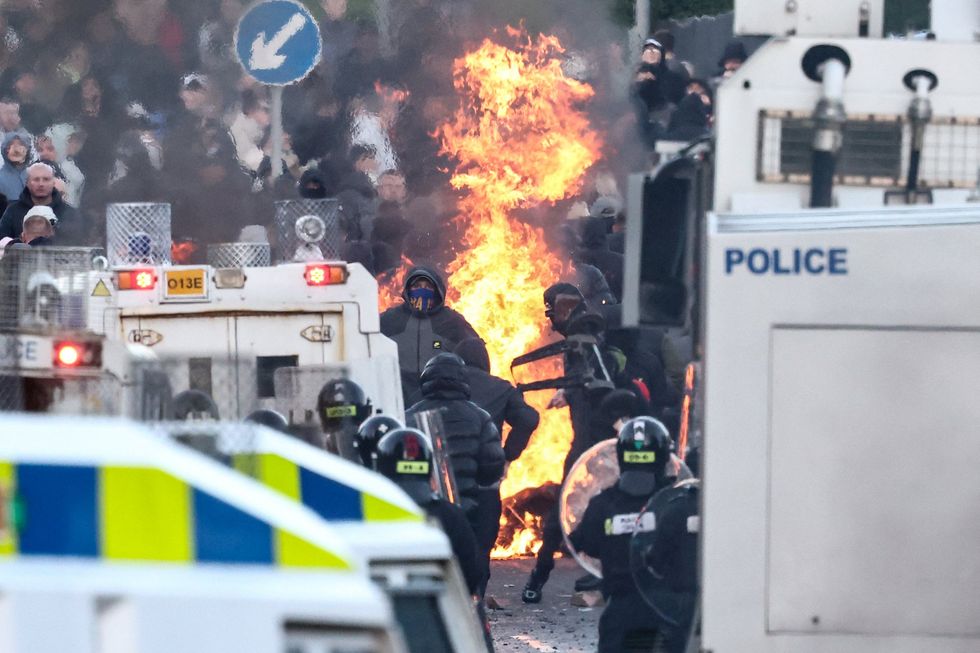
The British Army road-blocks, the routinely armed police, the peace walls, the watchtowers, the murals, and the sense of a city on edge or under occupation.
Some of the soldiers I was riding with in armoured Land Rovers or walking with – though we sometimes ran – were often younger than me.
They faced the prospect of daily annihilation. Perhaps more than anything else, this was my most shocking discovery.
Yes, it was alarming to hear that the stray dogs were trained to attack men in green khaki.
LATEST DEVELOPMENTS
- The anti-Reform agenda within Greater Manchester Fire Service is utterly Orwellian
- John Healey's resignation exposes one thing about Labour and our enemies are watching – Sir Liam Fox
- As the World Cup gets underway, I must admit as an English lad I have a guilty secret – Paul Coyte
Or that windows left open meant locals were anticipating a bomb blast that would blow them out. Or even that we should never accept a cup of tea from a kindly looking grandmother – we would find ground glass at the bottom of the mug.
No, the most shocking thing I found was that attacks were happening every day. Low-level insurgency. Blast bombs and sniper shots.
Often resulting in no injuries, sometimes in hospitalisation. Only a fatality made a headline back in England. The Troubles were still raging, but nobody on the mainland seemed to either know or care.
I returned to Northern Ireland several times over the years. I was back in Belfast as the Good Friday peace deal grew near, listening to the grumbles of loyalists in a bar off the Shankill Road.
I stayed in the Europa Hotel, which had the dubious distinction of being the most bombed hotel in the world.
I went to Londonderry, or Derry, depending on which side of the sectarian divide you are on, to hear the findings of the Savile Inquiry into the Bloody Sunday massacre. Driving there, I admired some of the farmhouses nestled in rolling hills.
I was told not to be fooled. Those remote rural hamlets, far away from prying eyes, had seen things I could not imagine. Informers tortured to death.
Captured British soldiers, such as the Army Captain Robert Nairac – a Catholic like me – were beaten to death by captors whose faith he shared.
It was a place, as the journalist Mark Urban wrote in the book of the same name, of Big Boy’s Rules. Where very bad men did very bad things for what they believed was a good cause.
But I never lost that initial sense from my first trip there that what happened in Northern Ireland, to a great and disturbing extent, stayed in Northern Ireland. The Province remains, as my old Sky TV colleague Tim Marshall might have put it, a prisoner of geography.
Unless somebody makes Boris Johnson’s pipe dream of a tunnel under or bridge over the Irish Sea a reality and it joins our contiguous landmass, the Province will remain a separate psychological entity.
I was reminded of this truth this week in the wake of the hideous attack by a Sudanese asylum seeker in North Belfast. Liberal commentators who couldn’t find Belfast on a map showed scant regard for its history and, how shall I put this, its distinctive social dynamics.
This is a part of the world, remember, almost uniquely attuned to subtle changes in population trends, with the Protestant loyalist community being told for years that they must eventually cede political overlordship to Catholic nationalists because of the way the demographic wind is blowing.
This is also a part of the world, again almost uniquely for Western Europe, where religious affiliation still matters in a way most of the rest of the continent would struggle to recognise, really, at any time since the Thirty Years' War and the Peace of Westphalia.
This is a part of the world where, as a very close friend of mine, a cameraman and Belfast native, used to tell me, people can tell which side of the sectarian divide you're on by their name, dint of their accent, or the way they look.
So, ethnic changes to Northern Ireland carry more than usual significance and arouse particular sensitivities. Hitherto, that has not mattered all that much. Belfast, for instance, is a far less “diverse” city than Dublin – anyone visiting the Irish capital in recent years is often surprised by the rapidity of its transformation.
But that started to change relatively recently. Parts of Belfast have been used, so it’s claimed, as dumping grounds for migrants in need of social housing. Tensions have risen in communities which, as I say, are sensitised to identity in a way that mainland Britain can’t imagine.
So far, this has been seen to be a concern far more for loyalists than nationalists, for Protestants, not Catholics. But even this has been changing. In the Republic of Ireland, recent waves of mass immigration, some of it illegal, have produced a backlash.
Not just against newcomers, but the Sinn Fein politicians who are seen as increasingly putting their woke values ahead of those of the Irish working class.
Nationalists forgetting their own nationals. A Republican movement, which fought against British colonisation, now finds some of its own supporters worried they are the ones now being colonised.
It will not have been lost on nationalists this week that the “medieval” attack allegedly carried out by Hadi Alodid happened in a Catholic enclave of North Belfast. Nor that the man who fought him off did so with a hurling stick, a symbol of Irish cultural nationalism.
Next month is the marching season, traditionally a time of tensions between nationalists and loyalists. But this year it’s more likely that old enmities will find a new direction. Nobody can imagine a Green-Orange coalition, but the idea of historic antagonists making common cause is no longer as far-fetched as it would’ve been when I first reported from the Province.
Our Standards: The GB News Editorial Charter