How the Miami Grand Prix became a 'Super Bowl weekend': A 50ft 'yacht' and a hip hop museum
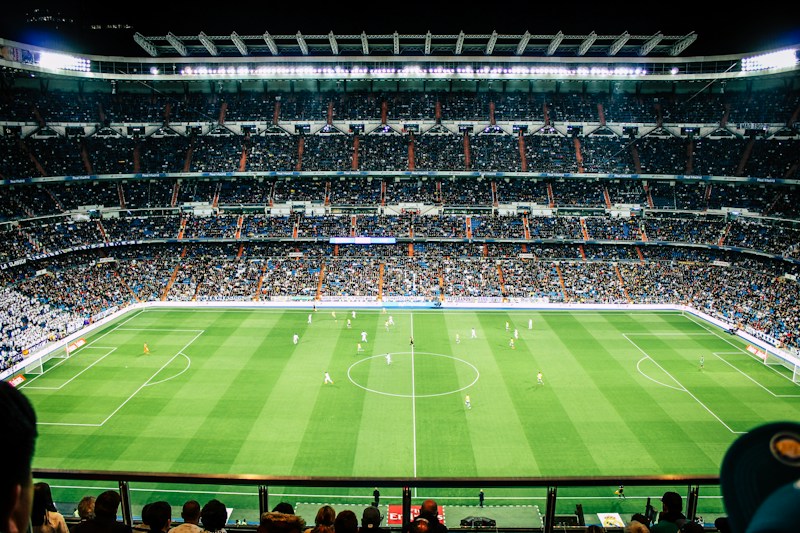
The Miami Grand Prix's contract is long, lasting to 2041. Hector Vivas / Getty Images Share articleNearly five months ago, Hard Rock Stadium roared to life. Hometown favorites, the No. 10 Miami Hurricanes, were facing the No. 1 Indiana Hoosiers for the College Football Playoff National Championship, the second football game hosted at the stadium since the world rang in the new year. Just over 67,000 fans filled the rectangular arena as the Hurricanes lost to the Hoosiers 27-21, marking the start of the stadium’s mega sports year. A month ago, Aryna Sabalenka and Jannik Sinner won their 2026 Miami Open titles on a centre court that this weekend, transforms into the paddock. Already one of Formula 1’s marquee events, this year’s Miami Grand Prix will draw more eyes than ever after the cancellation of races in Bahrain and Saudi Arabia left such a long gap between races. And Miami is tackling it in a way only it can — channeling a Super Bowl approach that embraces its diverse community. “In a way, this is perfect for Miami because it plays to their strengths of, ‘We’re back,’” said Liam Parker, F1’s chief communications and corporate relations officer. “We’ve had a gap. We’re back. Let’s do it with a bang. Let’s do it with the huge enthusiasm and color that Miami does it.” F1’s calendar features a mix of venues. Monaco or Melbourne are in the heart of the city, while some others are a bit further out, such as Barcelona. Even without the beach views, the Miami GP feels authentically Miami. Until 2022, when the Miami race was added to the calendar, it had been nearly a decade of just one U.S. race, the United States Grand Prix at Circuit of the Americas in Austin, Texas. The American market was largely untapped, it was before the ‘Drive to Survive’ boom, but Liberty Media, which acquired F1 in January 2017, was looking to place the sport in what Parker described as “international destination cities,” a phrase used by former F1 CEO Chase Carey. Miami was one of those cities, a global business hub and popular vacation spot known for its vibrant community. Hard Rock Stadium alone hosts a variety of international and domestic sporting events, as well as concerts. “What Chase saw, and was absolutely right, is that if we can bring the sport to international destination cities, you’ve already got a big international and domestic market there, through business, through tourism,” Parker said. “People are there. There are places to go. There are hotels geared up around it. The infrastructure is there.” The original vision was for the cars to race down the coastline, but they ultimately settled on Hard Rock Stadium in Miami Gardens. Locals did not immediately embrace the sport. Concerns were raised about noise pollution, environmental impact, and extra traffic in the city. It was hard for some to see what the potential benefit could be. “We only had one race in the U.S.,” Parker said, “so the U.S. market hadn’t yet seen what the economic, cultural and sporting benefit of having a Formula 1 race in your community could be. It was seen as a new outside thing. ‘What is this? Should we be careful?’” But F1 regarded the U.S. as an untapped market. “We were seeing the fanbase grow, obviously, around the time of Netflix and us opening up on social media,” Parker added. “We were seeing the fanbase grow more and more, but you need to keep that market alive with not just content, but actual physical presence. And the view was that one race was not enough.” The Miami Grand Prix has become more than just a race weekend. As Parker put it, “It’s just one great big sporting festival that just showcases the best of Miami.” Katharina Nowak, who was named the race’s president in Sept. 2025, explained to The Athletic that she’s told her team to deliver on three key items: Luxury, world-class racing and “being distinctly Miami.” On the latter, they have particularly succeeded, putting the stadium at the heart of the weekend, generating vibrant colors and delivering wide-ranging cuisine around the track. “It’s been fun to see the campus evolve and give fans a new taste of Miami every year,” she said. One of the big updates for 2026 is different influences from surrounding neighborhoods in each zone. Nowak said East Campus, where the stadium is, will “feel like you’re walking through the streets of Wynwood,” a neighborhood known for its murals. An “art of hip hop museum” has been added, alongside some of the city’s famous restaurants. Similarly, West Campus, which is around Turn 18, will reflect Little Havana, featuring Cuban food and the iconic music venue Ball & Chain. It’s known for its pineapple-shaped stage, which will be at the Miami GP. “When you’re walking through, you really feel like you’re experiencing Miami in a new way, but also in a very familiar way, since we’re highlighting those legendary and iconic places in Miami,” Nowak said. There are two other major changes, too, starting with the viral fake yacht marina. Real yachts used to be parked on fake water around Turns 5-9, but debuting this year is a yacht-type structure that is 264ft long, 96ft wide and 50ft tall. Each of the five levels will feature different fan experiences and will include a general admission area with an elevated viewing platform inside Turn 7. Aligning with the idea of being more than just a race weekend, organizers are also introducing a fan fest. Increasingly part of the city’s sports culture, fan fests were held when the 2025 Super Bowl was over in New Orleans, and another will be held during the FIFA World Cup this summer. “We want the entire community to know it’s race weekend in Miami, and they’re a part of this,” said Nowak. The Miami GP contract is lengthy, lasting until 2041, but the calendar is competitive. Imola is among the historic tracks to have fallen off the calendar in recent years. Nowak feels “the biggest challenge is continuing to innovate.” Miami’s first year drew plenty of criticism across the board, from track surface issues raised by drivers to the ‘gimmicky’ fake marina. Shade and water were key concerns, given the hot May conditions, and it was pricey, too. Awarding Miami a long-term deal has brought benefits, Parker said, chiefly the ability to plan and invest. Organizers are continually trying to improve the fan experience and racing product. The paddock was moved to Hard Rock Stadium’s field, the track resurfaced and new viewing areas constructed. Single-day tickets were introduced in 2024 (a response to fan feedback), and the 2025 race weekend featured 34 ticket packages. The main goal is to deliver a strong fan experience and “excellent race,” Nowak said. But Miami’s “hopes, dreams and goals” extend much further. The 2026 race weekend will mark the fifth year of its contract, and organizers want to use this year “as a stepping stone” to making the grand prix more than a race weekend. Nowak said the race weekend “already feels like a Super Bowl weekend,” but there is room for growth, hence the fan fest that will take place Wednesday through Sunday. Nowak explained that the grand prix wanted “to start to build into a true Super Bowl moment in the United States, where you’ve got programming every single day of the week, and it’s attracting this level of audience to come and spend the week with us in Miami, all leading up to the grand prix on Sunday.” Parker admitted F1 made a mistake when it came to the U.S. years ago, in the days of Detroit, Watkins Glen and Indianapolis. The sport would simply show up and compete, rather than invest. The U.S. sports market is crowded, with NASCAR and IndyCar dominating the motorsports space and eyeballs glued to the NBA, NFL and MLB. F1 knows it can’t “take on the NBA and the NFL,” Parker said, and the sport recognizes it’s competing against entertainment and sport. The Miami GP wants to create an experience that’s akin to a festival, producing an environment where “everyone’s welcome.” There’s value in striking a balance in the racing product and creating a four-day spectacle. “If we’re going to grow in the U.S., we need to be there 365 days a year,” Parker said. “We need to be providing the content to the fans that they want in the way that they want. Not one size fits all, but different age groups need different things.” Spot the pattern. Connect the terms Find the hidden link between sports termsالمصدر: The Athletic | Source: The Athletic
ملاحظة تحريرية | Editorial Note: نُشر هذا المقال في الأصل بواسطة The Athletic. خبر (Khabr) هي منصة إعلامية أردنية مرخّصة تعمل بالذكاء الاصطناعي. نضيف قيمة تحريرية من خلال: تحليل ذكي للأخبار، ملخصات تلقائية، رواية صوتية بالذكاء الاصطناعي، ترجمة متعددة اللغات، وتدقيق الحقائق. هدفنا جعل الأخبار أكثر وضوحاً وسهولةً للقارئ العربي.
This article was originally published by The Athletic. Khabr is a licensed Jordanian AI-powered news platform (Registration #82086). We add editorial value through: AI-powered news analysis, automated summaries, AI audio narration, multi-language translation (Arabic, English, French, Turkish), and AI fact-checking. Our mission is to make news more accessible and understandable for Arabic-speaking audiences worldwide.