How long can the US blockade of Iran ports — and the Strait of Hormuz — last?
•Dubai: Nearly nine weeks into the Iran conflict, Washington’s strategy has shifted from rapid escalation to a prolonged economic squeeze — raising a critical question: How long can the US naval blocka...
•“The blockade is somewhat more effective than the bombing,” Trump said, adding that Iran’s economy was “in real trouble.”But the approach carries risks — both geopolitical and domestic.Trump’s Hormuz...
•That comparison under-scores a stark shift from expectations of a short conflict to the reality of a potentially prolonged standoff.How long can the blockade last?Weeks?
هذا الخبر من Gulf News. خبر يقدم أدوات ذكاء اصطناعي للتلخيص والترجمة والاستماع.
المصدر: Gulf News | Source: Gulf NewsDubai: Nearly nine weeks into the Iran conflict, Washington’s strategy has shifted from rapid escalation to a prolonged economic squeeze — raising a critical question: How long can the US naval blockade of Iranian ports and the Strait of Hormuz last, and is the war sliding into a “frozen conflict”?
In effect, the Strait of Hormuz is no longer just a shipping lane — it is becoming a pressure point in a prolonged economic war.
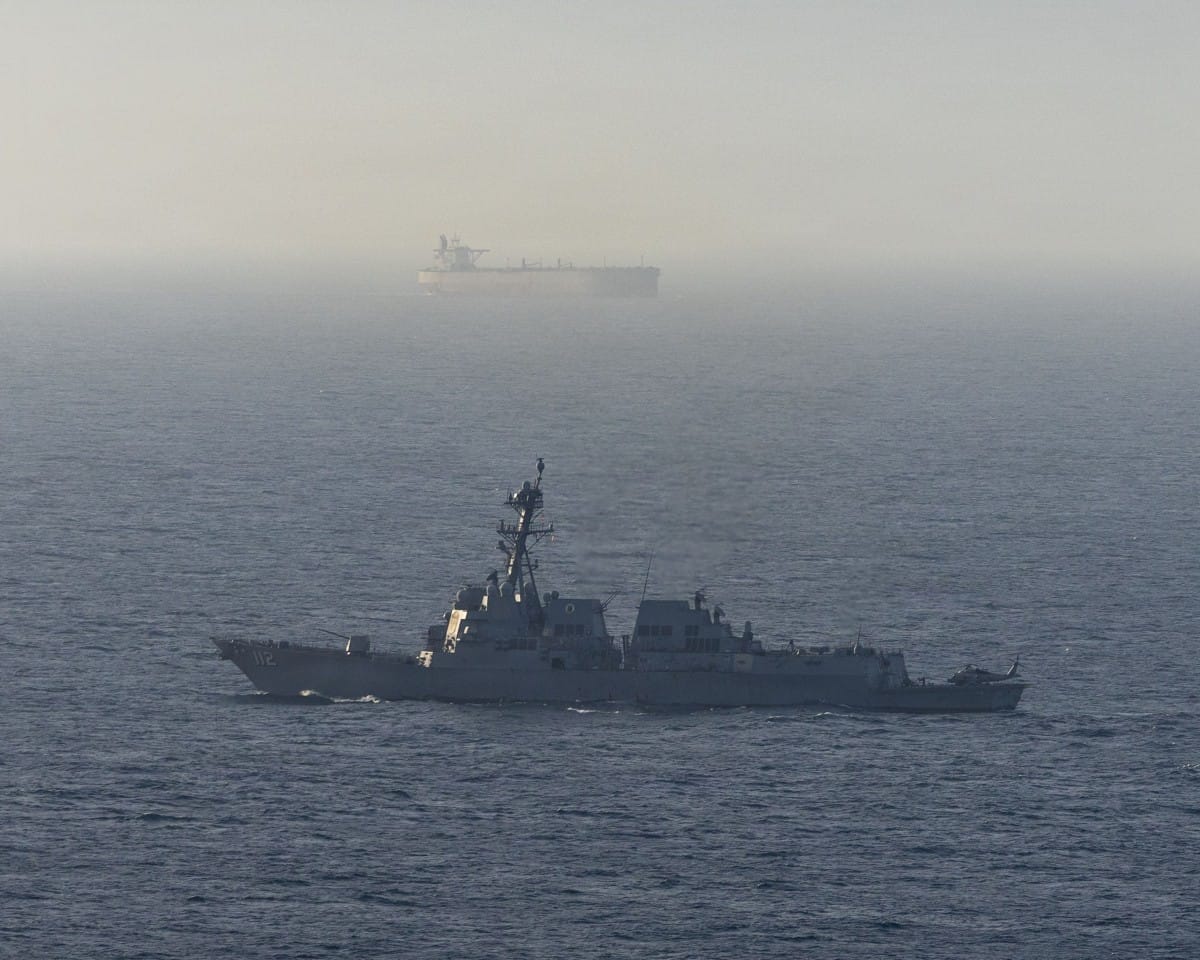
US President Donald Trump has signalled he wants to extend the naval blockade of Iranian ports, with aides laying the groundwork for a longer-term chokehold that could include keeping the Strait effectively shut, according to CNN.
The strategy is clear: Inflict maximum economic pain to force Tehran back to the negotiating table without resuming strikes. “The blockade is somewhat more effective than the bombing,” Trump said, adding that Iran’s economy was “in real trouble.”
But the approach carries risks — both geopolitical and domestic.
A war without an endgame?
Despite early predictions the conflict would last just weeks, Trump has hinted it could stretch far longer, even comparing its timeline to the years-long war in Ukraine. That comparison under-scores a stark shift from expectations of a short conflict to the reality of a potentially prolonged standoff.
How long can the blockade last?
Weeks? US officials believe Iran’s economy could buckle within weeks under mounting pressure from blocked oil exports and financial strain.
Months? The White House is preparing for a longer campaign, with President Donald Trump signalling the blockade could continue for months if needed.
Not indefinitely Analysts warn neither the US nor Iran can sustain prolonged economic warfare forever without severe global and domestic consequences.
Most likely scenario Experts point to a “frozen conflict” — a prolonged standoff with intermittent flare-ups rather than a clear end.
What could end it? A diplomatic breakthrough, internal pressure in Iran, or a renewed military escalation.
Analysts say the conflict is increasingly resembling a no war, no peace scenario — a state of suspended escalation where neither side backs down, but neither secures a decisive outcome.
Qatar’s foreign ministry has warned against such an outcome, cautioning that a frozen conflict could turn the Strait of Hormuz into a recurring pressure point with periodic flare-ups, Al Jazeera reported.
Mehran Kamrava, an Iran expert at Georgetown University in Qatar, said: “For the time being, we might see a short-term frozen conflict, but this cannot continue for several months or years.”
Economic chokehold — but for how long?
At the heart of Washington’s strategy is the belief that Iran’s economy is nearing breaking point. US officials cited intelligence suggesting Tehran may only withstand the blockade for “weeks, if not days,” according to CNN.
The impact is already visible. Dozens of oil tankers have been blocked or redirected, leaving tens of millions of barrels stranded and depriving Iran of critical revenue. The rial has plunged, inflation is soaring, and shortages are beginning to bite.
Taken together, the signals point to a wide and uncertain timeline: US officials see Iran’s economy buckling within weeks, while Trump has prepared for a strategy that could stretch for months. Analysts, however, warn neither side can sustain such pressure indefinitely — making a prolonged but not permanent frozen conflict the most likely outcome.
The theory is that such pressure will force Iran to concede on its nuclear programme without the need for further military action.
But history offers a cautionary note.
Iran has endured decades of sanctions, war and economic hardship without capitulating. Analysts warn that assuming economic pain will translate into political surrender may be overly optimistic.
“There is that constant search for that silver bullet… that causes the Iranians to collapse or ca-pitulate,” said Trita Parsi of the Quincy Institute in analysis cited by CNN. “Almost every time the US goes down that path, it ends up disappointing itself.”
Costs rising on both sides
The longer the blockade continues, the higher the costs — not just for Iran, but globally.
Oil prices have surged to multi-year highs, with US fuel prices topping $4 a gallon, fuelling voter discontent ahead of key elections. The United Nations Development Programme has warned the conflict could push tens of millions into poverty worldwide as supply chains are disrupted.
Even in Washington, political pressure is building.
Trump’s approval ratings have taken a hit, and Republicans are increasingly uneasy about the economic fallout of a prolonged conflict. The war has already cost the United States an estimat-ed $25 billion, with no clear endpoint.
A fragile balance
For now, both sides appear locked in a high-stakes gamble.
The United States is betting that sustained economic pressure will succeed where military strikes have not — forcing Iran to negotiate on Washington’s terms. Iran, meanwhile, is leveraging its control over the Strait of Hormuz to impose costs on the global economy and test US resolve.
That leaves the conflict balanced between escalation and stalemate.
That balance is already showing signs of strain. Iran’s navy chief, Shahram Irani, warned this week that Tehran was preparing to deploy a new, unspecified weapon system near adversaries’ assets, calling it a potential “game-changer” designed to “rattle” opponents.
The warning came after Washington signalled it would maintain the blockade, underscoring the risk that prolonged economic pressure could trigger fresh military responses rather than force a quick diplomatic breakthrough.
A return to full-scale war remains possible. So does a diplomatic breakthrough. But the most like-ly near-term outcome is something in between — a prolonged standoff marked by economic war-fare, sporadic flare-ups and deepening global uncertainty.
In other words, the war hasn’t ended — it has simply entered a slower, more dangerous phase.
ملاحظة تحريرية | Editorial Note: نُشر هذا المقال في الأصل بواسطة Gulf News. خبر (Khabr) هي منصة إعلامية أردنية مرخّصة تعمل بالذكاء الاصطناعي. نضيف قيمة تحريرية من خلال: تحليل ذكي للأخبار، ملخصات تلقائية، رواية صوتية بالذكاء الاصطناعي، ترجمة متعددة اللغات، وتدقيق الحقائق. هدفنا جعل الأخبار أكثر وضوحاً وسهولةً للقارئ العربي.
This article was originally published by Gulf News. Khabr is a licensed Jordanian AI-powered news platform (Registration #82086). We add editorial value through: AI-powered news analysis, automated summaries, AI audio narration, multi-language translation (Arabic, English, French, Turkish), and AI fact-checking. Our mission is to make news more accessible and understandable for Arabic-speaking audiences worldwide.