⚡ عاجل: كريستيانو رونالدو يُتوّج كأفضل لاعب كرة قدم في العالم●⚡ أخبار عاجلة تتابعونها لحظة بلحظة على خبر●⚡ تابعوا آخر المستجدات والأحداث من حول العالم●
AI اقتراحات ذكية
AI مباشر|--مشاهد مباشر
890,495مقال401مصدر نشط228قناة مباشرة4,571خبر اليوم
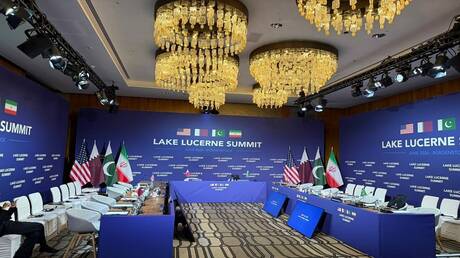
EVEN though talks in Islamabad between the US and Iran did not produce a deal, that they happened at all after five weeks of war was itself significant. There was no breakthrough but also no breakdown. Both delegations have gone back to their respective capitals to confer with their leaderships, who will decide the next steps. Neither side said talks broke down, which indicates the possibility of renewal of diplomatic engagement down the road. Backchannel communication is likely to continue. A fragile ceasefire is still in place and can of course be extended.
For Pakistan, it has been a high point in its diplomacy. Playing an unprecedented role as an intermediary between Tehran and Washington, Pakistan’s top military and civilian leadership helped to bring about a ceasefire in a war that was on the brink of entering its most dangerous phase. That role signified Pakistan’s geopolitical importance. Its diplomatic efforts to avert a protracted, wider conflict established the country as a middle power capable of shaping global geopolitics. It confirmed a new reality in global affairs — that the world has moved into an era of multipolarity in which middle powers not only wield increasing influence but can play a key role in war and peace.
The ceasefire agreement came about when the two warring parties wanted an off-ramp from the conflict and stepped back from their maximalist positions. Iran had previously said it would not agree to a temporary ceasefire and insisted on a comprehensive settlement for a lasting end to the war. It also said it would not open the Strait of Hormuz in return for a ceasefire. But it then agreed to a two-week truce and opening the strategic waterway to maritime traffic for the ceasefire’s duration. President Donald Trump who had earlier rejected Iran’s 10-point demands later accepted them as a “workable basis for negotiation”. Pakistan’s role in shaping the two-phase peace plan was important in persuading both sides to the negotiating table.
But within hours of the ceasefire announcement, challenges emerged. Israel launched its fiercest attacks yet on Lebanon. This prompted Iran to again close the Strait of Hormuz, saying this was part of the ceasefire agreement with the US. But Trump and Vice President J.D. Vance claimed Lebanon was not included in the ceasefire, contradicting the assertion by Prime Minister Shehbaz Sharif that it was. This underlined the difficulties of sustaining a precarious ceasefire especially as Israel is intent on playing spoiler. That appears even more likely after the inconclusive Islamabad talks. Frustrated by its failure to force Iran to surrender, Israel may try to sabotage resumption of the US-Iran dialogue, as it fears a deal between them.
There was no breakthrough but also no breakdown in talks which keeps diplomatic option open.
Both the US and Iran sent high-powered delegations for the talks in Islamabad. This was their highest level of face-to-face talks in over four decades during which they had no diplomatic relations. It was the strongest indication that both sides were serious about negotiations and sought an exit-ramp from conflict. Their positions, as reflected in America’s 15 points and Iran’s 10 points, remained very far apart. Iran’s core demands included assurances of no future US/Israeli attacks on Iran and its regional allies, lifting of sanctions, unfreezing of assets, recognition of its right to enrichment and continued control of the Strait of Hormuz. US demands included firm Iranian commitments not to seek nuclear weapons, curbs on it nuclear and ballistic programmes, removal of highly enriched uranium and reopening of the Strait of Hormuz.
Given these conflicting proposals it was unrealistic to expect that an agreement could be reached in just hours. Diplomacy, after all, is a process, not a one-day event. In the opening bid, it was not surprising that neither side budged from their positions. While both wanted de-escalation, they were not prepared at this juncture to back down from their core demands. Statements by US and Iranian officials after the talks made this evident, each side declaring what it saw as the sticking points. But both kept open the possibility of continuing on the diplomatic path. Coming days will show whether and when this might happen. A return to war is surely not in the interest of either country.
As for Pakistan, it has engaged in a difficult balancing act between Iran and its GCC friends especially Saudi Arabia, and of course between Iran and the US, while all the time keeping strategic ally China on board. At times, this mired Pakistan in adopting seemingly contradictory positions. Still, Islamabad deftly managed this tight-rope walk and retained the confidence of all sides throughout the fraught period. But if the war had prolonged, it may have made this balancing act untenable. Fortunately, that test didn’t come.
The war has demonstrated that despite the massive force used by the US and Israel to make Tehran capitulate to their demands, a militarily much weaker Iran gained the upper hand in the conflict by its resilience and resistance and by waging economic warfare, especially controlling the Strait of Hormuz, which shook global energy markets and the global economy. Iran also retained control of its stockpile of highly enriched uranium and capability to undertake retaliatory strikes against Israel and Gulf states. In past conflicts elsewhere, the US had tactical successes but faced strategic setbacks. This time it made neither tactical nor strategic gains.
The Guardian wrote in its editorial, “This is a strategic defeat for the US that will resound for decades, and a clear sign of its systemic failures.” In similar vein, The Economist in its leader said, “Donald Trump is the biggest loser” in a conflict that has revealed “the shallowness of his vision for a new way of wielding American power”.
Certainly, the war has left the US weakened, its credibility damaged in the region and its reputation dented across the world. Indeed, it heralds the closing of an era of American dominance and hegemony in the Middle East, where its security umbrella also failed to protect its allies. Washington no longer has the ability to control global events in a world where power is more dispersed than ever and where US unilateralism almost always backfires.
The writer is a former ambassador to the US, UK and UN.
ملاحظة تحريرية | Editorial Note:
نُشر هذا المقال في الأصل بواسطة Dawn.
خبر (Khabr) هي منصة إعلامية أردنية مرخّصة تعمل بالذكاء الاصطناعي.
نضيف قيمة تحريرية من خلال: تحليل ذكي للأخبار، ملخصات تلقائية، رواية صوتية بالذكاء الاصطناعي، ترجمة متعددة اللغات، وتدقيق الحقائق.
هدفنا جعل الأخبار أكثر وضوحاً وسهولةً للقارئ العربي.
This article was originally published by Dawn.
Khabr is a licensed Jordanian AI-powered news platform (Registration #82086).
We add editorial value through: AI-powered news analysis, automated summaries, AI audio narration, multi-language translation (Arabic, English, French, Turkish), and AI fact-checking.
Our mission is to make news more accessible and understandable for Arabic-speaking audiences worldwide.
هذا الخبر ضمن تغطية خبر لقسم سياسة.
نقدّم لك تحليلات ذكية وملخصات يومية لأهم الأخبار من مصادر موثوقة متعددة.
المصدر: Dawn.
يوجد 6 مقالات مرتبطة بهذا الموضوع.
This article is part of Khabr's coverage of Politics.
We provide AI-powered analysis, summaries, and multi-source aggregation to keep you informed.
Source: Dawn.
Tags: diplomacy, Iran, war.
🍪 نستخدم ملفات تعريف الارتباط لتحسين تجربتك وعرض الإعلانات المخصصة. باستخدامك للموقع، فإنك توافق على سياسة ملفات تعريف الارتباط وسياسة الخصوصية.
We use cookies to enhance your experience and show personalized ads. By using this site, you agree to our Cookie Policy and Privacy Policy.
🔍
FREEFree 1GB Internet + Free International Calls
$1 trial — eSIM in 190+ countries — No roaming charges