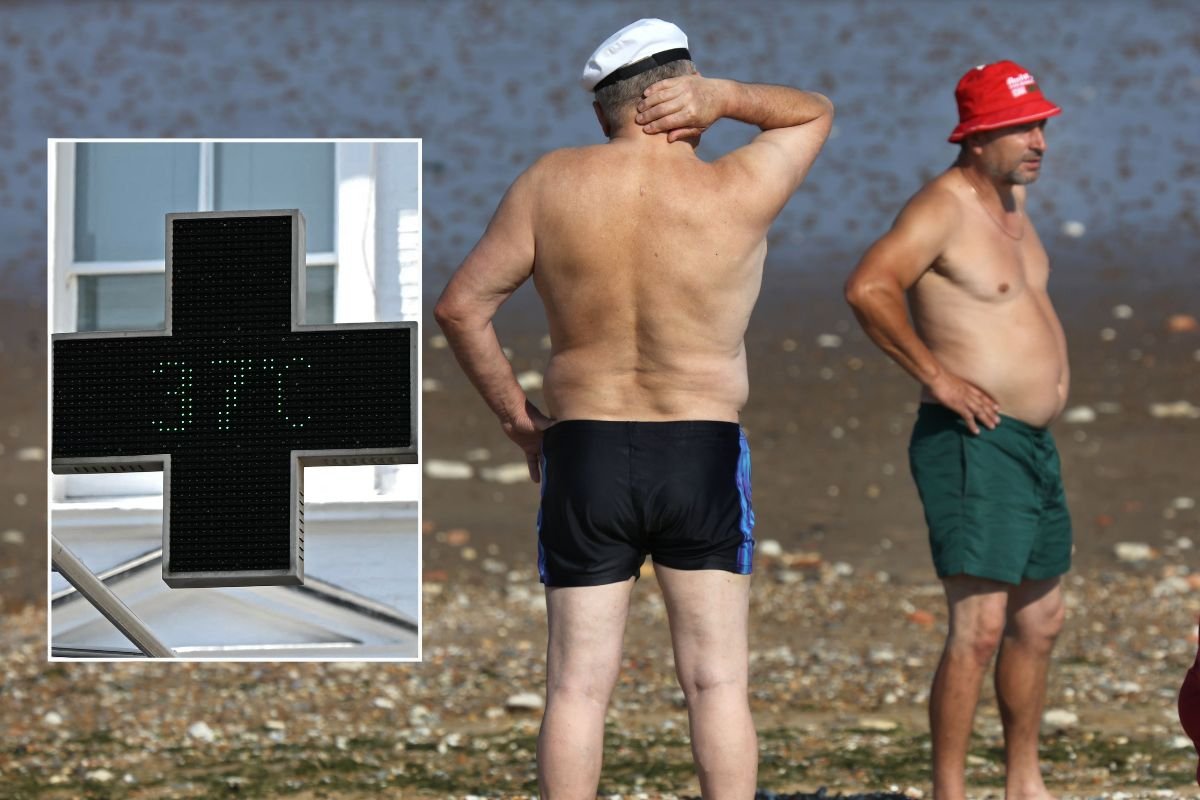
Heatwaves in May and June may have killed more than 2,700 people in England and Wales
•More than 2,700 individuals may have lost their lives due to heat-related causes during the extraordinary heatwaves that struck England and Wales throughout May and June, new research estimates sugges...
•This figure shattered the previous June record of 35.6C, which had stood since 1957.Authorities issued a rare red heat alert covering parts of England and Wales during the period, cautioning that even...
•TRENDING Stories Videos Your Say The study's estimates indicate that approximately 550 people perished from heat-related causes between May 21 and 29, whilst the June heatwave claimed nearly 2,20...
هذا الخبر من GB News. خبر يقدم أدوات ذكاء اصطناعي للتلخيص والترجمة والاستماع.
المصدر: GB News | Source: GB NewsMore than 2,700 individuals may have lost their lives due to heat-related causes during the extraordinary heatwaves that struck England and Wales throughout May and June, new research estimates suggest.
The findings come from a collaborative study conducted by Imperial College London, the Met Office and the London School of Hygiene and Tropical Medicine.
June proved to be England's hottest on record, with the mercury soaring to a remarkable 37.7C at Lingwood in Norfolk. This figure shattered the previous June record of 35.6C, which had stood since 1957.
Authorities issued a rare red heat alert covering parts of England and Wales during the period, cautioning that even those in good health faced substantial risk to their lives.
TRENDINGStoriesVideosYour SayThe study's estimates indicate that approximately 550 people perished from heat-related causes between May 21 and 29, whilst the June heatwave claimed nearly 2,200 lives between June 18 and 28.
May also witnessed unprecedented temperatures, with Kew Gardens recording 35.1C on the 26th of that month.
This represented a considerable leap from the previous May record of 32.8C, established in 1922 and matched again in 1944.
Scientists attribute both periods of extreme heat to a phenomenon known as a heat dome, whereby a stationary high-pressure system trapped warm air over the region.
The researchers maintain that human-induced climate change exacerbated these conditions significantly.
Global temperatures have risen approximately 1.4C since pre-industrial times and the team believes this added between three and four degrees to the peak temperatures experienced during both heatwaves.
LATEST DEVELOPMENTS
- Meningitis B vaccination scheme launched for students starting university this autumn
- Popular food group linked to doubled type 2 diabetes risk in 200,000-person study
- Three 'supposedly healthy' breakfast staples quietly pushing up your blood pressure
Sweltering nights offered little relief during the June heatwave, with humid conditions making it particularly difficult for the body to cool itself through perspiration.
Extreme heat places enormous strain on the cardiovascular system, forcing the heart to work considerably harder, and can trigger fatal emergencies including heart attacks and strokes.
Infants, the elderly and those with pre-existing medical conditions face the greatest danger, though experts stress that fit individuals are not immune.
Prof Fredi Otto, a climate scientist at Imperial involved in the research, told the BBC's Today Programme: "Don't underestimate the risks. Just because you're fit and healthy, you're not safe."
Prof Emily Shuckburgh, chief scientific adviser for the Department for Energy Security and Net Zero, revealed her father died following a stroke during last month's extreme heat.
"The ambulance services were overwhelmed and it took a number of hours for him to get to hospital. Really sadly, he didn't survive," she told Today.
Whilst acknowledging that her father's death cannot be definitively linked to the heat, Prof Shuckburgh emphasised that "these extreme heat events are costing lives today and we really need to take climate change seriously."
The research team employed historical mortality data to model potential deaths during the recent heatwaves, though they acknowledge the estimates involve assumptions that may not prove accurate.
Dr Clair Barnes, an extreme weather expert at Imperial College London, said: "If by putting out these estimates we highlight to people how dangerous it is and they change their behaviour next time there's a heatwave, and our estimates turn out to be high, I will be thrilled."
Looking ahead, researchers warn that heatwaves will likely grow more frequent, intense and prolonged as greenhouse gas emissions continue.
Our Standards: The GB News Editorial Charter


ملاحظة تحريرية | Editorial Note: نُشر هذا المقال في الأصل بواسطة GB News. خبر (Khabr) هي منصة إعلامية أردنية مرخّصة تعمل بالذكاء الاصطناعي. نضيف قيمة تحريرية من خلال: تحليل ذكي للأخبار، ملخصات تلقائية، رواية صوتية بالذكاء الاصطناعي، ترجمة متعددة اللغات، وتدقيق الحقائق. هدفنا جعل الأخبار أكثر وضوحاً وسهولةً للقارئ العربي.
This article was originally published by GB News. Khabr is a licensed Jordanian AI-powered news platform (Registration #82086). We add editorial value through: AI-powered news analysis, automated summaries, AI audio narration, multi-language translation (Arabic, English, French, Turkish), and AI fact-checking. Our mission is to make news more accessible and understandable for Arabic-speaking audiences worldwide.