⚡ عاجل: كريستيانو رونالدو يُتوّج كأفضل لاعب كرة قدم في العالم●⚡ أخبار عاجلة تتابعونها لحظة بلحظة على خبر●⚡ تابعوا آخر المستجدات والأحداث من حول العالم●
AI اقتراحات ذكية
AI مباشر|--مشاهد مباشر
848,729مقال404مصدر نشط224قناة مباشرة4,773خبر اليوم
آخر تحديث:منذ ثانيتين
Half of Iran’s workforce faces unemployment risk as the U.S.-Israel war’s ‘hidden target’ was the labor market, economist says
The U.S. and Iran have observed a cease-fire for nearly two weeks, but the economic toll is only starting to become clear and could have drastic consequences.
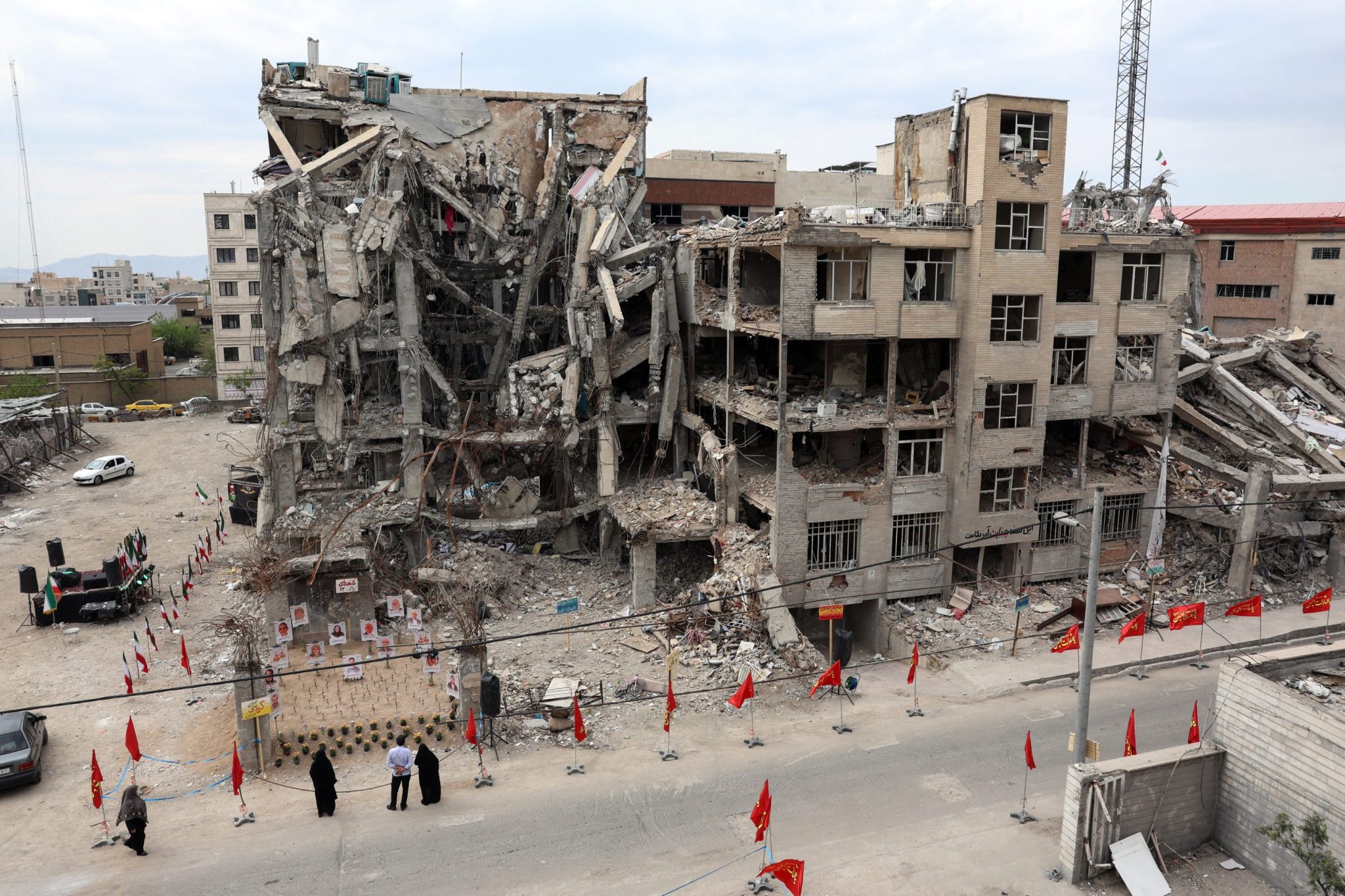
The U.S.-Israeli bombardment has damaged more than 125,000 residential and civilian buildings, while over 20,000 industrial units have been destroyed, according to Hadi Kahalzadeh, a former economist at Iran’s Social Security Organization writing for the Bourse & Bazaar Foundation.
“If this war had a hidden target, it was not Iran’s military power projection; it was the labor market that sustains the livelihoods of ordinary citizens,” he said in Substack post on Sunday.
Kahalzadeh added Iran’s ports and transportation systems have also been heavily damaged, while more than $300 billion in civilian infrastructure is estimated to have suffered damage.
In the process, supply chains, transport networks, and commercial services have been disrupted, forcing many companies to suspend operations.
But the pattern of strikes appears to have targeted the core pillars of Iran’s labor market, namely steel, construction, petrochemicals, pharmaceuticals, and retail, he pointed out.
Steel, in particular, is especially critical as supplies ripple through manufacturing, transportation, and construction, Kahalzadeh wrote.
The war’s other knock-on effects, including 72% inflation in March, weak demand, low liquidity, falling incomes, and deep uncertainty have hit wholesalers and retailers as well. After tallying up the impact on various sectors, the result is stark.
“Considering the pattern of attacks, about 10 [million] to 12 million jobs, roughly 50% of Iran’s workforce, are now at risk,” Kahalzadeh estimated. “That does not mean all of those jobs have already disappeared. It means that a very large share of Iranian workers now live under the shadow of furloughs or layoffs.”
To be sure, the U.S. and Israel have said they are targeting Iran’s defense industrial base that supports production of its missiles and drones. That has included some plants that serve both military and nonmilitary purposes.
Meanwhile, air strikes have largely avoided Iran’s energy infrastructure, though Israel attacked a fuel depot near Tehran as well as the massive South Pars gas field and nearby Asaluyeh refinery.
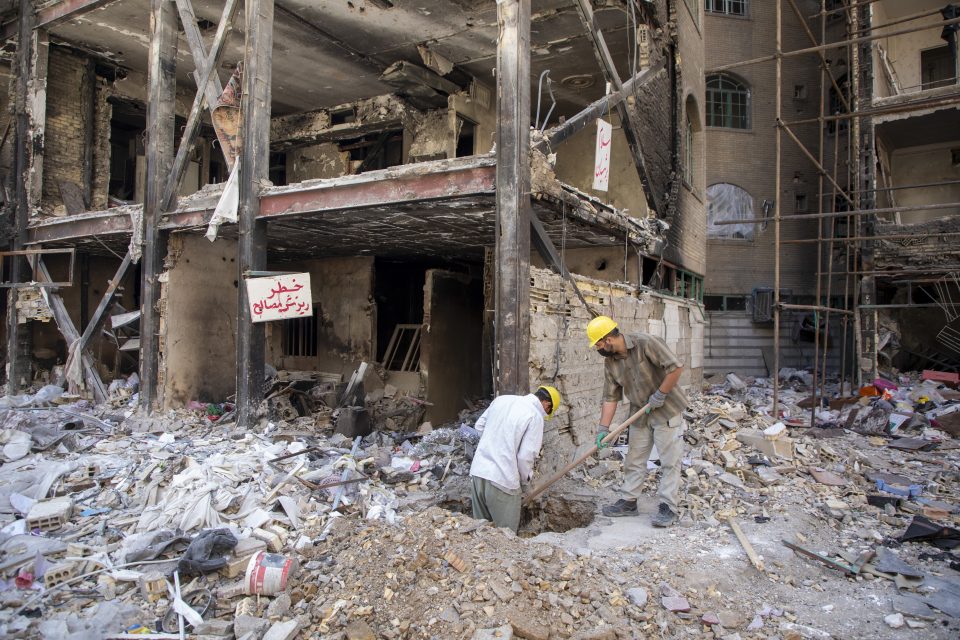
People work at the scene of a damaged residential building on April 14, 2026, in southeastern Tehran.
Since then, inflation has worsened, the currency has collapsed further, and the regime faces a cash crunch that threatens its ability to pay government workers.
On top of that, the U.S. naval blockade on ships entering or leaving Iranian ports could trigger a currency devaluation spiral and hyperinflation.
President Donald Trump said Friday the blockade will remain, despite saying Iran had agreed to fully open the Strait of Hormuz.
In fact, the Pentagon said earlier this week that the blockade would be expanded to include “shadow fleet” tankers used by Iran to transport sanctioned oil, even if it means interdicting ships in the Pacific.
So while the bombs have gone quiet for now, the Iranian people and the regime face must climb out of an epic economic crater.
Kahalzadeh calculated if only 30% of the 10 million to 12 million jobs at risk are actually lost, that still translates to approximately 3 million to 4 million jobs—representing a 15% labor market contraction and the largest decline in Iran’s modern history.
With so many people out of work, the social safety net would be stretched to the brink, as war-induced unemployment would take up at least 20% Iran’s budget, which is already running a large deficit.
“Even if the cease-fire holds, Iran’s most vulnerable people will suffer the long-term consequences of this 40-day conflict,” he added. “The bitter irony of this war is that the very population President Trump claimed to support by this war is now bearing the brunt of the damage.”
ملاحظة تحريرية | Editorial Note:
نُشر هذا المقال في الأصل بواسطة فورتشن العربية.
خبر (Khabr) هي منصة إعلامية أردنية مرخّصة تعمل بالذكاء الاصطناعي.
نضيف قيمة تحريرية من خلال: تحليل ذكي للأخبار، ملخصات تلقائية، رواية صوتية بالذكاء الاصطناعي، ترجمة متعددة اللغات، وتدقيق الحقائق.
هدفنا جعل الأخبار أكثر وضوحاً وسهولةً للقارئ العربي.
This article was originally published by فورتشن العربية.
Khabr is a licensed Jordanian AI-powered news platform (Registration #82086).
We add editorial value through: AI-powered news analysis, automated summaries, AI audio narration, multi-language translation (Arabic, English, French, Turkish), and AI fact-checking.
Our mission is to make news more accessible and understandable for Arabic-speaking audiences worldwide.
هذا الخبر ضمن تغطية خبر لقسم اقتصاد.
نقدّم لك تحليلات ذكية وملخصات يومية لأهم الأخبار من مصادر موثوقة متعددة.
المصدر: فورتشن العربية.
يوجد 6 مقالات مرتبطة بهذا الموضوع.
This article is part of Khabr's coverage of Economy.
We provide AI-powered analysis, summaries, and multi-source aggregation to keep you informed.
Source: فورتشن العربية.
Tags: Iran, unemployment, labor market, US-Israel war.
🍪 نستخدم ملفات تعريف الارتباط لتحسين تجربتك وعرض الإعلانات المخصصة. باستخدامك للموقع، فإنك توافق على سياسة ملفات تعريف الارتباط وسياسة الخصوصية.
We use cookies to enhance your experience and show personalized ads. By using this site, you agree to our Cookie Policy and Privacy Policy.
FREEFree 1GB Internet + Free International Calls
$1 trial — eSIM in 190+ countries — No roaming charges