Dubai: In Tamil Nadu, actors turning into state leaders isn’t a dramatic twist. It’s an established pattern, played out successfully time and again.
For years, the state has watched its screen heroes step off the big screen and straight into positions of power. But where did it all begin?
Say hello to the iconic M. G. Ramachandran, widely known as MGR, whose influence extended far beyond cinema. He's credited with laying the foundation for this movies-to-ballot crossover.
Through roles that cast him as a champion of the underprivileged, he cultivated a deep emotional connection with audiences, which later became the cornerstone of his political career. His fans could rarely distinguish between his on-screen persona and his real-life personality.
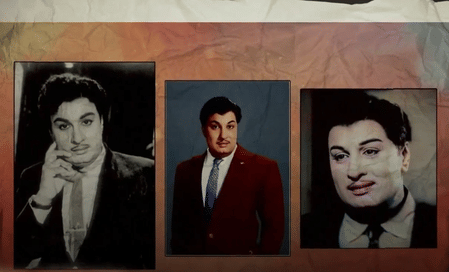
As the founder of the AIADMK, he went on to serve as Chief Minister of Tamil Nadu from 1977 until his death in 1987, setting a precedent that would endure for generations.
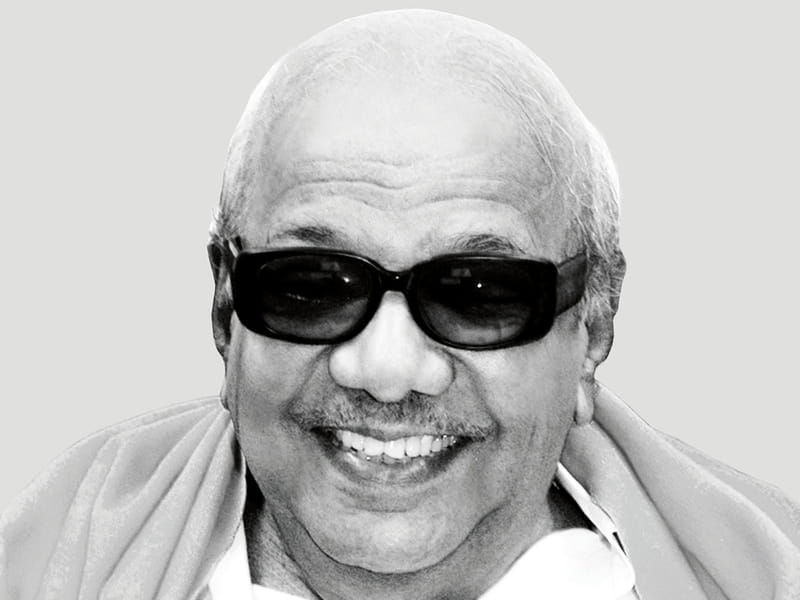
Running parallel to MGR’s rise was M. Karunanidhi, a figure who demonstrated that the bridge between cinema and politics did not rely solely on acting.
As a prolific screenwriter, Karunanidhi used films as a vehicle to communicate ideology and shape public discourse, embedding political messaging into popular culture long before assuming office himself. His multiple terms as Chief Minister underscored the power of narrative-building in influencing political outcomes.
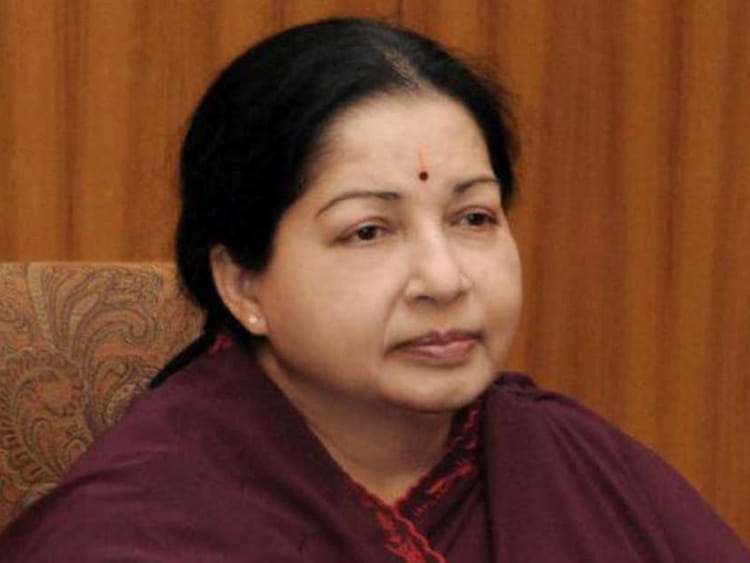
The transition from cinema to political dominance reached new heights with J. Jayalalithaa, a leading actress who emerged as one of Tamil Nadu’s most formidable leaders. Initially mentored by MGR, she successfully carved out her own political identity, serving multiple terms as Chief Minister and reinforcing the durability of the actor-to-leader trajectory. Her tenure illustrated that cinematic popularity, when combined with organisational strength and political acumen, could translate into sustained governance.
This pattern was not confined to Tamil Nadu alone. In neighbouring Andhra Pradesh, N. T. Rama Rao mirrored a similar journey. A legendary figure in Telugu cinema, NTR leveraged his immense popularity and carefully cultivated public image to found the Telugu Desam Party and serve as Chief Minister. His rise further cemented the idea that the emotional resonance built through cinema could be effectively mobilised in the political arena.
The success of these figures is rooted in a unique ecosystem where cinema functions as more than just entertainment. For decades, audiences have engaged with film stars not merely as performers but as embodiments of justice, leadership, and social aspiration.
This prolonged exposure creates a sense of familiarity and trust that few traditional politicians can replicate. Fan clubs, which begin as spaces of admiration, often evolve into structured grassroots networks capable of mobilising support during elections. In this context, the transition from screen to politics becomes less abrupt and more of a natural progression.
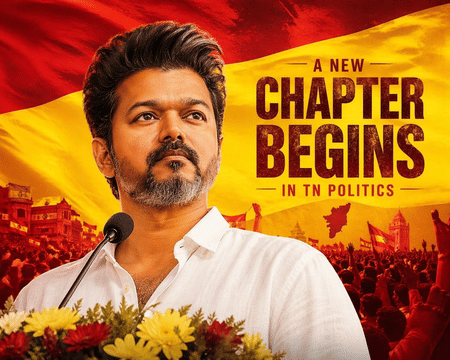
It is within this established framework that Vijay’s political ambitions must be understood. With a vast and loyal fan base, along with increasingly visible social messaging in his public persona, he possesses many of the attributes that defined his predecessors. The launch of Tamilaga Vettri Kazhagam signals a formal step into a space where his influence had already begun to extend beyond cinema.
While not every actor who enters politics achieves the same level of success, the broader trend remains significant. Figures such as K. B. Ganesh Kumar in Kerala illustrate that the crossover exists across India, even if its most pronounced successes have been concentrated in the southern states.
If Vijay’s current trajectory culminates in electoral success, it will not represent a disruption of the political order. Rather, it will reaffirm a long-standing dynamic in South India, where the journey from film stardom to political leadership is not only possible but, in many cases, historically proven.