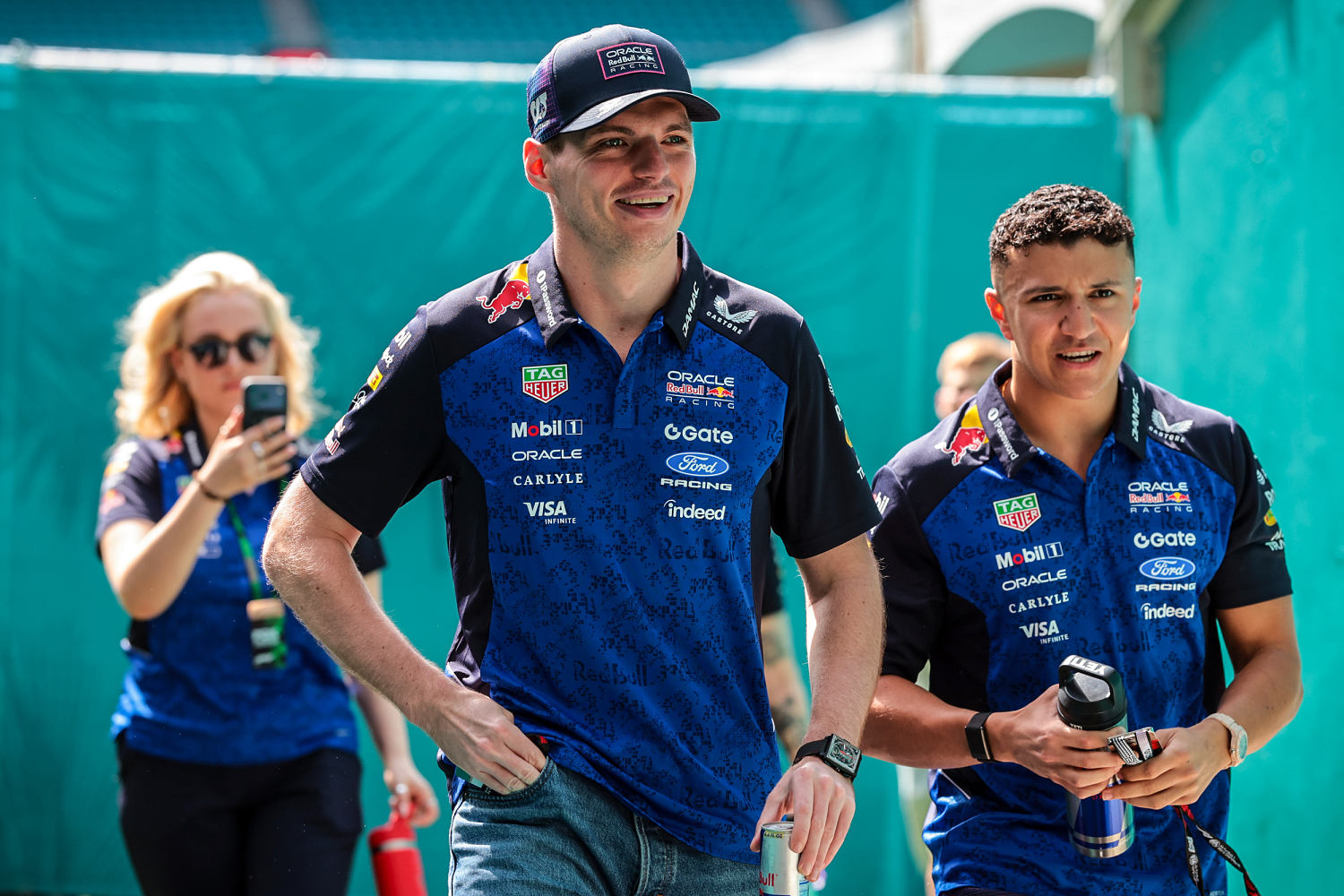
MIAMI GARDENS, Fla. — Formula 1 knows it has a dilemma when Max Verstappen, widely seen as the most talented driver of his generation, is threatening to quit the sport over the new 2026 regulations that have revolutionized the cars and racing. As the sport returns to the United States this week, it is making some “refinements” to the rules to try to placate the biggest criticisms, while balancing it with strengths like more overtakes and wheel-to-wheel racing that appeals to some fans. The Miami Grand Prix comes after a five-week break, with two Middle East races canceled due to the Iran war. After the last race in Japan, the 28-year-old Verstappen told BBC Sport he was “not enjoying” F1 and seriously considering quitting after this year. On Thursday, he said that the rules tweaks made by Formula 1 management haven’t done enough to change his outlook. “It’s a tickle. But it needs a bit more than a tickle for next year, that’s for sure,” Verstappen told reporters in response to a question from NBC News at the Red Bull hospitality suite. He said there must be “really big, big changes” to alter his view. The new cars are slimmer and more reliant on battery power controlled by buttons on the steering wheel, with a “boost” mode to increase speed that drivers have compared to Mario Kart. The rule tweaks are a mini-reset after the major reset, limiting energy recharging in qualifying and other changes to “super-clipping” aimed at reducing lifting and coasting. Verstappen, who won four championships from 2021 through 2024, was voted by fellow drivers and team bosses as the greatest driver last year after dragging a subpar car to within inches of a fifth title, narrowly losing out to McLaren’s Lando Norris. For him to quit would be a public relations nightmare for Formula 1 — the equivalent of prime LeBron James quitting the NBA or Tom Brady leaving the NFL to rebuke rule changes in the sport. Numerous drivers share Verstappen’s critique that the new cars devalue flat-out racing and put more emphasis on strategic gamesmanship and deployment of energy that includes lifting off the gas to recharge — anathema to plenty of die-hard fans. But there’s a dramatic upside, too: The new cars are more agile and the regulations make for much better wheel-to-wheel racing. Overtakes are more common. There are regular battles for the lead. The races are more unpredictable. George Russell of Mercedes said drivers can be “quite selfish” in wanting only the most enjoyable cars to drive. He added that the era of V10 engines — through the 1990s until the mid-2000s, seen by many Formula 1 die-hards as the golden age — was flawed. “The races were boring. And there’s no overtaking. And there weren’t as many fans following the sport,” he told reporters. “And the fans are loving the racing at the moment.” Nikolas Tombazis, the single-seater boss for the FIA, the sport’s governing body, said F1 is balancing competing considerations. “This sport is quite special because it’s got a lot of stakeholders. Obviously, drivers are very big, important one. They are the best drivers in the world,” he said in an interview. “But we have to always remember that we have some big automotive companies spending millions and maybe billions to be in the sport, and that it is important to hear their voice. They want to be relevant to their products that they have on the road.” “And additionally, we rely on many, many millions of fans around the world — and thankfully also in the United States in the last few years — who also want to see exciting races,” he added. “And to keep the balance between those factors is not always easy, and it’s part of the process of devising regulations with all our stakeholders involved.” While Verstappen was winning — if not outright dominating — in the previous generation of cars, it is Mercedes that built the strongest machine at the outset of the new regulations. “I can’t complain too much, to be fair,” said Kimi Antonelli, the 19-year-old Mercedes prodigy who is leading the championship. He said the lighter and more agile design “was a really good step forward and the car just feels more alive.” NBC News asked a half dozen drivers what their favorite and least favorite things are about the new regulations. “I still get to call myself an F1 driver. That’s always a cool thing to say,” McLaren’s Oscar Piastri deadpanned as he struggled to find anything positive to say about the new regulations. Formula 1 recently switched from broadcasting on ESPN and ABC to a major new deal with Apple TV. The Miami Grand Prix, which finally features a race at a normal hour for Americans, presents an important test for this market as F1 seeks to grow its fan base. Formula 1 betting has grown dramatically in the U.S., and the sport is engaging new partners to extend its tentacles further into the market. That includes Allwyn, a global lottery and gaming company, which is sponsoring the formation lap. It has also launched Allwyn League, a competition within the F1 Predict platform where prophetic fans can win tantalizing prizes like paddock club tickets or a signed Norris helmet. The F1 viewership and economic impact in Miami, where cost-of-living struggles are growing, will also be closely watched. Sergio Pérez, who drives for Cadillac F1, said it is “very exciting being here, racing for an American team — and having all the Latin support here in Miami, it’s always very special.” Asked to give his view on the new F1 regulations, Perez said, “I was very happy that as a young boy I played a lot of Mario Kart, so I have a lot of preparation going on in this new era.”
المصدر: NBC News
| Source: NBC News
ملاحظة تحريرية | Editorial Note:
نُشر هذا المقال في الأصل بواسطة NBC News.
خبر (Khabr) هي منصة إعلامية أردنية مرخّصة تعمل بالذكاء الاصطناعي.
نضيف قيمة تحريرية من خلال: تحليل ذكي للأخبار، ملخصات تلقائية، رواية صوتية بالذكاء الاصطناعي، ترجمة متعددة اللغات، وتدقيق الحقائق.
هدفنا جعل الأخبار أكثر وضوحاً وسهولةً للقارئ العربي.
This article was originally published by NBC News.
Khabr is a licensed Jordanian AI-powered news platform (Registration #82086).
We add editorial value through: AI-powered news analysis, automated summaries, AI audio narration, multi-language translation (Arabic, English, French, Turkish), and AI fact-checking.
Our mission is to make news more accessible and understandable for Arabic-speaking audiences worldwide.