Former US Ambassador to MWN: Algeria No Longer Has Upper Hand in Western Sahara Resolution
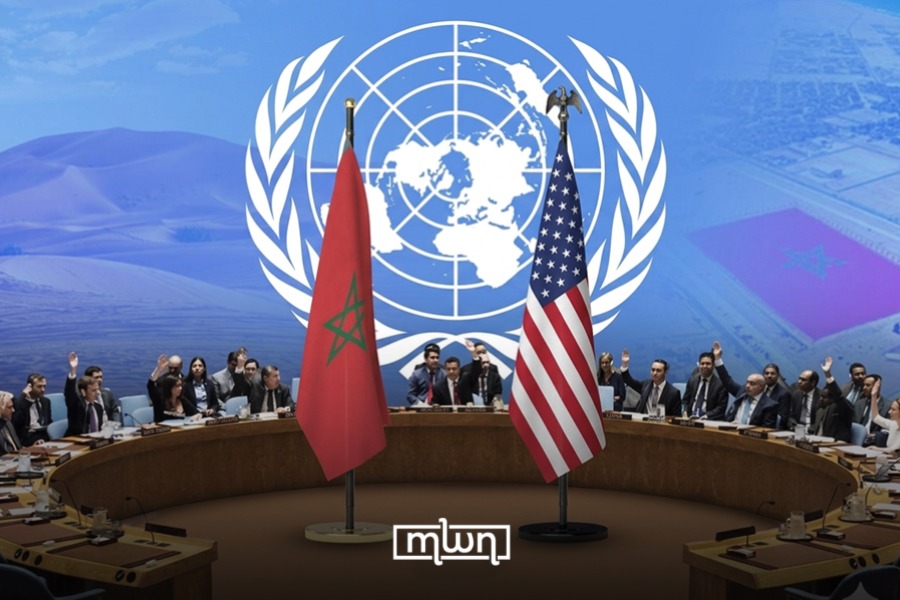
المصدر: Morocco World News | Source: Morocco World NewsRabat – The Western Sahara dispute continues to garner political and diplomatic attention, especially after the UN Security Council passed the historic Resolution 2797 in October 2025.
The resolution cleared the fog for a more sustainable roadmap toward an agreed-upon and mutually acceptable political solution to end the dispute over Western Sahara. It also cleared much ambiguity when it comes to identifying Algeria among the main political parties to the dispute, shattering its “observer” status claims.
For many observers and international advisors, the resolution unlocked doors for a glimpse of hope to see the Sahara dossier closed once and for all.
Former US ambassador to Morocco Edward Gabriel shared his insights on the matter with Morocco World News (MWN), emphasizing the strategic significance of Resolution 2797 and its importance in cementing US-Morocco diplomatic efforts to bring the Western Sahara dossier to an end.
Asked whether he expects the US to take an even bolder position in favor of Morocco’s sovereignty, Gabriel emphasised that Washington now holds an unambiguous stance in support of a negotiated settlement within the framework of the Moroccan initiative.
This unequivocal support for Morocco’s stance is clearly unchanged and will not see any change in future administrations, he argued, stressing that “it has stood the test of time.”
Gabriel elaborated: “As my colleague Robert Holley and I detail in the recent case study history of Moroccan-US diplomacy concerning the Sahara, this is a policy begun and endorsed during the Democrat administration of President Bill Clinton in 1999 and was brought to its current standing by the Republican administration of President Donald Trump.”
Last February, the former US ambassador co-wrote a detailed article on the Sahara dispute with retired Foreign Service Officer Robert M. Holley.
The article tackles the latest UN resolution and sheds light on how it has consecrated or almost definitely vindicated Morocco’s Autonomy Plan as a genuine roadmap to a lasting settlement and the only viable basis for negotiating a just and sustainable political situation to the Sahara question.
In the article, Ambassador Gabriel and Holley discussed the US-Morocco’s unique diplomatic contributions to efforts aimed at solving the 50-year dispute.
They acknowledged how a solution to the conflict is not only vital for Morocco’s or the US interests in North Africa, stating: “This issue is key to the prospects for peace, stability and prosperity in the Sahara and Sahel regions of Northwest and Central Africa.”
They also recalled the ongoing cooperation against international terrorist groups in the region, recalling Morocco’s stability amid a chaotic and fragile situation created by security challenges and threats to most of the states in the region.
The two diplomats were the principal advocates for the Washington policy review in 1999. This phase led to the adoption of the compromise sovereignty-autonomy initiative as US policy on Western Sahara.
Beyond Trump’s administration, Gabriel said former US President Joe Biden also made it clear that the US policy concerning the Sahara will not change under its Democratic administration.”
As Gabriel puts it, while every US administration since 1999 has endorsed the same policy, it was Trump’s administration that took the final steps to make the position clear.
In particular, the seasoned diplomat credited the Trump administration with leading a strong support of the UN Security Council to endorse the Moroccan autonomy initiative as the “only way forward, which may be the most important step towards moving this issue to its final resolution.”
Gabriel acknowledged that more work is needed to reach a final settlement, recalling the strength of US-Moroccan diplomacy around a common position with the UNSC.
As the penholder of US Security Council resolutions, the US has been firm in its determination to continue supporting Morocco’s Autonomy Plan as the only workable basis from which the parties to the dispute should find a compromise and an agreed-upon political solution to end the lingering territorial conflict.
In February this year, the US convened the parties to the conflict twice — in Madrid and Washington — to facilitate settlement talks.
Discussions focused on advancing negotiations toward the implementation of a political roadmap centered around the Autonomy Plan, as outlined by UNSC Resolution 2797.
Beyond these latest US-moderated efforts to broker a workable peace agreement, Ambassador Gabriel stressed that there were instances in the past when the US could have reached the results achieved in October 2025 “much sooner.”
One of these times came “for instance in 2007, when Morocco put on the UN table its sovereignty/autonomy initiative, which was called credible and serious, but the Bush administration stopped short of calling it ‘the only solution’ with which to negotiate,” he said.
For Gabriel, the status of the Sahara should have been also achieved in 2013, when then Secretary of State Hilary Clinton “stated that the US position was clear and had not changed, and went further by calling the Moroccan proposal ‘realistic’ but stopped short of saying the Moroccan initiative was the ‘only’ proposal that could address the Sahara issue.”
Algeria is unlikely to accept autonomy at present
Despite the historic, overwhelming international support and UN validation Morocco’s Autonomy Plan has registered in recent years, Algeria’s regime continues to resist the UN-led political process’s irrepressible march toward a compromise-based political solution in line with the Moroccan proposal.
In fact, Algiers has continued to hamper the UN-led political process by both keeping up its support for the separatist Polisario Front and shirking or denying its historical responsibility in the genesis of the territorial conflict. For the advances Moroccan diplomacy has made and all the backing of outdated narratives like “self-determination” and “referendum.”
Asked about the US’ recent efforts to bring the conflicting parties to the same roundtable, Gabriel acknowledged that tangible results are “dependent on Algeria.”
He elaborated: “King Mohammed VI has called for diplomatic efforts in the past to deal with Moroccan-Algerian policy differences, but to no avail. Will Algeria sincerely negotiate within the UN-mandated guidelines, which is autonomy under Moroccan sovereignty?”
Yet that does not mean that the solution is entirely in Algeria’s hands, the diplomat insisted, stressing the need to consult citizens in Moroccan southern provinces.
“And the UN has now made it clear that it expects to see an agreement based on the Moroccan initiative,” he insisted.
Read Also: Samir Bennis’s New Book Lays Bare the Conspiracy That Nearly Cost Morocco Its Sahara
The most critical detail the ambassador sought to highlight throughout the interview is his perception of the Trump administration as sincere in wanting to convene the parties to broker a lasting resolution. He described US adviser Massad Boulos, the pointman on the recently attempted US-led negotiations, as “capable” and “close” to the US President.
These are important qualities for the prospects of any negotiated solutions under the current US administration, he explained.
Still, Gabriel acknowledged that he does not expect Algeria — for now and in the near future, at least — to accept the Moroccan autonomy initiative.
“They will likely stall and obstruct. They will have to eventually realize that world opinion has solidified around the Moroccan initiative and that their negotiating power is diminishing with time,” he detailed.
Algeria should not have an outsized say in the final solution
Gabriel believes that, despite being a primary player in the continuation of this conflict, Algeria should not have an “outsized say” in a final solution to the dispute. Instead, he called on Morocco to take the initiative and tackle the question with its citizenry, including its Saharan population.
Upon the adoption of Resolution 2797, many ordinary Moroccans, including those in the southern provinces, celebrated the vote as the ultimate triumph of Morocco’s legal battle for the Western Sahara region.
Algeria and Polisario should be cited for their abuses of the past
Converging reports also documented Polisario’s repression of attempts at celebrations inside the Tindouf camps. At least 90,000 Sahrawis are held captive at the camps and cannot even move freely inside Algeria, which hosts, finances, arms, and supports the separatist group to undermine Morocco’s territorial integrity and sovereignty over its southern provinces.
Algeria refuses to allow a census inside the camps, where Sahrawis continue to endure challenges, including diseases like anaemia affecting mainly children and women due to malnutrition and other under-nourishment- and neglect-caused diseases.
Despite the millions of dollars of donations from the international community, Sahrawis in Tindouf continue to complain of a lack of food. Converging reports have in recent years highlighted that the Polisario leadership is infested with management and governance crises, with many independent reports decrying the group’s epidemics of embezzlement of funds by senior Polisario leaders.
Beyond embezzlement and restrictions imposed on Sahrawis, reports of kidnapping, among other violations of human rights, Polisario is now under international community scrutiny, as many lawmakers have urged their countries to designate the separatist group as a terrorist group.
In the US, two widely supported bills were recently introduced to both Congress and the Senate to designate the Algerian-backed separatist group as a terrorist entity.
Asked about his stance on these bills, the former ambassador said that while he has not read their contents to make an informed and independent judgment, he “knows” Polisario conducted human rights abuses against many residents in Tindouf in Algeria during these many years.
“You should talk to some of those who have left the camps and returned back to their homes in Morocco, as I have,” he explained. “The stories are horrendous. Algeria was also breaking international laws when it held and abused Moroccan prisoners of war for more than thirty years, until the US, in cooperation with King Mohammed VI, demanded the return in 2004 of all remaining POWs.”
Gabriel concluded by commending Morocco’s diplomacy under King Mohammed VI, stressing how the monarch’s legacy has achieved a historic mark through an understanding of the need for a long-term strategy on the Sahara.
The post Former US Ambassador to MWN: Algeria No Longer Has Upper Hand in Western Sahara Resolution appeared first on Morocco World News.
ملاحظة تحريرية | Editorial Note: نُشر هذا المقال في الأصل بواسطة Morocco World News. خبر (Khabr) هي منصة إعلامية أردنية مرخّصة تعمل بالذكاء الاصطناعي. نضيف قيمة تحريرية من خلال: تحليل ذكي للأخبار، ملخصات تلقائية، رواية صوتية بالذكاء الاصطناعي، ترجمة متعددة اللغات، وتدقيق الحقائق. هدفنا جعل الأخبار أكثر وضوحاً وسهولةً للقارئ العربي.
This article was originally published by Morocco World News. Khabr is a licensed Jordanian AI-powered news platform (Registration #82086). We add editorial value through: AI-powered news analysis, automated summaries, AI audio narration, multi-language translation (Arabic, English, French, Turkish), and AI fact-checking. Our mission is to make news more accessible and understandable for Arabic-speaking audiences worldwide.