Explained: What is Opec and what does UAE's exit from it mean?
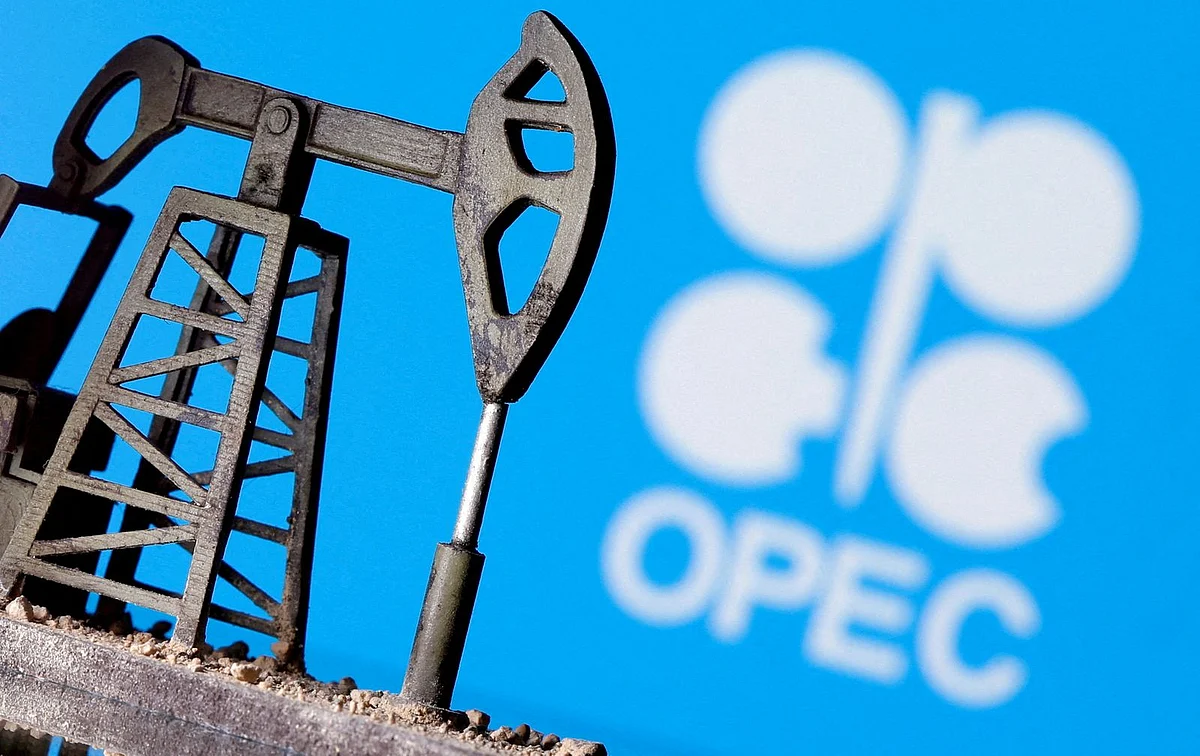
المصدر: Khaleej Times | Source: Khaleej TimesThe UAE has made the decision to exit the Organisation of the Petroleum Exporting Countries (Opec) and Opec+, effective May 1, after a “careful look at the regional power's energy strategies,” the energy minister said.
The UAE’s decision to withdraw is based on its long-term strategic and economic vision and evolving energy profile, including accelerated investment in domestic energy production, and reinforces its commitment to a responsible, reliable, and forward-looking role in global energy markets.
Stay up to date with the latest news. Follow KT on WhatsApp Channels.
What is Opec?
Opec was formed in 1960, with Abu Dhabi (later the UAE after the union) joining in 1967, as a way to unite against unfair and unstable petroleum prices and to unify petroleum policies among member states. Its stated objective is to obtain an efficient, economic, and regular supply of petroleum to consuming nations, and allow for a fair return on capital to those investing in the industry.
Which countries are Opec members?
It was founded by five, oil-producing, states: Iran, Iraq, Kuwait, Saudi Arabia, and Venezuela. Several other members have joined and left throughout the years, leaving the organisation standing with 11 members today. Saudi Arabia is widely accepted to be the most influential leader of OPEC, producing the highest number of barrels per day (bpd).
The 11 current members are: Algeria, Congo, Equatorial Guinea, Gabon, Iran, Iraq, Kuwait, Libya, Nigeria, Saudi Arabia, Venezuela.
Which countries have left Opec?
Qatar joined a year after its founding, but withdrew in 2019; Indonesia in 1962 but left twice in 2009 and 2016; Ecuador in 1973, suspending in 1992, then re-entering in 2007 and ultimately suspending again in 2020; Gabon joined in 1975, left in 1995, but later re-joined in 2016 and still stands as a member today.
In Qatar’s case, the decision to withdraw was, according to Qatar Petroleum’s CEO, “purely a business decision” meant to focus its effort on its LNG (Liquefied Natural Gas) exports.
The UAE has stated that the withdrawal was in due consideration to reflect the country’s long-term strategic and economic vision and “evolving energy profile, including accelerated investment in domestic energy production, and reinforces its commitment to a responsible, reliable, and forward-looking role in global energy markets,” according to wam.
Opec vs Opec+
The UAE made the decision to exit both Opec and Opec+.
Opec+ was created in 2016, largely in response to falling oil prices driven by significant increases in U.S. shale oil output. It consists of all OPEC members as well as 10 other non-member states, with Russia being one of the top exporters.
OPEC produced an estimated 28.7 million b/d (barrels per day) of crude oil in 2022, which was 38 per cent of total world oil production that year. The largest producer and most influential member of OPEC is Saudi Arabia, which was the world’s second-largest oil producer in 2022, after the United States, according to the U.S. Energy Information Administration.
What will this mean for Opec and the UAE?
Following the UAE’s exit, the country will continue to act responsibly, bringing additional production to market in a gradual and measured manner, aligned with demand and market conditions, wam reported.
Analysts said that this could put pressure on Opec's ability to manage the market.
The UAE leaving Opec and Opec+ could affect the organisations’ market influence and its ability to manage spare supply, said Madhur Kakkar, founder and CEO of Elevate Financial Services. He explained that this could introduce greater volatility and potential price corrections in the long-term if the UAE increases oil production meaningfully.
“In the short- to medium term, the market should be able to absorb additional UAE barrels given depleted global inventories and the need to rebuild reserves,” Ole Hansen, head of commodity strategy at Saxo Bank, said, adding that over time, OPEC’s ability to manage orderly markets through coordinated supply adjustments may increasingly be called into question.
ملاحظة تحريرية | Editorial Note: نُشر هذا المقال في الأصل بواسطة Khaleej Times. خبر (Khabr) هي منصة إعلامية أردنية مرخّصة تعمل بالذكاء الاصطناعي. نضيف قيمة تحريرية من خلال: تحليل ذكي للأخبار، ملخصات تلقائية، رواية صوتية بالذكاء الاصطناعي، ترجمة متعددة اللغات، وتدقيق الحقائق. هدفنا جعل الأخبار أكثر وضوحاً وسهولةً للقارئ العربي.
This article was originally published by Khaleej Times. Khabr is a licensed Jordanian AI-powered news platform (Registration #82086). We add editorial value through: AI-powered news analysis, automated summaries, AI audio narration, multi-language translation (Arabic, English, French, Turkish), and AI fact-checking. Our mission is to make news more accessible and understandable for Arabic-speaking audiences worldwide.