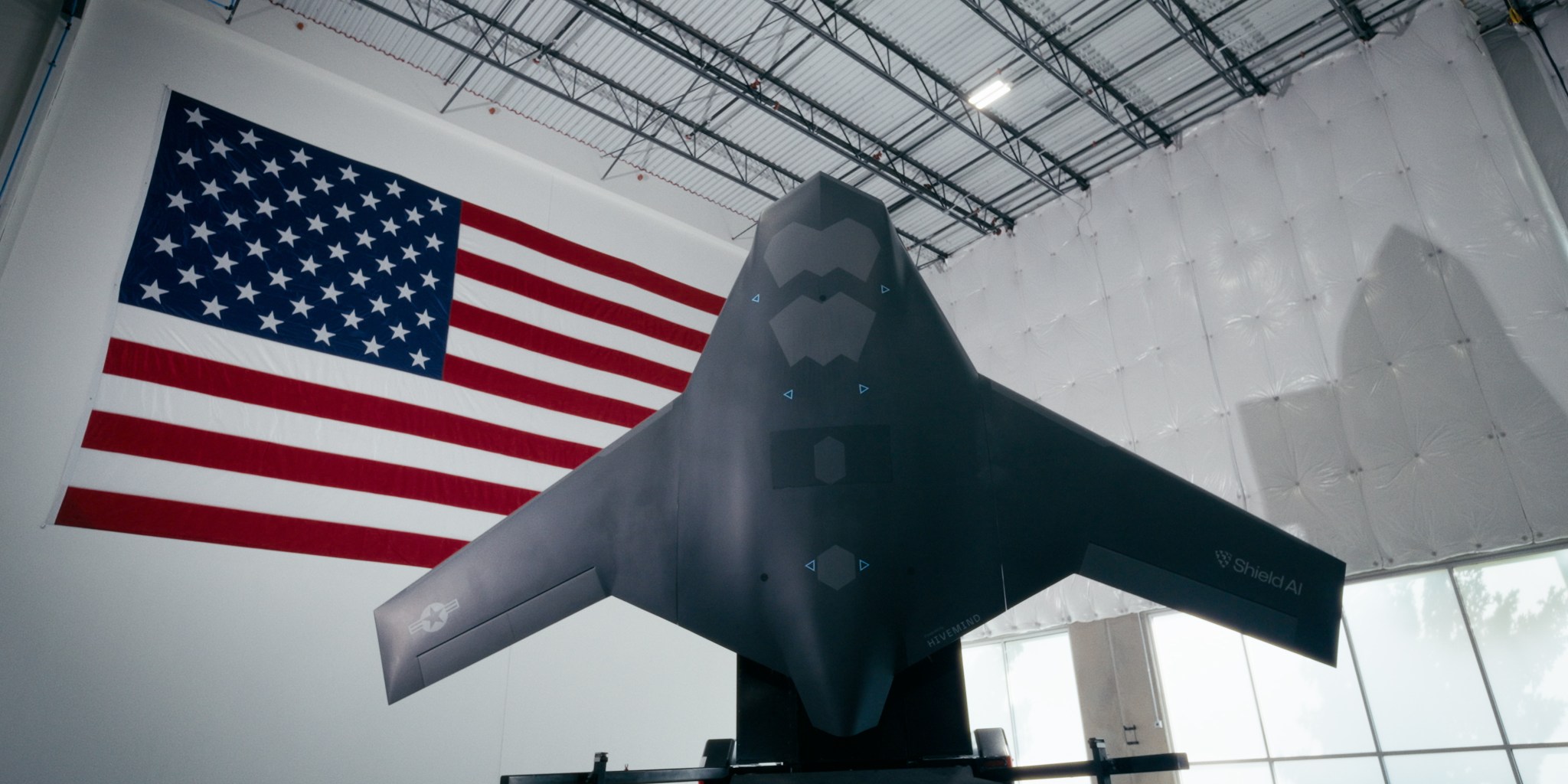
Global conflicts are awakening governments—and investors—to the importance of modernizing military forces, says Brandon Tseng, the cofounder and president of ShieldAI, a maker of AI-powered drones that announced Thursday that it had raised $1.5 billion in Series G funding at a $12.7 billion valuation.
The new funding more than doubles the valuation of the San Diego, Calif. defense startup, which was founded in 2015 and was previously valued at $5.6 billion by investors. Shield AI is projecting more than 80% revenue growth by the end of 2026, Shield AI cofounder Brandon Tseng and CFO Kingsley Afemikhe told Fortune. That would equate to at least $540 million in revenue this year, based on Shield AI’s 2025 revenue figures.
“We don’t expect growth to slow down,” Tseng said in an interview.
Shield’s Series G round—co-led by first-time investors Advent International and JPMorganChase’s Security and Resiliency Initiative—is happening in tandem with two major financial moves: the pending acquisition of the tactical simulation company Aechalon and a non-dilutive $500 million fixed return preferred equity financing deal with Blackstone. The infusion of capital will fund the acquisition, as well as help Shield scale its Hivemind autonomy platform and its V-BAT surveillance drone. The funds will also support the development of a new combat drone that is preparing for its first flight by the end of this year.
The deal underscores how global conflict is reshaping venture priorities in Silicon Valley, as a crop of young companies including Anduril and Allen Control Systems produce new tech-driven products designed for a changing battlefield. Shield AI has gained traction from the deployment of its systems in Ukraine, where its V-BAT surveillance drone has been used in active operations.
Tseng told Fortune that fundraising discussions began in November, prior to the U.S. military capturing Venezuelan President Nicolás Maduro or the recent strikes in Iran. Tseng says investor sentiment has shifted alongside “a broad observation” that the world has become less stable.
“Countries around the world are modernizing their militaries, and obviously the U.S. has pushed for an increase in defense spend among all of its allies and partners,” Tseng said. “That certainly is in the background as investors think about investing in defense.”
Tseng declined to say whether Shield AI’s V-BAT drones have been deployed in Iran, but noted the company operates “in almost every single conflict zone.”
Advent Chairman David Mussafer is joining Shield AI’s board as part of the funding deal, while investor Todd Combs, of JPMorgan Chase, will serve as a board observer. Aechelon cofounder and CEO Nacho Sanz-Pastor will continue to lead the business unit and oversee its integration with Hivemind, reporting to Shield AI CEO Gary Steele, according to Tseng.
Shield’s projection of more than 80% revenue this year does not include the acquisition of Aechelon.
The final close of Shield AI’s funding round will also be contingent on approval of the Aechelon acquisition. If the deal fails to clear regulatory hurdles, Tseng said the company would “re-evaluate” the financing with investors.
Aechelon’s platform, which is used across the autonomy sector to simulate battlefield environments and train AI machines, will remain open to other customers following the acquisition, Tseng said.
This story was originally featured on Fortune.com