‘Ceuta, Melilla Are Not in Spain’: Top Rubio Ally Escalates Against Madrid
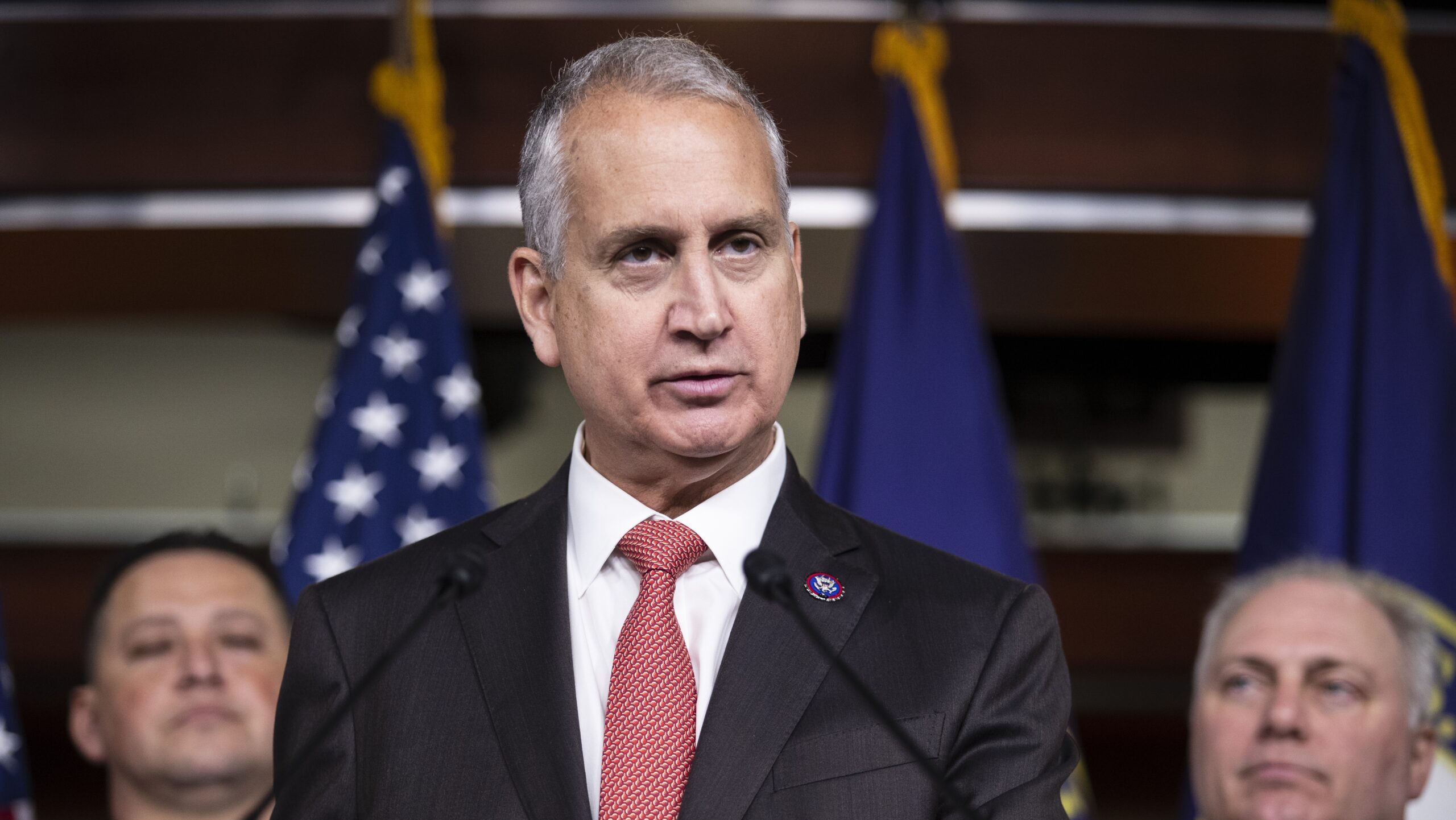
المصدر: Morocco World News | Source: Morocco World NewsMarrakech – In what may be the most politically consequential utterance by a sitting US congressman on the status of Spain’s North African enclaves in years, Republican Representative Mario Díaz-Balart has declared that Ceuta and Melilla “are not in the geographic territory of Spain” but “in the territory of Morocco” – and that their fate “is established, negotiated, and discussed between friends and allies.”
The remarks, delivered in an interview published April 1 by Spanish newspaper El Español, did not emerge from the margins of American politics. Díaz-Balart is no backbencher. The Cuban-American lawmaker chairs the House Subcommittee on National Security, Department of State, and Related Programs – the appropriations body that bankrolls American diplomacy and foreign operations.
He is among the closest congressional confidants of Secretary of State Marco Rubio, with whom he has worked on Latin American and Middle Eastern policy for over a decade. He is, by every institutional metric, a man whose words carry the weight of policy signaling rather than rhetorical indulgence.
Spain’s defiance meets Washington’s wrath
The interview landed amid the gravest unspooling of US-Spain ties in living memory. Madrid first denied Washington use of the jointly operated Rota and Morón military bases for operations tied to the US-Israeli campaign against Iran, forcing the relocation of 15 American aircraft.
Prime Minister Pedro Sánchez’s government went further this week, shutting Spanish airspace entirely to US military flights connected to the conflict. Defense Minister Margarita Robles described the move as consistent with Spain’s characterization of the war as “profoundly illegal and profoundly unjust.”
The escalation drew a blistering response from Rubio, who accused Spain’s leaders of “bragging” about the airspace closure while relying on the same alliance for their own defense. “If NATO is just about us defending Europe if they’re attacked, but then denying us basing rights when we need them, that’s not a very good arrangement,” Rubio told Al Jazeera.
Trump himself has been firm – and escalatory – in his hostility toward Madrid for months. In October 2025, during an Oval Office meeting with Finnish President Alexander Stubb, Trump singled out Spain as the only NATO member refusing the 5% GDP defense spending target. “We had one laggard. It was Spain,” he said then while openly floating expulsion from the alliance: “Maybe you should throw them out of NATO, frankly.”
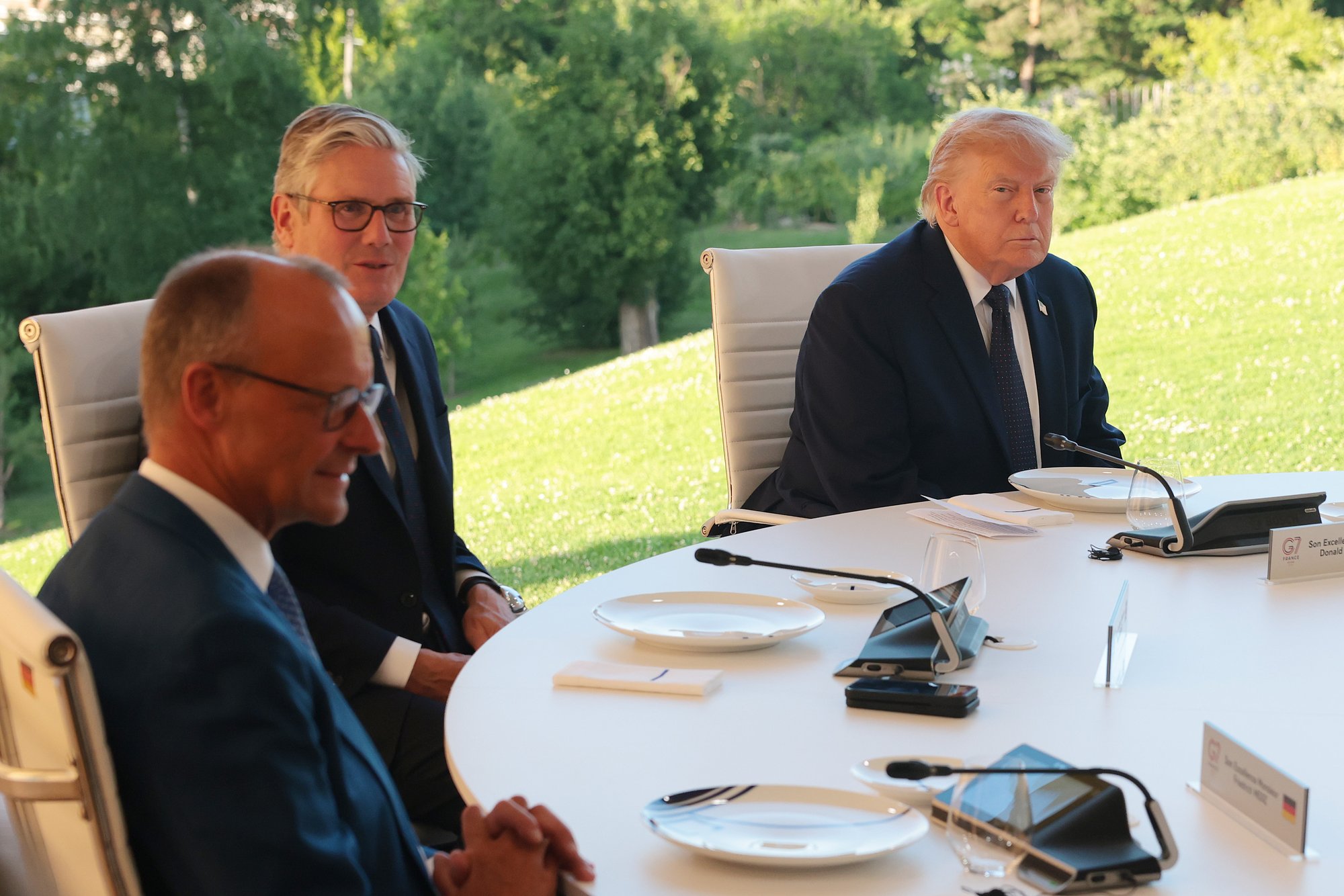
Then, on March 3 this year, after Sánchez barred the Rota and Morón bases from use in the Iran campaign, Trump called Spain “terrible” during a press conference alongside German Chancellor Friedrich Merz and directed Treasury Secretary Scott Bessent to “cut off all dealings with Spain,” threatening a full trade embargo.
It is against this increasingly fraught landscape that Díaz-Balart invoked Morocco as a counterweight – and did so with a warmth entirely absent from his excoriation of Madrid. Asked whether Washington could consider relocating military assets to Moroccan territory, the congressman offered an unequivocal endorsement of Rabat’s reliability.
“The attitude of the King of Morocco has been positive,” he said, describing the 250-year-old US-Morocco alliance as one that “has remained consistent” and “very important” – a partnership that “has endured even in difficult times.”
He then drew a pointed comparison. “It is very sad that this individual [Sánchez] is endangering the alliance between the United States and Spain, something the Kingdom of Morocco has not done,” Díaz-Balart affirmed.
He added that the relationship between Washington and the Alaouite kingdom has been “very long, very positive,” before pivoting directly to the territorial question. The issue of whether Ceuta and Melilla “are part of Spain or should be part of Morocco,” he declared, remains an open matter to be “established, negotiated, and discussed between friends and allies.”
Indeed, Morocco was the first country to recognize US independence in December 1777, when Sultan Sidi Mohammed Ben Abdallah opened Moroccan ports to American vessels. The move led to the 1786 Treaty of Peace and Friendship, widely considered America’s oldest continuously operative treaty relationship.
A congressman with institutional reach on Morocco
Díaz-Balart’s engagement with Morocco is neither incidental nor new. He sits as a member of the Congressional Morocco Caucus and chairs the very appropriations subcommittee that oversees US foreign operations budgets – a dual perch that confers influence over both the diplomatic posture and the financial architecture of American engagement with Rabat.
In April 2025, Díaz-Balart met with Morocco’s Foreign Minister Nasser Bourita during the latter’s working visit to Washington – a trip that also included high-level discussions with Rubio and National Security Advisor Mike Waltz.
Following the meeting, Díaz-Balart reaffirmed his “steadfast support for President Trump’s recognition of Morocco’s sovereignty over the Western Sahara,” describing the kingdom under King Mohammed VI as “a crucial US ally and partner for peace in the Middle East.”
That visit coincided with a seismic legislative thrust on Capitol Hill: the Polisario Front Terrorist Designation Act, introduced in the House of Representatives in June 2025 by Republican Joe Wilson and Democrat Jimmy Panetta – a bill Díaz-Balart has publicly championed from his powerful appropriations perch.
The bipartisan legislation, which brands the Polisario as “a Marxist militia backed by Iran, Hezbollah, and Russia,” seeks to impose sanctions and sever the separatist movement from the global financial system.
The legislation has since gained further traction in the Senate, where Ted Cruz, Tom Cotton, and Rick Scott introduced a companion bill in March 2026. The two chambers of Congress are now advancing parallel legislative efforts toward the same strategic objective.
A familiar playbook, now amplified
Díaz-Balart’s territorial provocation does not exist in a vacuum. It arrives on the heels of two incendiary op-eds by Michael Rubin, a former Pentagon official and senior fellow at the American Enterprise Institute (AEI), published through the Middle East Forum.
In his March 12 piece, Rubin urged Trump and Rubio to formally recognize Ceuta and Melilla as “occupied Moroccan territory,” branding Spain a colonial power “running colonies across the Strait of Gibraltar.” He dismissed Madrid’s sovereignty claims with a single sentence: “Neither maps nor history lie.”
Four days later, Rubin escalated further, invoking the spirit of the 1975 Green March and calling on Morocco to dispatch unarmed civilians into the enclaves. He argued that NATO would have no legal basis to intervene, citing Article 6 of the Washington Treaty, which explicitly excludes territories south of the Tropic of Cancer from the alliance’s mutual defense obligations.
Taken together, the contours of a coordinated pressure campaign against Spain’s remaining colonial footholds in Africa are becoming increasingly difficult to dismiss as coincidence.
For Morocco, which has never relented in demanding the restitution of Ceuta, Melilla, and every occupied islet along its northern coast, the geopolitical winds have rarely blown with such unmistakable force.
Read also: Spanish Ex-General Sparks Scrutiny for Claiming Morocco is ‘Threat’ to Spain
The post ‘Ceuta, Melilla Are Not in Spain’: Top Rubio Ally Escalates Against Madrid appeared first on Morocco World News.
ملاحظة تحريرية | Editorial Note: نُشر هذا المقال في الأصل بواسطة Morocco World News. خبر (Khabr) هي منصة إعلامية أردنية مرخّصة تعمل بالذكاء الاصطناعي. نضيف قيمة تحريرية من خلال: تحليل ذكي للأخبار، ملخصات تلقائية، رواية صوتية بالذكاء الاصطناعي، ترجمة متعددة اللغات، وتدقيق الحقائق. هدفنا جعل الأخبار أكثر وضوحاً وسهولةً للقارئ العربي.
This article was originally published by Morocco World News. Khabr is a licensed Jordanian AI-powered news platform (Registration #82086). We add editorial value through: AI-powered news analysis, automated summaries, AI audio narration, multi-language translation (Arabic, English, French, Turkish), and AI fact-checking. Our mission is to make news more accessible and understandable for Arabic-speaking audiences worldwide.