Editor's note: Gong Zhe is a senior sci-tech editor at CGTN Digital. This article reflects his own opinions and not necessarily the views of CGTN.
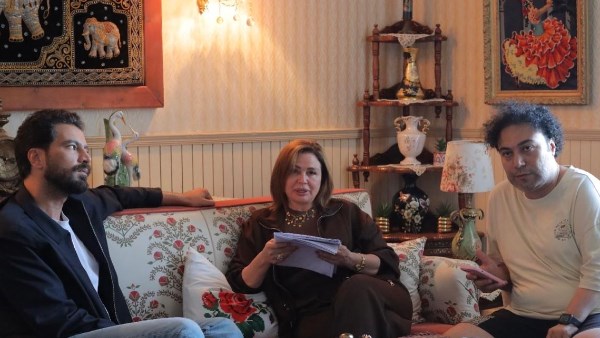
This year's Shanghai International Film Festival debuted an unusual experiment. Four teams of filmmakers and AI specialists spent a month making short films together, then opened their workflows to the public – every prompt, every failed frame, every lesson learned.
The question at the heart of this "AI Backlot" event was simple: What can and cannot AI actually do in filmmaking?
The "can" side is increasingly hard to ignore. Netflix used generative AI for a building collapse scene in "El Eternauta" and completed it 10 times faster than traditional VFX. Bona Film Group spent two years producing "Sanxingdui: Future Past," China's first theatrically released AI-assisted feature film, which premiered at Cannes this year.
German AI director Mark Wachholz, who participated in the Shanghai event, told reporters that "film is film" and there is no need to distinguish whether it was made with AI.
The technology is lowering barriers, cutting costs and making original mid-budget storytelling viable again in an industry that had all but abandoned it.
But the "cannot" is where the real insight lives. Renowned director James Cameron called generative AI as a blended "average" of artworks previously created by humans. German filmmaker Werner Herzog said AI films "have no soul."
Chinese historian Yi Zhongtian, one of the judges of the AI Backlot's live creation challenge, asked a sharper question: "Can AI itch?" Pain can be endured, but an itch is a subtle, authentic life experience that is uniquely human, he said.
The industry is drawing lines on paper as well. US media labor union SAG-AFTRA's 2026 contract requires explicit consent and fair compensation for any AI use of an actor's image or voice. The Oscars do not allow AI-generated performances to qualify for awards. These guardrails are not anti-technology. They are an acknowledgment that efficiency is not creativity, and that what makes a story land with a live audience has never been about processing power.
The AI Backlot's most valuable output may be its framing. The teams did not set out to prove AI could replace filmmakers. They set out to discover where the boundary between humans and machines actually lies. That boundary is not a wall. It is a negotiation, and it will be re-drawn with every project.
The only relevant question is: Who does the drawing?