Rabat – The decision by the CAF Appeal Board to strip Senegal of the 2025 AFCON title did not come from pressure or speculation. Instead, it was the culmination of conclusions from a set of detailed and consistent official reports.
Those reports now form the foundation of the ruling that awarded Morocco a 3-0 win against Senegal.
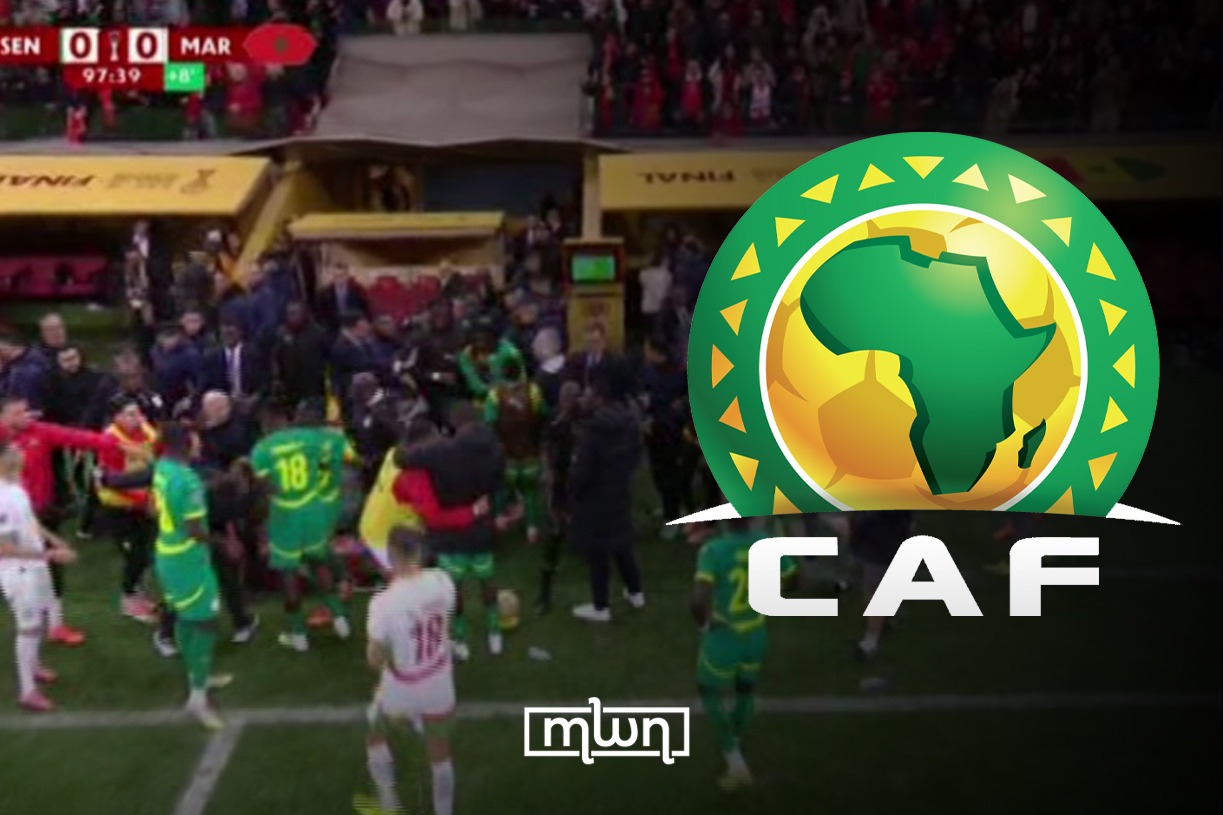
According to Médias24, multiple documents reviewed by CAF describe the same sequence of events late in the match. In the 97th minute, tensions escalated quickly after the referee awarded a penalty awarded to Morocco.
Senegal’s players reacted strongly. The referee’s report notes that, on instructions from head coach Pape Thiaw, the players left the pitch and returned to the dressing room.
The match stopped at that point, and play only resumed several minutes later.
That moment became the turning point of the case.
CAF’s decision focused on that exact sequence. And the official reports all describe not just a protest, but a full interruption of the match after Senegal’s players left the field.
From a regulatory perspective, that detail matters.
Under CAF rules, leaving the pitch without the referee’s authorization triggers automatic consequences. And the return to the field does not cancel what already happened.
Consistent reports across all levels
Indeed, both the referee’s account and other official reports make this exact case.
The match commissioner confirmed that most Senegalese players left the field, forcing a temporary suspension. The general coordinator described strong reactions from players, staff, and substitutes, especially after the VAR decision.
Security reports added further context. They mention attempts by some supporters to approach the pitch and objects being thrown from the stands. The atmosphere became tense, and security teams had to step in to contain the situation.
All in all, these reports do not contradict each other. They instead converge on one key point: the match was disrupted after Senegal’s players left the field.
From protest to regulatory breach
CAF’s ruling does not treat the incident as a simple protest.
Disagreement with refereeing decisions is part of football. Leaving the pitch is not.
That distinction defines the case.
Analyst Samir Bennis has made the same argument in his recent analyses. “The Senegalese team’s conduct amounted to a withdrawal from the field of play,” he recently wrote, pointing to both video evidence and official reports.
Bennis has also stressed that Article 82 of the CAF regulations is clear and cannot be subject to creative interpretations under any circumstances. The article unambiguously stipulates that a team that refuses to play or leaves the pitch without authorization “shall be considered to have lost.”
There is no clause allowing the act to be reversed if the team later returns. There is also no minimum duration required.
In that context, Senegal’s actions fall under both refusal to play and withdrawal, a combination that is difficult to defend from a legal standpoint.
A decision rooted in structure, not narrative
The broader debate around the final has grown beyond the match itself. Different interpretations and narratives continue to circulate as both camps anxiously await the final verdict from the Court of Arbitration for Sport (CAS).
But CAF’s decision follows a structured approach.
It relies on:
- Official match reports
- Consistent accounts from multiple officials
- Clear regulatory provisions
That combination leaves limited room for ambiguity.
As Médias 24’s analysis shows, the reasoning behind the ruling is built step by step, focusing on the rule as written and the facts as documented.
What comes next
The case now moves to the Court of Arbitration for Sport (CAS).
CAS will not revisit the emotions of the match or the controversy around the penalty. It will focus on whether CAF correctly applied its own regulations.
That brings the case back to its core question: what are the consequences when a team leaves the field during a match?
CAF has already answered that question.
And based on the reports and the rules, that answer rests less on interpretation and more on the application of the text itself.
Read also: AFCON Final: Senegal Politicizes CAS Strategy to Offset Legal Weakness
The post CAF’s AFCON Final Decision Built on Reports, Not Preferential Interpretation appeared first on Morocco World News.