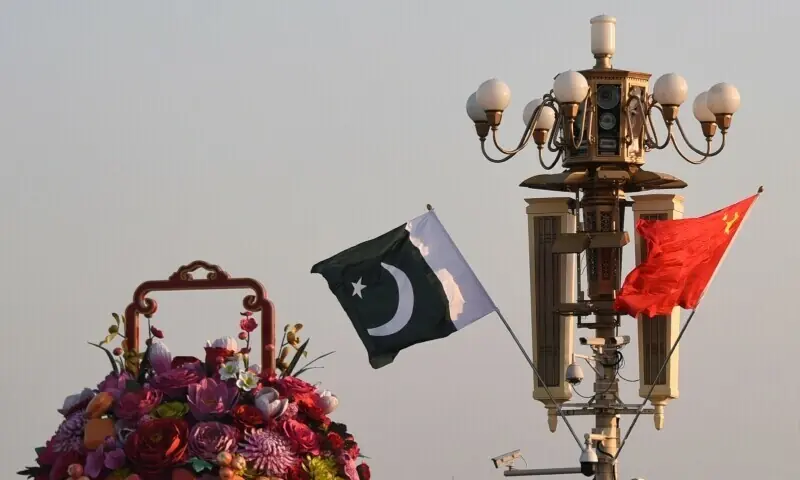
Pakistan and China celebrated the 75th anniversary of the establishment of diplomatic relations on May 21. The events held around these celebrations underscore that the relationship between the two countries is entering a new phase characterised by greater financial integration, expanding sub-national cooperation and renewed geopolitical cooperation.
What began as a strategic and political partnership has gradually evolved into one of Pakistan’s most critical economic relationships. Today, China is one of Pakistan’s largest bilateral creditors, a major investor in infrastructure and energy, and an increasingly important source of financial stability for Islamabad during periods of economic stress.
Against this backdrop, Prime Minister Shehbaz Sharif is visiting China these days in a trip that focuses heavily on trade, industrial cooperation, financial connectivity and the future direction of the China-Pakistan Economic Corridor (CPEC).
“The visit is expected to further strengthen and deepen political trust, strategic coordination, expand political cooperation and consolidate the long-standing friendship between the two countries,” a Pakistan foreign ministry spokesman said at a weekly media briefing.
The growing engagement between Pakistani provinces and Chinese regional governments highlights how bilateral ties are extending at the sub-national level
The premier would begin his tour with a business-to-business conference and meet with the Chinese leadership, including President Xi Jinping and Prime Minister Li Qiang. “The two sides will review bilateral relations, and cooperation in political, economic and strategic domains,” the spokesman said.
Many in Pakistan believe that the geopolitical turbulence in the Middle East has created fresh opportunities for closer regional economic cooperation and alternative financing arrangements centred around China.
Foreign Minister Ishaq Dar’s visit to Beijing in late March amid Islamabad’s intensified diplomatic efforts aimed at easing tensions in the Middle East also underscored the two countries’ growing role as regional diplomatic actors. It highlighted Islamabad’s interest in aligning more closely with China on regional stability and economic security issues.
In that context, the recent issuance of overwhelmingly oversubscribed three-year Panda Bond reflects both economic necessity and strategic recalibration. The initiative has allowed Islamabad to raise yuan-denominated debt directly from Chinese investors, helping diversify its external borrowing sources at a time when access to international capital markets remains constrained and costly.
Therefore, Panda Bond is widely viewed as more than a financing instrument. It represents Pakistan’s broader effort to deepen integration with China’s financial system and reduce dependence on traditional Western financing channels. The recent crisis in the Middle East has further reinforced this thinking by exposing vulnerabilities in global trade routes, energy markets and international capital flows.
The strengthening relationship is also becoming increasingly diversified beyond the federal level. President Asif Ali Zardari visited China last month, where multiple agreements and memorandums of understanding were signed between Sindh and Chinese provincial authorities and businesses. The agreements covered areas ranging from trade and agriculture to urban development, technology and investment cooperation.
The growing engagement between Pakistani provinces and Chinese regional governments highlights how bilateral ties are extending at the sub-national level. Analysts view this trend as particularly significant because it broadens economic cooperation beyond large federal infrastructure projects under CPEC and creates new channels for investment, industrial partnerships and people-to-people connectivity.
At the same time, this renewed warmth in Pakistan-China relations is unfolding amid Islamabad’s parallel diplomatic outreach towards Washington and President Donald Trump. For Islamabad, however, managing this balance remains delicate. While Pakistan seeks stronger economic and diplomatic engagement with Washington, policymakers understand that such outreach cannot come at the expense of its long-standing strategic and economic partnership with Beijing. China remains indispensable to Pakistan’s economic stability, external financing and infrastructure ambitions in ways that few other partners can match.
Beijing’s concerns regarding the security of its assets and the safety of its nationals in Pakistan also continue to shape bilateral ties. Attacks targeting Chinese engineers and workers in recent years have emerged as one of Beijing’s biggest concerns regarding future investment expansion.
Pakistan has undertaken extensive security measures to address this issue. Significant progress has been made in improving the security environment for Chinese workers associated with CPEC and other ventures.
Nevertheless, Chinese investors continue to closely monitor the situation, and many believe more sustained efforts will be necessary if Pakistan hopes to attract larger volumes of Chinese private sector investment beyond state-backed infrastructure financing.
Financial cooperation between the two countries has, in the meantime, continued to expand steadily, though the balance remains heavily tilted in China’s favour.
Seventy-five years after diplomatic relations were established, Pakistan and China now find themselves navigating a rapidly changing global order together. The visit of Prime Minister Shehbaz Sharif, Pakistan’s entry into the Chinese capital market through the Panda Bond issuance, expanding provincial-level cooperation and increasing regional cooperation all point towards a relationship that is becoming more financially integrated, strategically consequential and economically diversified than ever before.
Published in Dawn, The Business and Finance Weekly, May 25th, 2026