⚡ عاجل: كريستيانو رونالدو يُتوّج كأفضل لاعب كرة قدم في العالم●⚡ أخبار عاجلة تتابعونها لحظة بلحظة على خبر●⚡ تابعوا آخر المستجدات والأحداث من حول العالم●
AI اقتراحات ذكية
AI مباشر|--مشاهد مباشر
889,423مقال401مصدر نشط228قناة مباشرة4,385خبر اليوم
آخر تحديث:منذ 0 ثانية
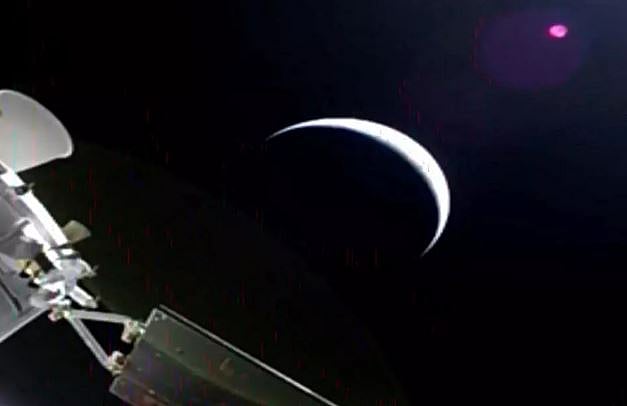
Beyond the Moon: Artemis II astronauts catch epic solar eclipse
The Artemis II crew concluded their lunar flyby with a breathtaking total solar eclipse, visible only from their Orion spacecraft.
The event occurred shortly after the crew made their closest approach to the Moon, just over 4,000 miles away. Communications with Earth were lost for roughly 40 minutes as the spacecraft passed behind the lunar surface.
Stunning views of the Sun’s corona
For nearly an hour, astronauts observed the Sun’s outer atmosphere, the corona, while monitoring for unusual solar activity. NASA geologist Kelsey Young said the crew’s “unique vantage point” allowed them to describe features of the corona to Earth.
All four astronauts used eclipse glasses to safely view the event. Venus appeared as a small white dot against the darkened Moon, alongside Mercury, Mars and Saturn in the distance.
Right now, the Orion capsule is passing behind the Moon, so the Sun is entirely eclipsed from their perspective. During this time, they will view a mostly darkened Moon and will use the opportunity to analyze the solar corona. pic.twitter.com/PWDPfZKxGh
Artemis II also broke Apollo 13’s distance record, reaching 252,756 miles from Earth — more than 4,000 miles farther than Apollo 13. From their unprecedented position, the crew captured images of lunar craters, Apollo 12 and 14 landing sites, and Earthrise, providing scientists and the public with never-before-seen views of the Moon’s far side.
Emotional moments
The astronauts carried Apollo-era memorabilia, including the Apollo 8 silk patch, and received a recorded message from Apollo 13 commander Jim Lovell. Commander Reid Wiseman and his crew shared moments of awe and emotion, reflecting on humanity’s place in the universe while taking in the majestic lunar landscape.
New record
The Artemis II astronauts are now farther from Earth than humans have ever been! At 1:57 p.m. EDT, they broke the record set by Apollo 13 in 1970.
Their journey around the far side of the Moon today will take them a maximum distance of 252,752 miles from Earth. pic.twitter.com/P5Swojpn0n
Artemis II followed a free-return lunar trajectory, similar to Apollo 13, using Earth and Moon gravity to safely return the crew to Earth. The mission lays the groundwork for Artemis III, which will land astronauts near the Moon’s south pole in 2027.
Breaking distance records
The mission set a new distance record, surpassing Apollo 13, reaching 252,756 miles from Earth. The crew also captured breathtaking images of lunar craters, Apollo landing sites, and Earthrise.
Emotional moments and Apollo heritage
Commander Reid Wiseman and the crew carried Apollo-era memorabilia, including the Apollo 8 silk patch. The astronauts shared moments of awe and emotion while navigating the Moon’s surface and capturing historic sights.
Artemis II paves the way for lunar landing
This mission, NASA’s first crewed Moon trip since 1972, lays the groundwork for Artemis III, which will land astronauts near the Moon’s south pole in 2027. The crew’s lunar flyby combined science, exploration, and unforgettable views of the cosmos.
ملاحظة تحريرية | Editorial Note:
نُشر هذا المقال في الأصل بواسطة Gulf News.
خبر (Khabr) هي منصة إعلامية أردنية مرخّصة تعمل بالذكاء الاصطناعي.
نضيف قيمة تحريرية من خلال: تحليل ذكي للأخبار، ملخصات تلقائية، رواية صوتية بالذكاء الاصطناعي، ترجمة متعددة اللغات، وتدقيق الحقائق.
هدفنا جعل الأخبار أكثر وضوحاً وسهولةً للقارئ العربي.
This article was originally published by Gulf News.
Khabr is a licensed Jordanian AI-powered news platform (Registration #82086).
We add editorial value through: AI-powered news analysis, automated summaries, AI audio narration, multi-language translation (Arabic, English, French, Turkish), and AI fact-checking.
Our mission is to make news more accessible and understandable for Arabic-speaking audiences worldwide.
هذا الخبر ضمن تغطية خبر لقسم علوم.
نقدّم لك تحليلات ذكية وملخصات يومية لأهم الأخبار من مصادر موثوقة متعددة.
المصدر: Gulf News.
يوجد 6 مقالات مرتبطة بهذا الموضوع.
This article is part of Khabr's coverage of Science.
We provide AI-powered analysis, summaries, and multi-source aggregation to keep you informed.
Source: Gulf News.
Tags: Artemis II, solar eclipse, space exploration.
🍪 نستخدم ملفات تعريف الارتباط لتحسين تجربتك وعرض الإعلانات المخصصة. باستخدامك للموقع، فإنك توافق على سياسة ملفات تعريف الارتباط وسياسة الخصوصية.
We use cookies to enhance your experience and show personalized ads. By using this site, you agree to our Cookie Policy and Privacy Policy.
🔍
FREEFree 1GB Internet + Free International Calls
$1 trial — eSIM in 190+ countries — No roaming charges