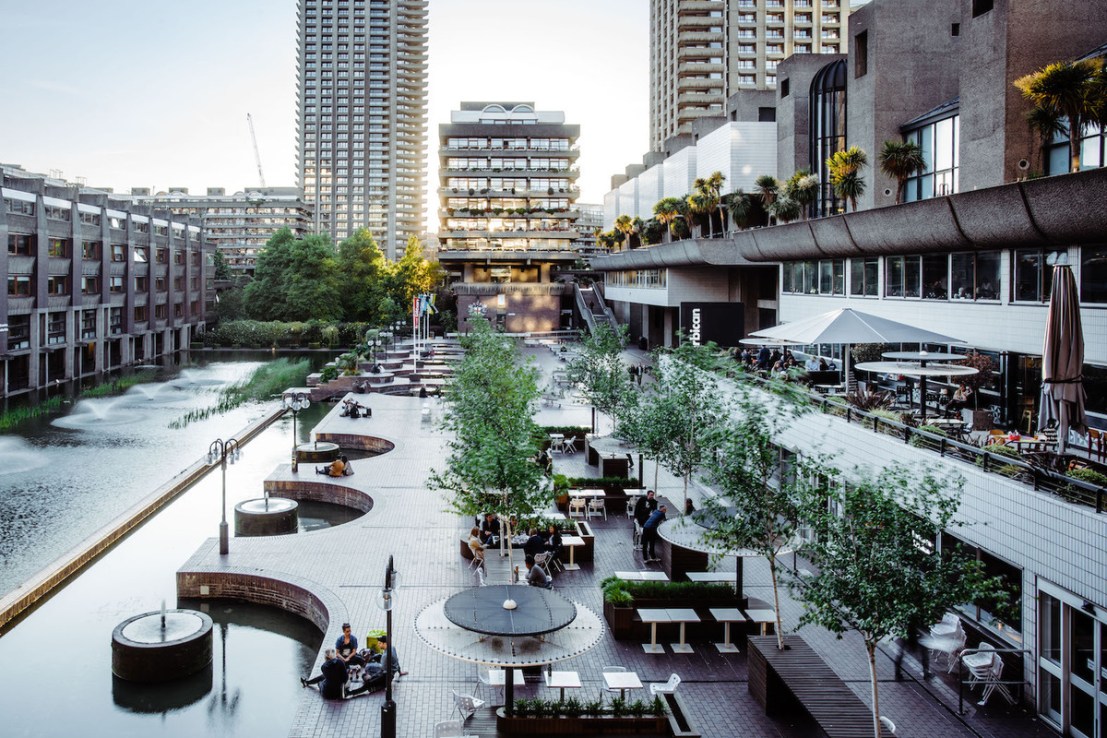
This week SXSW returns to London for its second year. For decades, this festival has brought together music, tech, film and the arts, creating cultural moments and sparking new ideas. The Barbican is proud to be a part of it, hosting a number of world film premieres in the heart of the City. SXSW shares our belief that great things happen when different ways of thinking collide. And like us, SXSW represents a kind of ecosystem, one that turns the city into a venue and makes the location part of the experience.
The Barbican’s partnership with SXSW is exactly the kind of collaboration that cultural institutions like ours need to foster to thrive in the modern world. And while I believe that London is the cultural capital of the world – it’s why I travelled ten thousand miles from Australia to live and work here – I’ve come to view its cultural capital position not as a competition but a partnership. We live in a divided world, and we should be thinking of ways to work together, not against each other.
We should view cities like New York, Paris and Dubai as friends not rivals. They, and countless other cities around the world, are contributors to the same global conversation about arts and culture. It’s a conversation that London, with its venerable institutions, its artists and musicians, its rich history and heritage, should be at the heart of – but we need to remember to look beyond our city to ensure we remain part of the conversation.

Creative partnerships are London’s economic assets
Institutions like ours should create ambitious partnerships that cross borders, sectors and industries, developing connections and creating ecosystems built on sharing information and mutual outcomes. Not only is this one of the most powerful ways of telling the world what London represents – and why people should come here – it’s also one of our most important economic assets.
I grew up and worked in Melbourne, a city whose identity is defined by culture, which believes creativity should be seen and experienced everywhere: in streets and school grounds, in carparks and businesses, in parks and in the workplace. Enjoying creative experiences should not be a luxury – it should be something that enriches everyone.
This idea is shared with the Barbican. Indeed, it’s at the heart of why we were created: as a place where daily life and culture come together, and where art is accessible to everyone. Now 44 years into our journey, we’re investing £231 million into enhancing our building. Our renewal programme isn’t just about restoring our iconic architecture, it’s about reimagining what a space like ours can be. We want to make sure we are more welcoming, more connected and more relevant, for the benefit of future generations as well as people today. We are redefining what we are whilst reigniting our founding purpose. And part of this is working more closely with our cultural neighbours.
The Barbican enters a new phase
This includes the Guildhall School of Music and Drama, the London Archives, the London Museum (which is due to re-open later this year). Together we’re making sure this corner of London is known as much for art as it is finance.
The Barbican is lucky also to have partners such as the London Symphony Orchestra, the Royal Shakespeare Company, Boy Blue and many more. We all share a spirit of collaboration. After all, people travel to London from all over the world to see incredible performances and shows at the Barbican. Working with our partners – in London, nationally and abroad – doesn’t just make the Barbican stronger, it makes London stronger.
The Barbican was built on London’s biggest bomb site. It represents a symbol of optimism and hope, an ambitious post-war vision that culture should sit at the heart of daily life, not just accessible, but welcoming. This is why the idea of working in partnership comes so naturally to us – because it is in this spirit that we were originally created, and it’s in this spirit we will continue to create. We have opened our doors to you, please come on in.