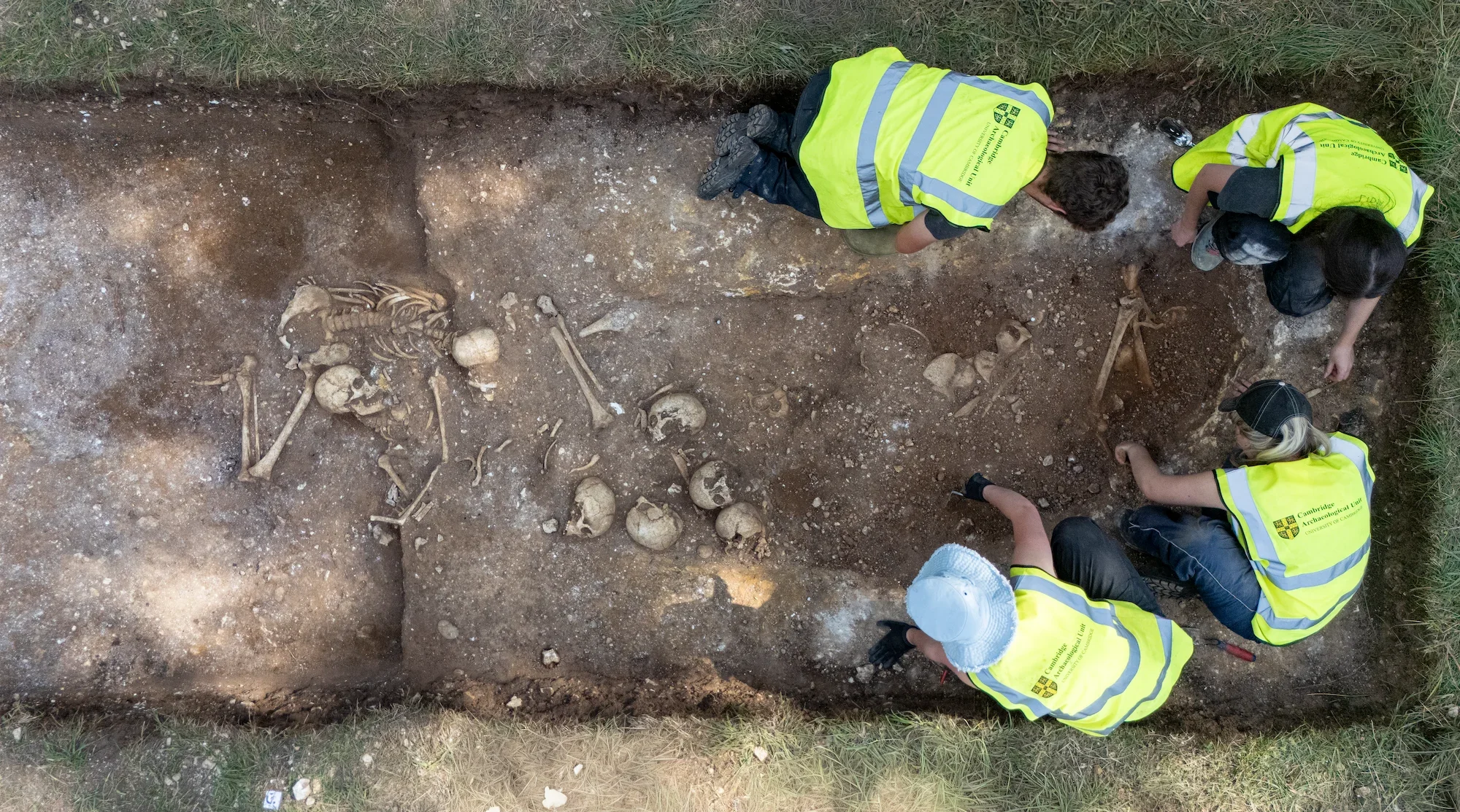
An archaeology student has uncovered a ninth-century Viking grave in Cambridge with an unusually tall skeleton inside.
A routine training excavation conducted by University of Cambridge archaeology students has yielded an extraordinary ninth-century mass burial site at Wandlebury, located just three miles from the city centre.
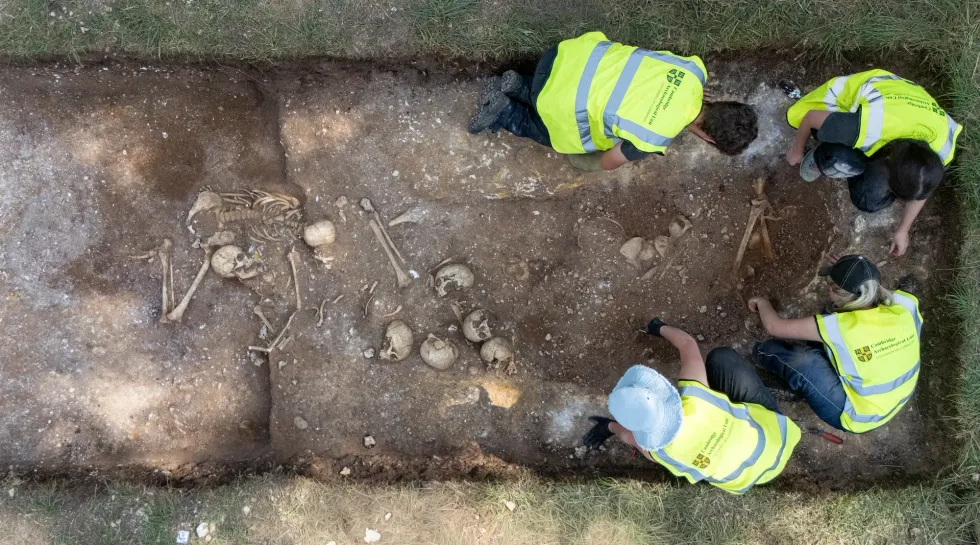
The 2025 dig initially appeared unremarkable before researchers uncovered a burial pit containing the skeletal remains of at least 10 young men, dated through radiocarbon analysis to the era of Viking rule in the region.
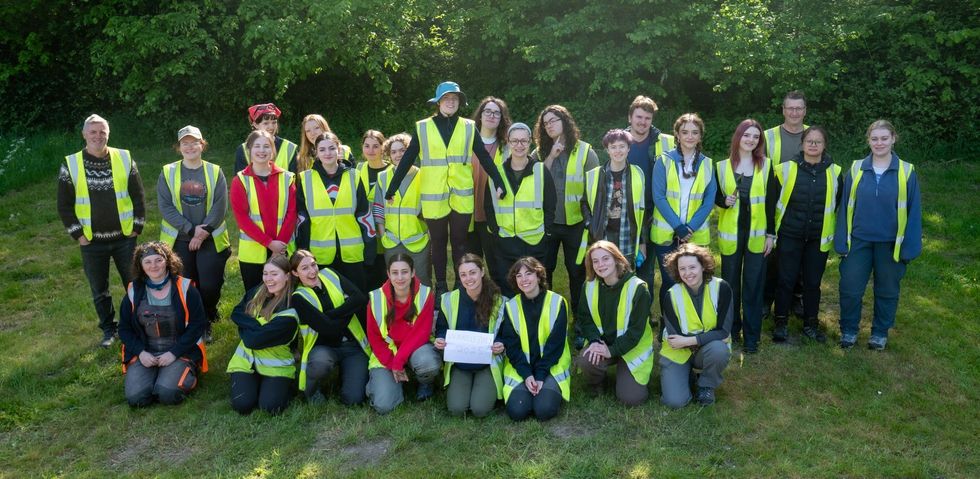
Archaeology undergraduate Olivia Courtney said the dig was not fruitful initially, only finding a "1960s smarties lid".
She said: "I had never encountered human remains on a dig, and I was struck by how close yet distant these people felt. We were separated by only a few years in age but over a thousand years in time."
The skull count within the grave established the minimum number of individuals interred at the site.
Among the remains, one individual stood out dramatically from the rest.
A young man aged between 17 and 24 was found lying face down, measuring an extraordinary six foot five inches tall – nearly a foot above the typical male height of five foot six inches during that period.
His skull bore a one-inch-diameter hole created through trepanation, an ancient surgical technique intended to treat migraines and seizures.
Dr Trish Biers, curator of the Duckworth Collections at Cambridge University, said: "The individual may have had a tumour that affected their pituitary gland and caused an excess of growth hormones.
"Such a condition in the brain would have led to increased pressure in the skull, causing headaches that the trepanning may have been an attempt to alleviate. Not uncommon with head trauma today."
Distinctive features visible in his limb bones supported this diagnosis.
LATEST DEVELOPMENTS
- Shark with face ‘not even mother would love’ spotted at sea by scientists
- Ancient artefacts discovered inside Bronze Age burial mound brings past to life
- Centuries old priceless porcelain discovered on 300-year-old shipwreck
The Wandlebury location held strategic significance during the turbulent ninth century, sitting on the contested border between the Saxon kingdom of Mercia and East Anglia.
Around 874AD, the Viking Great Army captured the town, bringing Cambridgeshire under Scandinavian control.
Evidence of brutal violence marked several remains.
One individual displayed chop marks on his jaw consistent with decapitation, whilst others appeared to have been bound together before death.
The grave contained a chaotic mixture of complete skeletons and scattered body parts, including isolated skulls, a pile of leg bones, and four intact corpses.
Dr Oscar Aldred, from the university, suggested the deceased "could of been recipients of corporal punishment".
He said: "Those buried could have been recipients of corporal punishment, and that may be connected to Wandlebury as a sacred or well-known meeting place."
The disarticulated parts may have been displayed as trophies before burial, the academic continued.
Dr Aldred noted beyond the beheading evidence, few signs indicated deliberate dismemberment, leading him to conclude the body parts were likely decomposing when placed in the pit.
"Cambridgeshire was a frontier zone between Mercia and East Anglia, and the continual wars between Saxons and Vikings as they clashed over territory across many decades," he said.
"We suspect the pit may relate to these conflicts."
No artefacts accompanied the bones to help pinpoint a more precise date.
Historic England intends to commission fresh geophysical surveys of the surrounding area, whilst Cambridge researchers will conduct DNA and isotopic analysis to examine health, family connections, and ancestry.
Our Standards: The GB News Editorial Charter