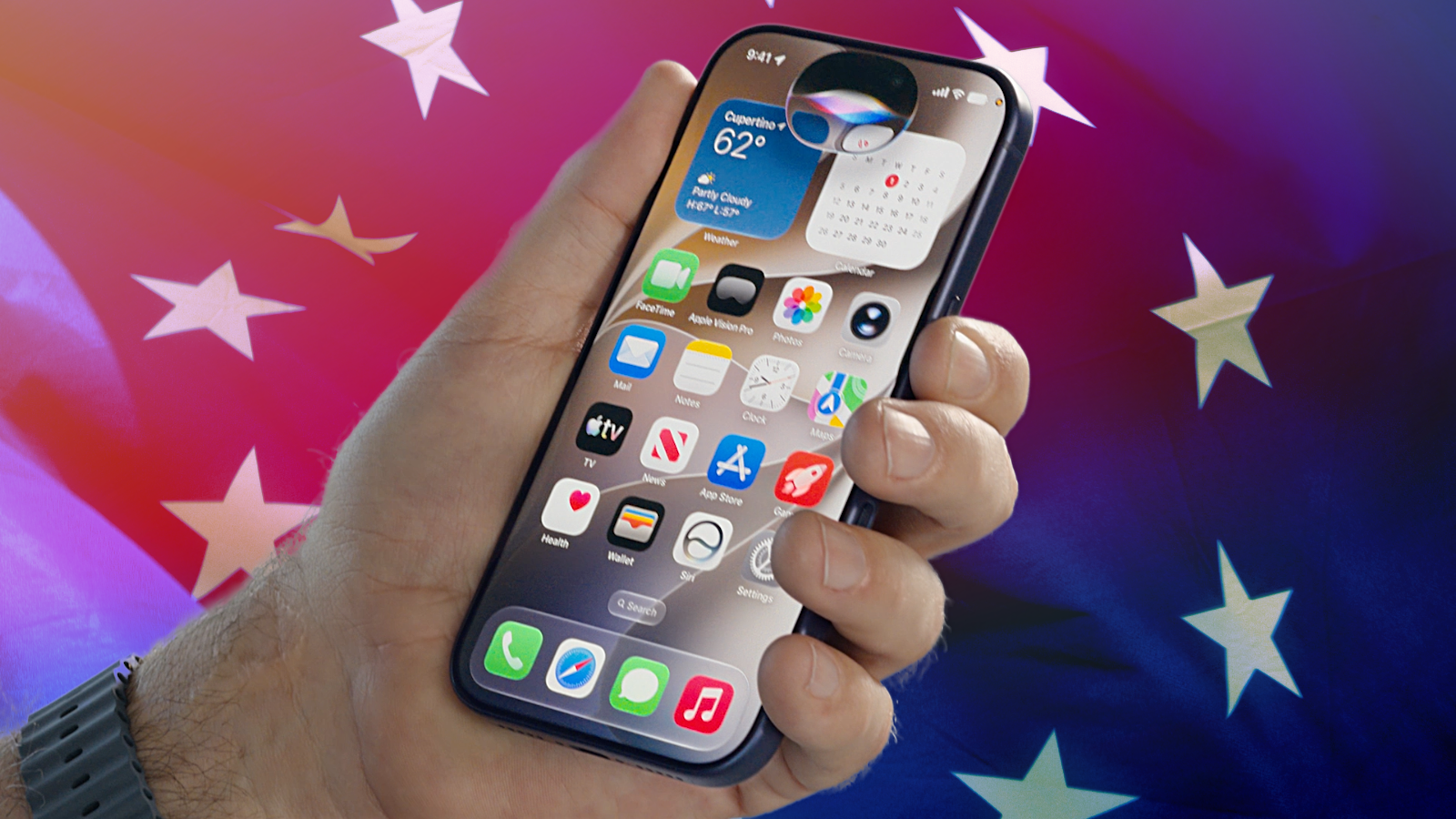
iPhone and iPad owners living in the European Union will miss out on the all-new Siri AI announced this week at Apple's Worldwide Developer Conference. The Californian company has called out the Digital Markets Act (DMA) for delaying the rollout of new features, something that it previously warned could be an unintended consequence.
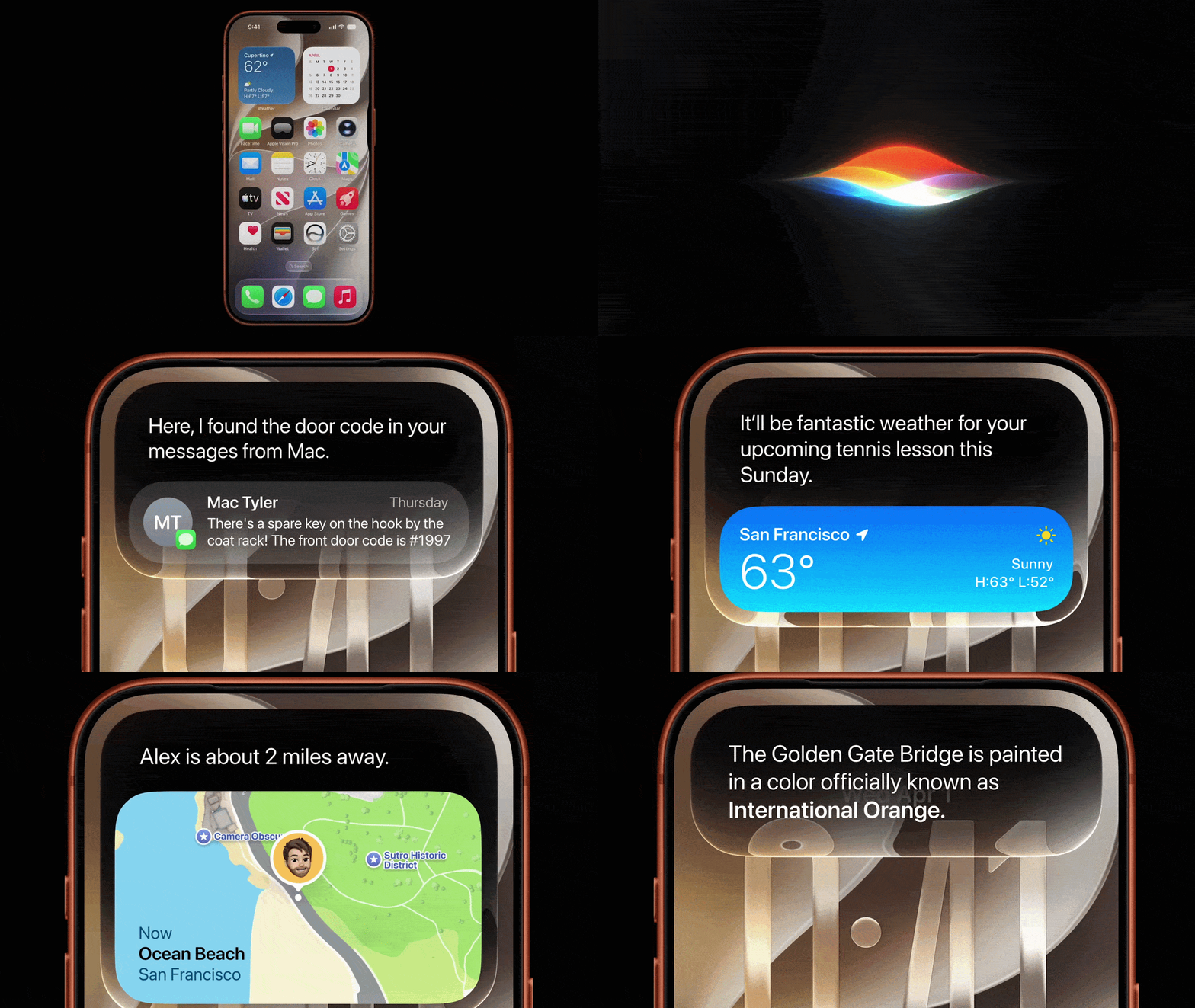
Siri AI has been rebuilt from the ground up to take advantage of new Artificial Intelligence (AI) models, letting you ask complex general knowledge questions, as well as personal queries about photos, emails, and text messages stored on your device — a first for the talkactive AI that's been preinstalled on every iPhone since 2011.
Apple will release the all-new Siri with its latest operating systems sometime this autumn, following an extension period of beta testing, but anyone living in the 27 European Union member states will miss out.
Apple Senior Vice President of Software Engineering, Craig Federighi, said: "We’re deeply disappointed that our EU users won’t have Siri AI on iPhone or iPad when we share our new software releases later this year.
"Our hope is to eventually bring Siri AI to the EU, and we will continue to engage with EU regulators on a path forward. However, their refusal to engage constructively on solutions that preserve privacy and security means we do not currently have a timeline for Siri AI’s availability on iOS and iPadOS in the EU."
Good news for Brits: all of Apple's shiny new Siri AI tricks are heading to the UK. That's thanks to Brexit, which left Britain outside the reach of new EU tech rules — meaning the regulations being pushed by Brussels' 27 member states won't stand in the way.
While the Competitions and Markets Authority (CMA) in the UK has adopted some of the same rules as the Europeans — something that many believed could lead to British users missing out on the sorts of cutting-edge features and functionality ahead of the implementation — that hasn't happened this time around.
LATEST DEVELOPMENTS
- Meet Siri AI, Apple's unrecognisable new AI assistant that can answer ANY question
- Update your old iPhone and enjoy up to 80% speed boost for free
- Apple unveils slew of expanded child safety features
The Competition and Markets Authority has not forced Apple to open-up any specific technologies. According to Apple, the Brits have engaged in conversations about the importance of privacy and security — ensuring that personal information entrusted on these devices, like photographs, emails, text messages, notes, health data, and much more, remains under strict end-to-end encryption.
The CMA did get Apple to agree to several commitments designed to make its ecosystem less of a closed box for developers. It's hoped this will afford new opportunities to teams working in the UK to develop new software that works on iPhone, iPad, Mac, and others.
For those who don't know, the DMA was cooked up by the European Commission to impose a list of do's and don'ts on the biggest online platforms, dubbed "gatekeepers" in the legislation. The law was an effort to stop these brands from unfairly locking-in users or squeezing businesses that rely on them. The six gatekeepers identified by EU lawmakers are: Amazon, Google's parent company Alphabet, TikTok owner ByteDance, Meta, Microsoft, and Apple.
European lawmakers have taken issue with the so-called "walled garden" employed by Apple, which is responsible for both the software and hardware of its products. That's very different from Google, which develops the Android operating system used on handsets built by Samsung, Xiaomi, and Motorola, to name just a few.
Confusingly, when it comes the smartphone martket, Apple is deemed a gatekeeper by the Europeans, but that isn't the case for its MacBooks, iMac, or Vision Pro headset.
That means the same Siri AI features that won't be available on iPhone will be accessible from a Mac in Europe. Of course, it's just everyday users who'll feel the impact. Developers based in the EU won't be able to test or use any of the new Siri AI features for their apps on iOS and iPadOS platforms.
The next-generation Siri update is able to scour through the hundreds of thousands of text messages, emails, photographs, and notes stored on your devices to personalise its responses — pulling relevant information and tailoring its tone to match yours.
Apple has stressed that all of your personal data will remain private, with most processing done on the system-on-a-chip inside the iPhone, iPad, and Mac itself or through its Private Cloud Compute system, which leverages powerful servers to crunch complex requests without allowing anyone — not even Apple itself — to see the data.
Developers can update their applications on iPhone, iPad, and Mac so that Siri AI can draw out information to use as part of these new multi-step requests. For example, you could ask the chatty AI to plot an itinerary for a city break that includes the restaurant recommendations sent in text messages from a family member.
However, the DMA's interoperability stipulation means Siri should have deeper access to the system, with the ability to act autonomously without ongoing user visibility or control, EU regulators state. That would mean AI assistants could read and send messages, make purchases, access files, and execute actions across apps, Apple claims.
In a bid to launch Siri AI in the European Union at the same time as other markets, Apple told regulators it could introduce an intermediary over 18 months that would allow other assistants to access the same features and capabilities as Siri AI in a way that doesn't impact privacy and security, but the request was turned down.
In a blog post on its website, Apple states: "Apple will continue working to bring these features to the European Union as safely as possible. However, given the clear dangers to EU users and the regulators’ failure to acknowledge these risks, there is currently no timeline for Siri AI’s availability in the EU on iOS and iPadOS."
In response to the announcement at WWDC, EU Commission spokesperson Thomas Regnier responded: "The decision not to roll out Siri AI in the EU is Apple's and Apple's only.
"Apple was simply unable to develop interoperability solutions that meet essential EU privacy and security standards. Instead of trying to find a suitable compliance solution, Apple simply made a request to the European Commission to be exempted from its interoperability obligations under the DMA – and this for at least 18 months. That's not an option."
Europe accounted for nearly 27% of total sales for Apple in the last fiscal year. However, the company does not break out sales for EU countries.
Our Standards: The GB News Editorial Charter