Anti-war protests rock Japan as PM pushes for stronger defence
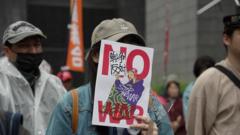
Anti-war protests rock Japan as PM pushes for stronger defenceJust nowShareSaveAdd as preferred on GoogleKurumi MoriTokyo correspondentBBC News: Jiro AkibaOn a Tokyo street corner, in the pouring rain, a swelling crowd gathered with drenched placards and sodden flags. On one of them was written just two words, in big bold Japanese kanji characters: "No War".It's a sentiment that is gaining more and more volume in Japan, which is currently witnessing its largest anti-war protests in decades.Since coming to power in October 2025, Japanese Prime Minister Sanae Takaichi has taken major steps away from the country's post-war pacifist stance, lifting long-standing restrictions on arms exports and expanding Japan's military role abroad. The government says such moves are necessary in an increasingly tense region. But for many residents, it's raising alarm.As fears grow that Japan is becoming a war-capable nation, protests are gaining momentum.Public protests in Japan tend to be relatively restrained. There's a strong cultural understanding of social harmony and not causing disruption. So when people do take to the streets in large numbers, it usually signals something deeper.This time, the issue is Japan's national identity.The PM pushing for changeAfter World War Two, Japan adopted the constitution, including Article 9, which prohibits the maintenance of armed forces and renounces war as a right of sovereignty.Now, Takaichi says this framework no longer reflects reality. Geographically, Japan sits in a challenging neighbourhood with an assertive China, an unpredictable North Korea, and Russia nearby. And the United States, its closest ally, has been encouraging Tokyo to play a more active security role.She's not the first Japanese leader to push for changes to Japan's postwar security framework.Getty ImagesOver the past few decades, conservative leaders, most notably from the ruling Liberal Democratic Party, have called fo...المصدر: BBC News | Source: BBC News
ملاحظة تحريرية | Editorial Note: نُشر هذا المقال في الأصل بواسطة BBC News. خبر (Khabr) هي منصة إعلامية أردنية مرخّصة تعمل بالذكاء الاصطناعي. نضيف قيمة تحريرية من خلال: تحليل ذكي للأخبار، ملخصات تلقائية، رواية صوتية بالذكاء الاصطناعي، ترجمة متعددة اللغات، وتدقيق الحقائق. هدفنا جعل الأخبار أكثر وضوحاً وسهولةً للقارئ العربي.
This article was originally published by BBC News. Khabr is a licensed Jordanian AI-powered news platform (Registration #82086). We add editorial value through: AI-powered news analysis, automated summaries, AI audio narration, multi-language translation (Arabic, English, French, Turkish), and AI fact-checking. Our mission is to make news more accessible and understandable for Arabic-speaking audiences worldwide.