⚡ عاجل: كريستيانو رونالدو يُتوّج كأفضل لاعب كرة قدم في العالم●⚡ أخبار عاجلة تتابعونها لحظة بلحظة على خبر●⚡ تابعوا آخر المستجدات والأحداث من حول العالم●
AI اقتراحات ذكية
AI مباشر|--مشاهد مباشر
1,078,270مقال401مصدر نشط228قناة مباشرة4,048خبر اليوم
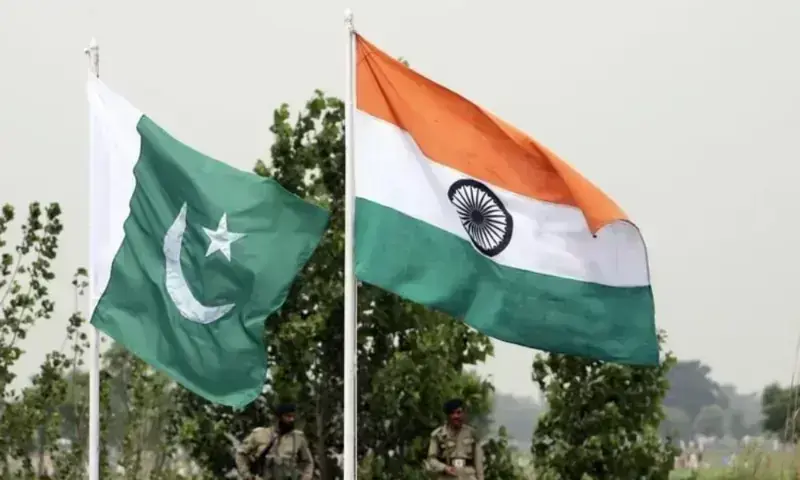
•• Pakistan-India ties still trapped by Delhi’s intransigence, US failure to create political process after ceasefire• Islamabad’s institutional coherence shattered New Delhi’s illusions it was dealing...
•While neither India nor Pakistan got what they expected from the flare-up of 2025, very few could have predicted that less than a year later, it would be Pakistan that emerged as the diplomatic lynchp...
•Today, the relationship between the two neighbours remains frozen in an unusually rigid state; there is no war, but there is no diplomacy worth the name, either.
هذا الخبر من Dawn. خبر يقدم أدوات ذكاء اصطناعي للتلخيص والترجمة والاستماع.
• Pakistan-India ties still trapped by Delhi’s intransigence, US failure to create political process after ceasefire • Islamabad’s institutional coherence shattered New Delhi’s illusions it was dealing with ‘weak neighbour’ • Water war takes centre stage as Indus treaty remains ‘unilaterally held in abeyance’
THE fighting lasted barely 90 hours, but the political consequences have proved far more durable.
While neither India nor Pakistan got what they expected from the flare-up of 2025, very few could have predicted that less than a year later, it would be Pakistan that emerged as the diplomatic lynchpin in the region, while India remained relegated to the side-lines.
Today, the relationship between the two neighbours remains frozen in an unusually rigid state; there is no war, but there is no diplomacy worth the name, either. The border is shut, trade is suspended and the Indus Waters Treaty remains unilaterally held in abeyance by New Delhi.
Military hotlines between the two countries are functioning, but they are emergency mechanisms rather than channels of engagement.
The resulting situation is not that of stability in the conventional sense, but a colder equilibrium sustained by deterrence, mistrust and the absence of political alternatives.
At the time the US facilitated ceasefire was announced, there was an understanding — at least according to US Secretary of State Marco Rubio’s announcement — that military de-escalation would be followed by talks at a neutral venue.
The US role for crisis management had been unusually visible and President Donald Trump publicly claimed credit for helping secure the ceasefire. So, there was a strong hope for a structured engagement between the two sides when the conflict ended.
But that process never materialised; India quickly rejected any suggestion of external mediation and insisted that the ceasefire understanding emerged through direct communication at the level of the two directors general of military operations.
It did so because New Delhi had long opposed internationalisation of the Kashmir dispute, and Trump’s public handling of the episode caused disquiet in Indian official circles.
Pakistan, meanwhile, believed that the conflict had restored a measure of strategic balance and that the post-war environment would generate a diplomatic momentum leading to improvement in the relationship and some semblance of normalisation.
But things did not turn out that way, mostly because Washington — after helping stop the fighting — had not invested sustained diplomatic capital in building a political framework around the ceasefire.
The impression left behind was that the US could help stop wars in South Asia, but may no longer possess either the leverage or the appetite to sustain a structured peace process afterwards.
India’s loss, Pakistan’s gain
Indian resistance to any formal mediatory role, meanwhile, further weakened the possibility of follow up diplomacy.
Besides Delhi’s refusal to accept any external mediation on the Kashmir dispute, Indian strategic thinking before May 2025 viewed Pakistan as a state weakened by internal instability, economic distress and persistent terrorist violence.
Therefore, the widening asymmetry in economic size, diplomatic influence and military modernisation encouraged a belief that India no longer needed engagement with Pakistan, and could manage the relationship through pressure, coercive signalling and diplomatic isolation instead.
The conflict, especially the way it ended, complicated that assumption.
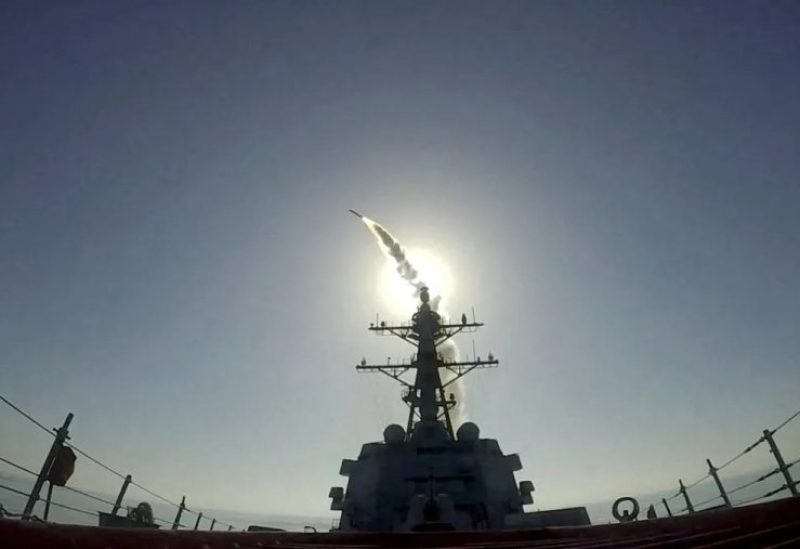
Pakistan, to the surprise of many, demonstrated a great degree of institutional coherence during the crisis, absorbing military pressure, maintaining escalation control and mounting a coordinated response involving drones, missiles and air power. The conflict produced a narrative that Pakistan was strategically resilient, despite its internal difficulties.
Equally important, the crisis restored Pakistan’s geopolitical relevance. US engagement intensified during the conflict; China, Turkiye and Iran publicly backed Islamabad diplomatically and Gulf states quietly remained involved in de-escalation efforts.
Islamabad then went on to use the post-war period to improve its diplomatic visibility, particularly as regional tensions surrounding Iran later increased international interest in Islamabad’s intermediary role.
But none of this fundamentally altered the broader asymmetry between India and Pakistan. India still retains overwhelming long term advantages in economic weight and global positioning, but the conflict shattered the assumption, both in Delhi and around the world, that Pakistan had become “strategically irrelevant”.
An Indian military analyst, who has a good understanding of the Modi government’s thinking on foreign policy and security matters, told Dawn, “India is still operating on the assumption that that the asymmetry continues to favour it, though some important lessons were learnt from the conflict.”
Policymakers, he said, continue to believe that long-term geopolitical and economic trends remain firmly in India’s favour.
That explanation sums up the prevailing situation, where even after strategic recalibration, India has shown little interest in re-engagement with Pakistan.
Lack of engagement
Part of the reason for the India intransigence lies in its domestic politics, where engagement with Pakistan carries political costs.
In this situation, India prefers crisis management over structured dialogue.
Dr Moeed Yusuf, a former national security adviser, believes the present arrangement cannot hold indefinitely. “It is only sustainable till you don’t have the next crisis,” he said, arguing that the absence of political engagement leaves both sides vulnerable to another sudden confrontation.
He said India’s domestic political environment and years of anti-Pakistan narratives had narrowed the space for reconciliation, adding that while improving ties was essential for regional development, he was “not at all optimistic at this point”.
Moreover, the issue of unfounded terrorism allegations also remains central to that paralysis. India keeps the terrorism bogey alive and continues to maintain that meaningful improvement in relations is difficult without addressing its “concerns”.
Pakistan rightfully rejects those accusations, of which India has failed to provide any evidence, and argues that it has itself paid a heavy price over the past two decades in fighting militancy and terrorism.
Islamabad’s consistent position has been that sustained dialogue remains necessary precisely because of these disputes and risks. But the Indian hard line on the issue has narrowed the diplomatic space even further after the May 2025 conflict demonstrated how quickly such incidents can trigger wider military escalation.
In the absence of formal diplomacy, unofficial channels have continued to function quietly.
Over the past year, there have been periodic reports of Track 1.5 and Track 2 interactions involving retired officials, academics and policy interlocutors in places such as London, Muscat, Doha and Bangkok. These contacts have limited utility, but preserve communication during periods of estrangement and allow both sides to quietly test ideas and assess intentions.
After Kashmir, water becomes new front
Meanwhile, an important shift has quietly taken place in the substance of the bilateral dispute itself.
Kashmir remains unresolved and politically central, but has receded from active diplomacy after the conflict. In its place, water security has emerged as perhaps the most immediate and dangerous point of friction.
India’s decision to place the Indus Waters Treaty in abeyance marked a significant departure from past practice, since the treaty had survived nearly all previous wars and crises. Pakistan viewed the move as the “weaponisation of water” and warned that interference with the Indus system threatens millions dependent on agriculture, irrigation and hydropower.
Climate pressures and long term water insecurity have made the issue even more sensitive.
Former Federal Flood Commission chairman Ahmed Kamal said Pakistan had recently raised concerns with India over reduced flows in the Chenab. “Future cooperation on water security issue rests with India and would be determined by how it responds to Pakistan’s concern,” he said recalling that Pakistan’s commissioner for Indus waters recently took up the matter with India.
Ironically, however, water may also become one of the few issues capable of forcing limited engagement in the future. Even governments unwilling to resume broader political dialogue may eventually find it difficult to indefinitely avoid technical coordination over river flows, treaty obligations and data-sharing mechanisms.
While the space for comprehensive dialogue currently appears unlikely, narrower and more technical contacts involving water management, ceasefire stabilisation, crisis communication, humanitarian issues and limited security understandings may still be possible.
Outside actors including the US, Gulf states or European governments could potentially facilitate such engagement quietly with-out formally mediating the broader dispute.
None of this would resolve the underlying political conflict, but may help reduce the risk of another uncontrolled crisis in a region where trust has sharply eroded.
ملاحظة تحريرية | Editorial Note:
نُشر هذا المقال في الأصل بواسطة Dawn.
خبر (Khabr) هي منصة إعلامية أردنية مرخّصة تعمل بالذكاء الاصطناعي.
نضيف قيمة تحريرية من خلال: تحليل ذكي للأخبار، ملخصات تلقائية، رواية صوتية بالذكاء الاصطناعي، ترجمة متعددة اللغات، وتدقيق الحقائق.
هدفنا جعل الأخبار أكثر وضوحاً وسهولةً للقارئ العربي.
This article was originally published by Dawn.
Khabr is a licensed Jordanian AI-powered news platform (Registration #82086).
We add editorial value through: AI-powered news analysis, automated summaries, AI audio narration, multi-language translation (Arabic, English, French, Turkish), and AI fact-checking.
Our mission is to make news more accessible and understandable for Arabic-speaking audiences worldwide.
هذا الخبر ضمن تغطية خبر لقسم سياسة.
نقدّم لك تحليلات ذكية وملخصات يومية لأهم الأخبار من مصادر موثوقة متعددة.
المصدر: Dawn.
يوجد 6 مقالات مرتبطة بهذا الموضوع.
This article is part of Khabr's coverage of Politics.
We provide AI-powered analysis, summaries, and multi-source aggregation to keep you informed.
Source: Dawn.
Tags: conflict, analysis, peace.
🍪 نستخدم ملفات تعريف الارتباط لتحسين تجربتك وعرض الإعلانات المخصصة. باستخدامك للموقع، فإنك توافق على سياسة ملفات تعريف الارتباط وسياسة الخصوصية.
We use cookies to enhance your experience and show personalized ads. By using this site, you agree to our Cookie Policy and Privacy Policy.
🔍
FREEFree 1GB Internet + Free International Calls
$1 trial — eSIM in 190+ countries — No roaming charges