⚡ عاجل: كريستيانو رونالدو يُتوّج كأفضل لاعب كرة قدم في العالم●⚡ أخبار عاجلة تتابعونها لحظة بلحظة على خبر●⚡ تابعوا آخر المستجدات والأحداث من حول العالم●
AI اقتراحات ذكية
AI مباشر|--مشاهد مباشر
1,082,675مقال401مصدر نشط228قناة مباشرة4,065خبر اليوم
آخر تحديث:منذ ثانيتين
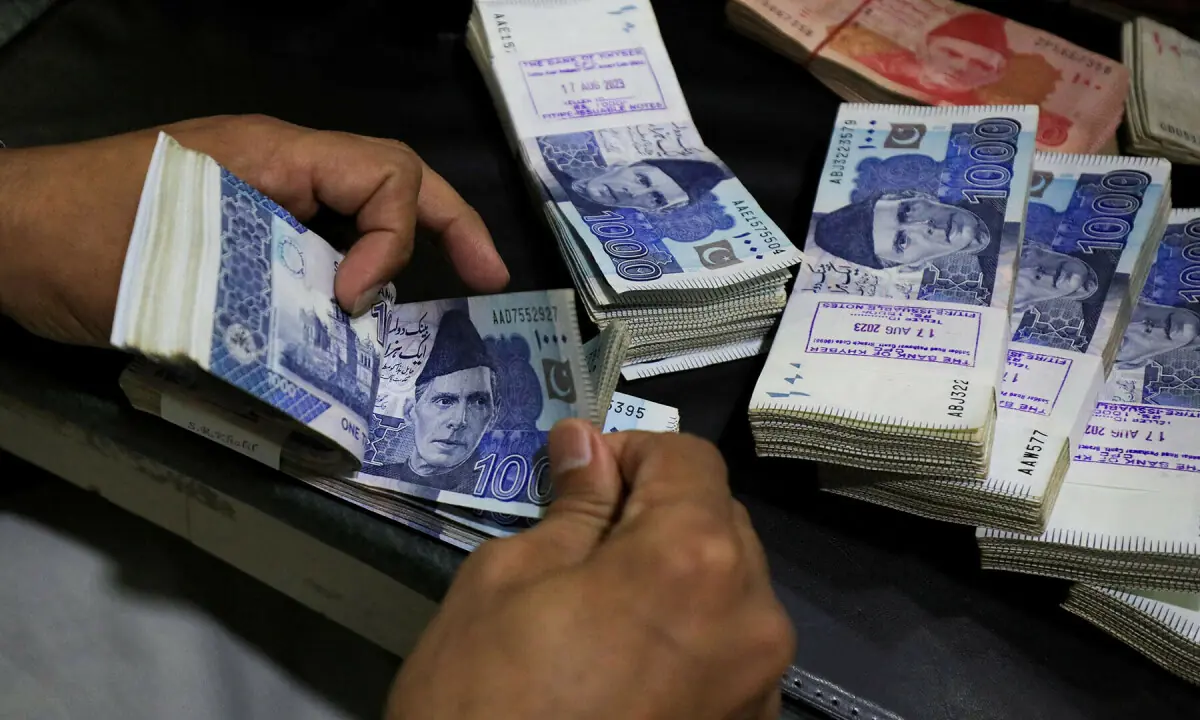
Analysis: BUDGET 2026-27: Budget battles: who really shapes country’s finances?
•THE budget is a tug-of-war between different interest groups.
•On one hand, there is explicit lobbying by various business groups and industry bodies that commission reports, hold events and engage policymakers.
•These organisations, explains Dr Ali Hasanain, associate professor of economics at Lums, also meet political party leaders and bureaucrats in both formal and private settings to communicate their conc...
هذا الخبر من Dawn. خبر يقدم أدوات ذكاء اصطناعي للتلخيص والترجمة والاستماع.
THE budget is a tug-of-war between different interest groups. On one hand, there is explicit lobbying by various business groups and industry bodies that commission reports, hold events and engage policymakers.
These organisations, explains Dr Ali Hasanain, associate professor of economics at Lums, also meet political party leaders and bureaucrats in both formal and private settings to communicate their concerns and policy preferences.
This is broadly in line with how businesses operate globally. For example, US President Donald Trump’s top backer in the last election was investor Timothy Mellon, who gave $150 million to Make America Great Again, Inc., followed by Elon Musk, who gave $118.6m.
But while lobbying and formal influence exist everywhere, the distribution of power is far less orderly in Pakistan. No single player is all-powerful, though wealth is concentrated in relatively few hands. Instead, policy becomes outcome of fragmented pressure from multiple directions.
The big boss may be IMF, but Pakistan remains a sovereign nation, not a subject of the Fund
In Pakistan’s case, this fragmentation is further constrained by an external anchor: the IMF. Under successive programmes, Pakistan is required to meet a long list of targets. Yet within those constraints, governments tend to follow the path of least resistance, typically raising taxes on those already in the tax net rather than expanding it. This tendency is reinforced by a deeper structural weakness: the lack of strong feasibility studies for projects. Plans are often undertaken without adequately accounting for inefficiencies, bureaucratic incompetence, weak political leadership and changing political equations, he says.
‘Noise’ from lobbies
On the one hand, there are concentrated lobbies; on the other, there is the politics of visibility, the ‘noise makers’.
Take retailers and wholesalers, for instance. They remain among the country’s most undertaxed sectors and have repeatedly been identified by the IMF as areas requiring reform. Yet, even the latest small trader scheme is less a tax reform than a negotiated settlement.
“Combined together, they can make a lot more noise than your typical person” and therefore can remain broadly outside the tax net, points out Ammar Habib Khan, assistant professor of practice at IBA, Karachi.
He cites solar net metering as another classic example of the power of noise. “There are only about 400,000 net-metering users, but they can make so much noise that the government finds it difficult to make a reasonable decision,” he says.
“Globally, the transition from net metering to net billing is fairly standard. However, policymakers struggle to make that decision because many of the people affected are wealthy, influential and belong to powerful families.”
This creates a second-order distortion in the process: not just who has formal access to power, but who can raise the political cost of change.
The IMF influence equation
Pakistan’s role on the global chessboard is defined by more than just its GDP.
The nuclear-armed state shares borders with Afghanistan, India, Iran and China while also close to Russia and key Gulf chokepoints. It is one the most densely populated countries, and an important part of the Muslim world.
The United States is the largest single member of the IMF, with the highest financial contribution and voting power. The Fund has a lending capacity of roughly $1 trillion. By comparison, what the US economy produces in about a week — roughly $570 billion — exceeds Pakistan’s annual GDP of approximately $452bn.
Against that backdrop, a $7bn IMF programme, staggered over three years and repayable with interest, is small in financial terms but significant in terms of influence. It is a low-cost, high-leverage exposure to a strategically important state.
The big boss may be the IMF, but Pakistan remains a sovereign nation, not a subject of the Fund. As a lender of last resort, the IMF steps in when a country faces a severe financial crisis.
“When the lender comes to collect, whether you pay it off by selling your wife’s jewellery, dipping into your savings, or using your son’s tuition fund is up to you. The lender’s job is to collect,” Dr Hasnain explains, arguing that while the goals may belong to IMF, the mechanisms belong to Pakistan.
ملاحظة تحريرية | Editorial Note:
نُشر هذا المقال في الأصل بواسطة Dawn.
خبر (Khabr) هي منصة إعلامية أردنية مرخّصة تعمل بالذكاء الاصطناعي.
نضيف قيمة تحريرية من خلال: تحليل ذكي للأخبار، ملخصات تلقائية، رواية صوتية بالذكاء الاصطناعي، ترجمة متعددة اللغات، وتدقيق الحقائق.
هدفنا جعل الأخبار أكثر وضوحاً وسهولةً للقارئ العربي.
This article was originally published by Dawn.
Khabr is a licensed Jordanian AI-powered news platform (Registration #82086).
We add editorial value through: AI-powered news analysis, automated summaries, AI audio narration, multi-language translation (Arabic, English, French, Turkish), and AI fact-checking.
Our mission is to make news more accessible and understandable for Arabic-speaking audiences worldwide.
هذا الخبر ضمن تغطية خبر لقسم اقتصاد.
نقدّم لك تحليلات ذكية وملخصات يومية لأهم الأخبار من مصادر موثوقة متعددة.
المصدر: Dawn.
يوجد 6 مقالات مرتبطة بهذا الموضوع.
This article is part of Khabr's coverage of Economy.
We provide AI-powered analysis, summaries, and multi-source aggregation to keep you informed.
Source: Dawn.
Tags: budget, finances, analysis.
🍪 نستخدم ملفات تعريف الارتباط لتحسين تجربتك وعرض الإعلانات المخصصة. باستخدامك للموقع، فإنك توافق على سياسة ملفات تعريف الارتباط وسياسة الخصوصية.
We use cookies to enhance your experience and show personalized ads. By using this site, you agree to our Cookie Policy and Privacy Policy.
🔍
FREEFree 1GB Internet + Free International Calls
$1 trial — eSIM in 190+ countries — No roaming charges