Africa pushes for reparations after UN slavery resolution
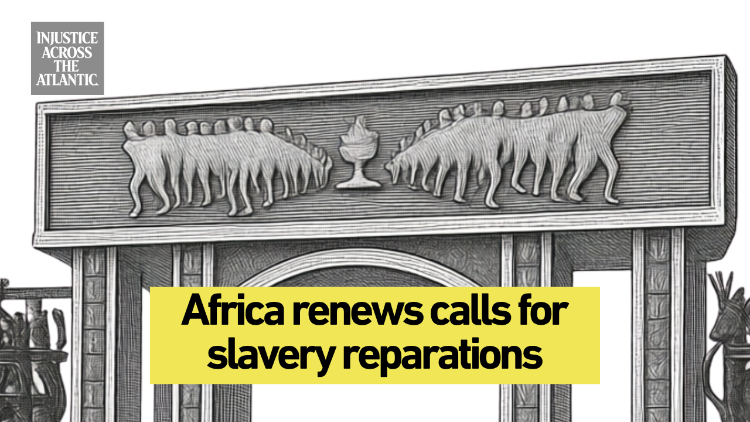
المصدر: CGTN EN | Source: CGTN ENEditor's Note: This series, Injustice Across the Atlantic, examines the harrowing history and enduring legacy of the transatlantic slave trade. Over four centuries, millions of Africans were forcibly uprooted, subjected to unimaginable brutality, and transported across continents to fuel European colonial economies. The consequences of this history continue to shape social, economic, and political inequalities today.
Calls are growing across Africa for Western nations to acknowledge and take responsibility for their role in the transatlantic slave trade, following a landmark United Nations General Assembly resolution.
Adopted on March 25, the resolution formally recognizes the transatlantic trade in enslaved Africans and the system of racialized slavery it created as the “gravest crime against humanity.” While not legally binding, experts say it marks a significant step in the global push for recognition and reparative justice.
The move comes amid efforts by the African Union to develop a unified position among its 55 member states on what reparations for slavery should entail.
“Through the resolution, this very, very painful part of African history is being given the attention it deserves,” said historian Hassoum Ceesay. “For too long, this has been left to historians… now, at the international diplomatic level, this crime is being addressed.”
A total of 123 countries supported the motion, while all European Union member states and the United Kingdom abstained, citing legal and financial concerns. The United States voted against it.
Legacy of exploitation
The transatlantic slave trade, which lasted nearly four centuries, saw millions of Africans forcibly transported to the Americas. According to the United Nations, the system played a central role in building plantation economies in the Americas and driving the rise of European industrial powers.
Historians argue that while Europe and the Americas benefited economically, Africa suffered population loss, economic decline, and long-term social disruption.
The main European powers involved in the trade included Portugal, Spain, Britain, France, and the Netherlands, according to UN records.
African leaders and scholars say the economic prosperity of Western nations was built in part on the exploitation of enslaved Africans, with consequences still visible today in global inequality and systemic racism.
However, some Western governments argue that present-day states should not be held accountable for historical actions.
Renewed push for reparations
Despite differing views, UN Secretary-General António Guterres has called for stronger global efforts to confront historical injustices, including the legacy of slavery.
The African Union has already designated 2026–2036 as a “Decade of Reparations,” aiming to push for a structured international process that could include financial compensation, development support, and the return of cultural artefacts.
Experts say the UN resolution could strengthen Africa's negotiating position and sustain momentum in the long-running reparations debate.
For many on the continent, the issue goes beyond compensation; it is about acknowledgment, justice, and addressing inequalities rooted in centuries of exploitation.
“Reparations, the economic loss has been calculated. It is now the duty of the offending entities to pay reparations. And this is very, very telling—the abstentions, their names are there, so there is no need to look for them anywhere else,” Ceesay said.
ملاحظة تحريرية | Editorial Note: نُشر هذا المقال في الأصل بواسطة CGTN EN. خبر (Khabr) هي منصة إعلامية أردنية مرخّصة تعمل بالذكاء الاصطناعي. نضيف قيمة تحريرية من خلال: تحليل ذكي للأخبار، ملخصات تلقائية، رواية صوتية بالذكاء الاصطناعي، ترجمة متعددة اللغات، وتدقيق الحقائق. هدفنا جعل الأخبار أكثر وضوحاً وسهولةً للقارئ العربي.
This article was originally published by CGTN EN. Khabr is a licensed Jordanian AI-powered news platform (Registration #82086). We add editorial value through: AI-powered news analysis, automated summaries, AI audio narration, multi-language translation (Arabic, English, French, Turkish), and AI fact-checking. Our mission is to make news more accessible and understandable for Arabic-speaking audiences worldwide.