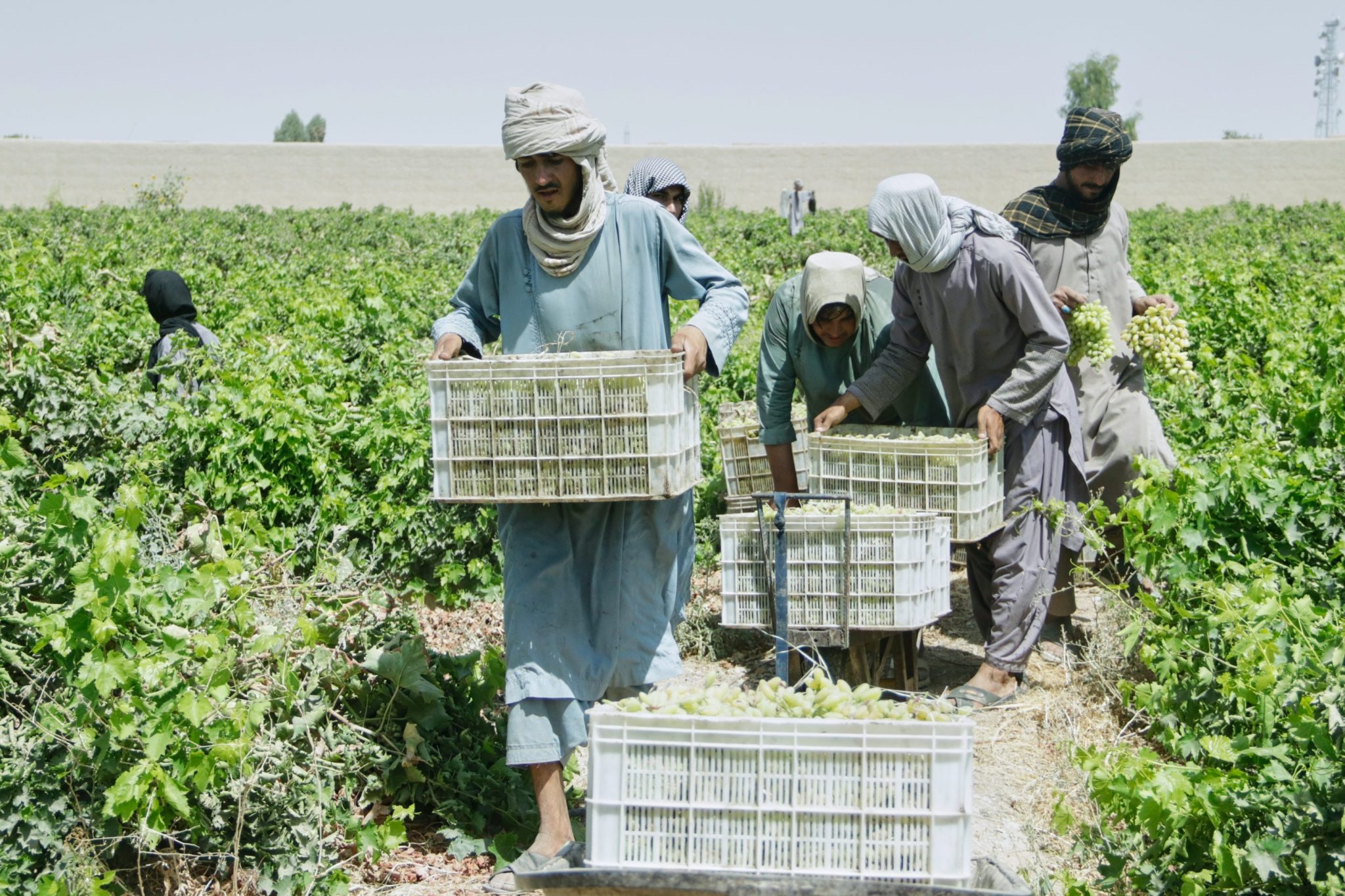
It’s grape season in Afghanistan’s southern province of Kandahar, and the harvest this year is plentiful. But that’s small comfort for the region’s grape producers and workers, who say fighting between Afghanistan and Pakistan has left them unable to access their primary market.
For months, the two countries have traded fire sporadically across their long, mountainous border, leaving hundreds of people dead. Islamabad accuses Afghanistan’s Taliban government of harboring militants who carry out attacks inside Pakistan — a charge Kabul denies.
With the fighting have come border closures, severing a critical trade route and preventing Afghan producers from reaching what is the primary export market for many goods.
Unable to export their fresh fruit, Afghan grape producers have turned to the domestic market, where the increased supply has sent prices tumbling. To adapt, many producers are now drying their grapes and turning them into raisins — a cheaper product that sells for less.
In a long warehouse in Kandahar’s Zhari district, fans whirl overhead, stirring the hot summer air around bunches of plump, green grapes draped over sticks set up in rows to dry.
But even for raisins, prices have tanked.
Sakhi Jan, who owns a grape orchard in Zhari, says that with 10 people in his household to feed, he’s barely getting by. Seven kilograms (15.5 pounds) of raisins used to sell for around 1,000 to 1,200 afghanis ($13 to $16), he says. Now, the same amount sells for just 400-450 afghanis ($5-$6).
In a country where poverty is rife and malnutrition strikes the most vulnerable, such income losses can be critical.
“We are grateful, but things aren’t like they used to be, the struggle is much harder now,” Jan said. “In the past, work was steady, we used to sell some grapes, and people generally had good work but now the hardship is immense.”
Opening the border crossings and allowing trade to flow once more is critical, he stressed.
“We urge both our government and Pakistan to open these routes and reach an agreement,” he said. “The current situation is causing great hardship.”
Abdul Baqi Bina, the deputy director of the Kandahar Chamber of Commerce and Investment, said the border closure has dealt a severe blow to Afghanistan’s fruit exports — not just grapes, but also pomegranates.
In 2025, five southern Afghan provinces that make up the country’s main grape-producing region exported 44,225 tons — $13.8 million worth of grapes. Nearly all — 43,000 tons — went to Pakistan and the remainder headed to Bangladesh, Iraq and India, Bina said. So far this year, only 256 tons have been exported, at a value of $100,000.
For grape exporter Haji Abdul Hai, it has been a disaster.
“In my 50 years of life, I have never seen these roads closed to the extent they are now,” he said, adding that previous border closures would usually last for a few days, or one crossing would close while another remained open.
“But now, we are facing truly major difficulties,” he said.
Last year, the orchard where Qudratullah Popal worked picking grapes employed about 1,500 workers. This year, Popal said the number has plummeted to around 15.
“There have been good harvests. Grapes turned out well, but the issue is they cannot be exported to other countries. They are being sent to domestic locations … where there is already an abundance of grapes,” he said.
“When routes are blocked and trade halts, everyone’s livelihood is paralyzed, traders, laborers and orchard owners alike,” Popal said.It’s grape season in Afghanistan’s southern province of Kandahar, and the harvest this year is plentiful. But that’s small comfort for the region’s grape producers and workers, who say fighting between Afghanistan and Pakistan has left them unable to access their primary market.
For months, the two countries have traded fire sporadically across their long, mountainous border, leaving hundreds of people dead. Islamabad accuses Afghanistan’s Taliban government of harboring militants who carry out attacks inside Pakistan — a charge Kabul denies.
With the fighting have come border closures, severing a critical trade route and preventing Afghan producers from reaching what is the primary export market for many goods.
Unable to export their fresh fruit, Afghan grape producers have turned to the domestic market, where the increased supply has sent prices tumbling. To adapt, many producers are now drying their grapes and turning them into raisins — a cheaper product that sells for less.
In a long warehouse in Kandahar’s Zhari district, fans whirl overhead, stirring the hot summer air around bunches of plump, green grapes draped over sticks set up in rows to dry.
But even for raisins, prices have tanked.
Sakhi Jan, who owns a grape orchard in Zhari, says that with 10 people in his household to feed, he’s barely getting by. Seven kilograms (15.5 pounds) of raisins used to sell for around 1,000 to 1,200 afghanis ($13 to $16), he says. Now, the same amount sells for just 400-450 afghanis ($5-$6).
In a country where poverty is rife and malnutrition strikes the most vulnerable, such income losses can be critical.
“We are grateful, but things aren’t like they used to be, the struggle is much harder now,” Jan said. “In the past, work was steady, we used to sell some grapes, and people generally had good work but now the hardship is immense.”
Opening the border crossings and allowing trade to flow once more is critical, he stressed.
“We urge both our government and Pakistan to open these routes and reach an agreement,” he said. “The current situation is causing great hardship.”
Abdul Baqi Bina, the deputy director of the Kandahar Chamber of Commerce and Investment, said the border closure has dealt a severe blow to Afghanistan’s fruit exports — not just grapes, but also pomegranates.
In 2025, five southern Afghan provinces that make up the country’s main grape-producing region exported 44,225 tons — $13.8 million worth of grapes. Nearly all — 43,000 tons — went to Pakistan and the remainder headed to Bangladesh, Iraq and India, Bina said. So far this year, only 256 tons have been exported, at a value of $100,000.
For grape exporter Haji Abdul Hai, it has been a disaster.
“In my 50 years of life, I have never seen these roads closed to the extent they are now,” he said, adding that previous border closures would usually last for a few days, or one crossing would close while another remained open.
“But now, we are facing truly major difficulties,” he said.
Last year, the orchard where Qudratullah Popal worked picking grapes employed about 1,500 workers. This year, Popal said the number has plummeted to around 15.
“There have been good harvests. Grapes turned out well, but the issue is they cannot be exported to other countries. They are being sent to domestic locations … where there is already an abundance of grapes,” he said.
“When routes are blocked and trade halts, everyone’s livelihood is paralyzed, traders, laborers and orchard owners alike,” Popal said.
This story was originally featured on Fortune.com