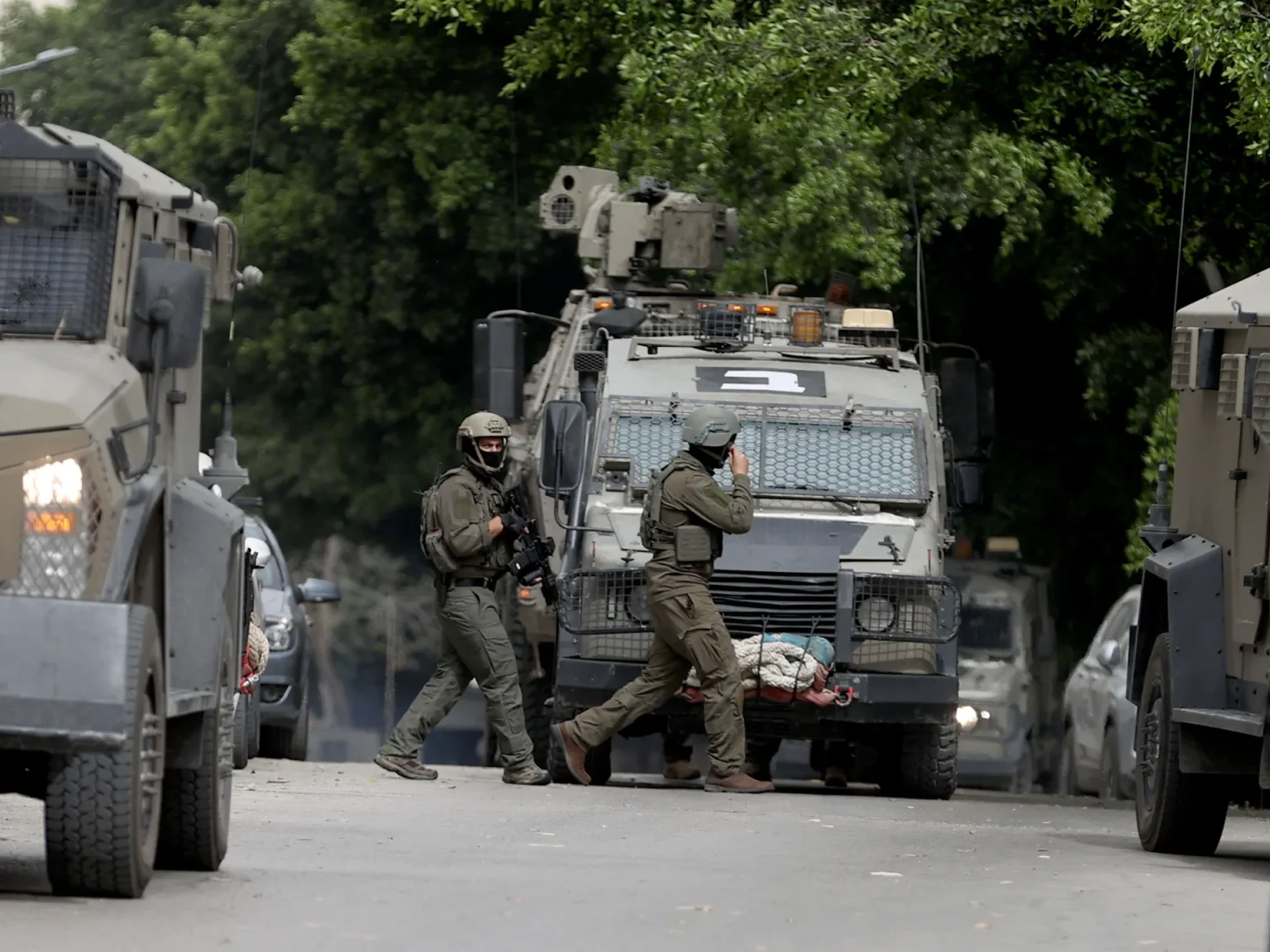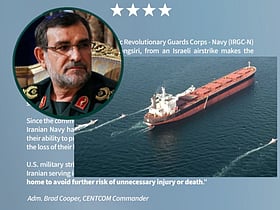
The US Central Command has confirmed the death of hardliner Iranian Admiral Alireza Tangsiri hours after an Israeli strike in Bandar Abbas, near the Strait of Hormuz.
In confirming the killing, US Admiral Brad Cooper called on those serving in the Iran Republican Guard Corps Navy (IRGC-N) to immediately "abandon their post and return home to avoid further risk of unnecessary injury or death".
“US military strikes on the IRGC-N will continue," said US Admiral Brad Cooper, CentCom Commander, in an X post late on Thursday.
"Therefore, we call on every Iranian serving in the IRGC-N to immediately abandon their post and return home to avoid further risk of unnecessary injury or death.”
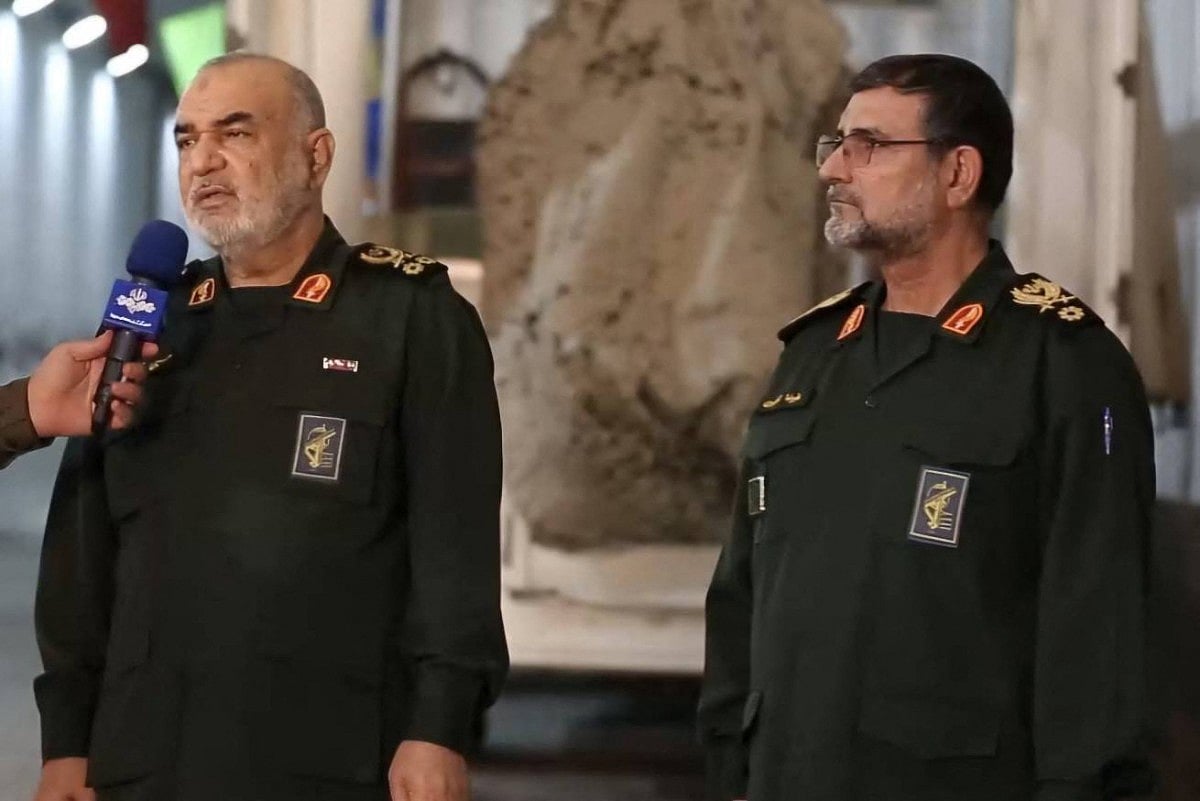
Region 'safer' without Tangsiri: Cooper
Cooper said the death of Tangsiri, a hardliner and designated global terrorist, makes the region “safer”.
“The death of the Iranian Islamic Revolutionary Guards Corps - Navy (IRGC-N) commander, Admiral Alireza Tangsiri, from an Israeli airstrike makes the region safer,” Cooper stated.
Tangsiri commanded the IRGC-N for eight years, during which time the IRGC harassed thousands of innocent merchant mariners, attacked hundreds of vessels with one way attack drones and missiles, and killed countless innocent civilians.
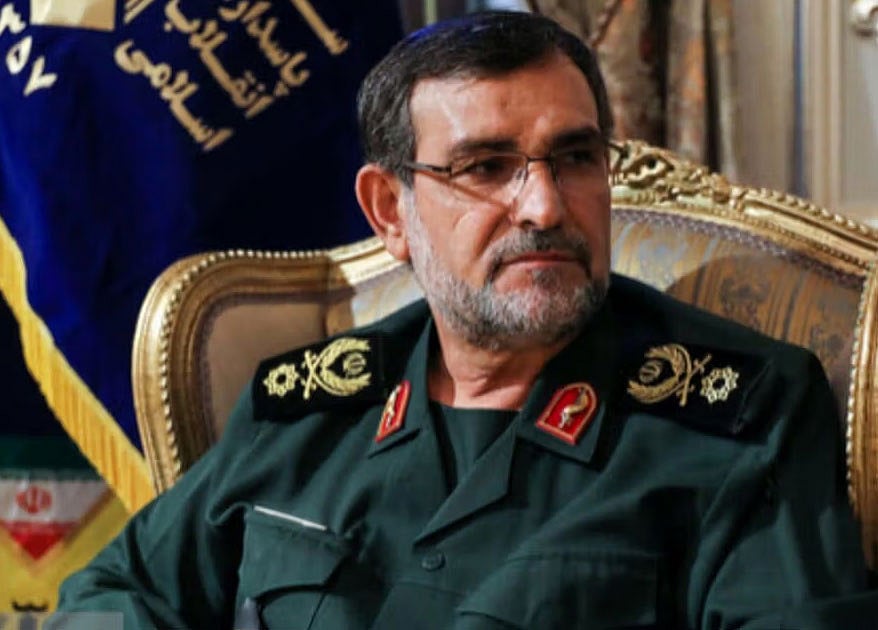
Global terrorist
Tansiri was designated as a "Specially Designated Global Terrorist" by the US Treasury in June 2019, with additional secondary sanctions added in 2024 related to drone development.
Tangsiri was known inside Iran as a loyal hardliner who dramatically expanded the IRGC-N’s fast-attack craft, drone, and anti-ship missile fleet.
The elimination of Tangsiri, combined with the destruction of 92% of Iran’s large naval fleet during Operation Epic Fury, has left the IRGC-N without effective leadership or power-projection capability.
Tangsiri’s death is the latest in a string of high-level Iranian command losses since US-Israeli strikes began February 28, 2026, further crippling Tehran’s ability to threaten global energy routes through the Strait of Hormuz.
'Irreversible decline'
Western governments and shipping insurers viewed him as the “architect” of systematic harassment of commercial vessels in international waters.
Since the commencement of Operation Epic Fury, 92% of the large ships in the Iranian Navy have been eliminated.
As a result, IRGC-N has completely lost their ability to project power in the Middle East or around the world.
“Now, with the loss of their long-time leader, the IRGC-N is on an irreversible decline,” said Cooper.
Statement from Adm. Brad Cooper, CENTCOM commander: pic.twitter.com/oVqhVjgIDL
— U.S. Central Command (@CENTCOM) March 26, 2026
Tangsiri Timeline
Admiral Alireza Tangsiri (born 1962 in Bushehr Province, Iran) was the longest-serving commander of the Islamic Revolutionary Guard Corps Navy (IRGC-N) and one of Tehran’s most hardline naval figures.
A veteran of the 1980–88 Iran-Iraq War and the 1980s Tanker Wars against US forces, he built his career on asymmetric maritime warfare and Gulf operations.
Timeline
1980s: Tangsiri served in IRGC naval units during the Iran-Iraq War and Tanker Wars, gaining expertise in speedboat swarms, mining, and harassment tactics.
2010–2018: Deputy commander of the IRGC Navy and commander of the 1st Naval District in Bandar Abbas — Iran’s key southern port near the Strait of Hormuz.
August 23, 2018: Appointed IRGC-N commander by Supreme Leader Ali Khamenei, replacing Rear Admiral Ali Fadavi.
June 2019: Designated a Specially Designated Global Terrorist by the U.S. Treasury for supporting IRGC terrorism and maritime attacks.
2020–2024: Oversaw aggressive IRGC-N patrols, drone and missile attacks on merchant shipping, and public threats to close the Strait of Hormuz — a chokepoint carrying ~20% of global oil trade. Additional U.S. sanctions imposed in 2024 specifically for IRGC drone development programs.
February 28, 2026: Operation Epic Fury begins (U.S.-led strikes on Iran). Tangsiri directed IRGC-N efforts to mine and blockade the Strait of Hormuz in retaliation.
March 26, 2026: Killed in an Israeli airstrike in Bandar Abbas alongside senior naval officers. Israeli Defense Minister Israel Katz confirmed the strike; CentCom verified his death hours later.