[Editor's Note: Follow Khaleej Times live blog amid US-Israel-Iran war for the latest regional developments.]
Billions of dollars have been wasted, not to mention thousands of lives lost, in the ongoing US-Israel-Iran war. And yet, despite the financial and economic fallout, there are some social media influencers who reportedly gained millions of dollars by “weaponising their platforms” – not only for clout chasing – but to profit significantly from the chaos, analysts noted.
Over a span of 28 days, influencers across multiple continents have reportedly amassed an estimated $42 to $47 million by flooding social media feeds with AI-generated apocalypse footage, fabricated tales of investor exodus, and repurposed disaster videos presented as fresh calamities. Payouts came after reaching engagement milestones.
One of the most notorious instances involved a 45-second video on March 1, featuring AI-generated footage of the Burj Khalifa engulfed in flames. It was captioned, "Iranian precision strike. Western media enforcing total blackout." The video was entirely fabricated, and within hours, AFP's (Agence France-Presse) digital verification team exposed the deception, citing impossible physics in the flame patterns and metadata timestamps indicating the video's creation occurred 18 hours prior to the alleged attack.
Stay up to date with the latest news. Follow KT on WhatsApp channels.
“Within six hours, 12,400 bot accounts disseminated the false narrative across 14 languages. By the end of the first day, over 340 Instagram accounts and 180 TikTok profiles amplified the footage,” according to a digital forensic study conducted by UAE-based Rayad Group.
Another false narrative claimed mainstream media were ordered to suppress the story "Dubai is under direct assault, and investors are fleeing in panic." This deception alone generated 4.2 million views in just 72 hours, yielding an estimated $29,400 in AdSense revenue.
There was another influencer who posted from his apartment in Dubai, claiming, "I'm literally watching this happen right now." His voice trembled as he described witnessing the chaos. But he was never in danger; the smoke he claimed to see did not exist. His fabricated narrative garnered 3.1 million views and $21,700 in revenue, along with links to a $47 emergency relocation guide that sold 840 copies, generating $39,480.
AI-generated content proliferated, including one created by another influencer who stitched together fake Burj Khalifa footage with unrelated explosion videos from past conflicts in other parts of the world. The video reportedly garnered 5.8 million views within 36 hours, generating approximately $18,200. “When fact-checkers debunked the claims, he doubled down, asserting that the refutations were part of a cover-up,” Rayad Group noted.
More videos were created with apocalyptic titles such as "I'm Leaving the Gulf: Here's Why You Should Too" and "GCC Investor Exodus: What They're Not Telling You". The objective was to incite widespread fear to instigate more views and generate higher payouts.
Digital gold rush
“What we are witnessing is unprecedented economic warfare executed at a scale and sophistication that has never been seen before. This is not merely disinformation; it is a systematic operation of fear, a digital gold rush built on human terror," Rayad Kamal Ayub, cybersecurity expert and Managing Director of Rayad Group, told Khaleej Times.
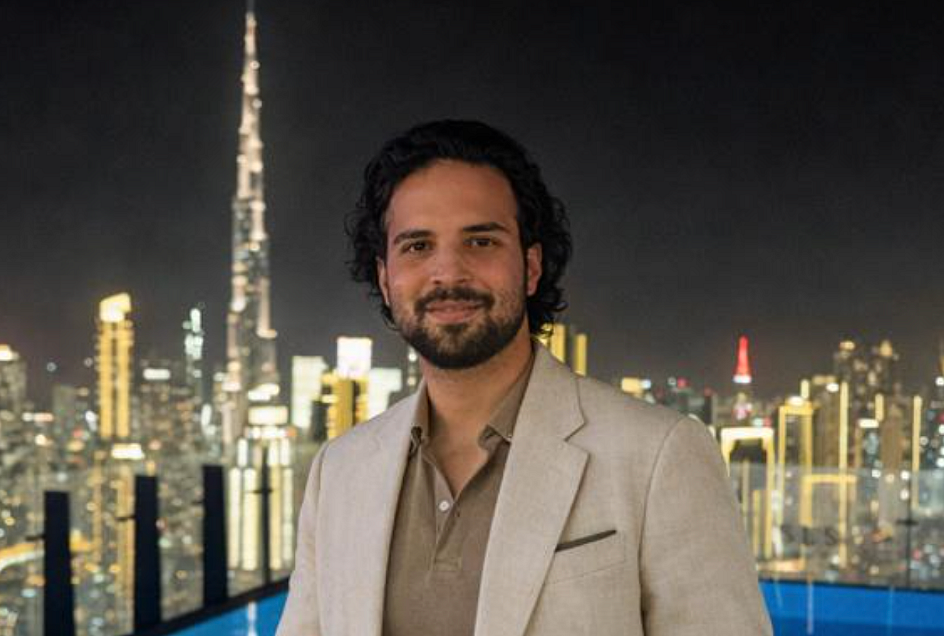
Rayad Kamal Ayub
This phenomenon has been previously explained by Ben Nimmo, founder of Digital Forensic Research Lab (DFRLab) and worked as director of investigations at Graphika, who noted, "What we're witnessing is the emergence of crisis capitalism within the influencer economy. These individuals have developed sophisticated strategies for monetising disasters, whether real or fabricated."
Dr. Claire Wardle, co-director of Information Futures Lab at Brown University, also remarked: “The speed of monetisation is unprecedented. Automation created volume, influencers provided credibility, and algorithms delivered audiences at scale."
Ayub noted: “There has been dramatic impact on social media metrics. Some YouTube channels gained 23.3 million new subscribers during this crisis by spreading panic. Additionally, more than 47,000 individuals fell victim to related scams.”
Dr. Emerson Brooking, from Atlantic Council's Digital Forensic Research Lab, observed: "The bots created the initial viral momentum, but influencers provided the emotional narrative that transformed obvious fabrication into believable crisis reporting."
One particular influencer, according to a digital forensic, had an uptake of followers from 420,000 to 1.2 million between March 5 and March 15, when he allegedly claimed, “Dubai property market is in freefall. I'm selling everything and leaving Dubai before it's too late." This video alone attracted 2.4 million views within 48 hours.
By deliberately manufacturing panic, another influencer reportedly generated around $600,000 in revenue streams, including YouTube AdSense revenue, sponsored content, and paid consultations.
Another analysis revealed 127 influencers globally monetised fabricated departure narratives. “Forensic investigations indicated that 43 had never lived in Dubai despite claiming to do so, while 19 resided in Dubai but never left. One influencer delivered a tearful performance claiming he was forced to leave after five years in Dubai due to danger. However, geolocation data confirmed he was posting from India throughout the crisis, and the apartment he showcased was merely a short-term rental,” Ayub noted.
The video generated 14.2 million views, earning $89,000 in AdSense revenue, along with additional sponsorships. The total revenue from this fabricated narrative reached $627,000, a striking example of the weaponisation of trust that influencers had cultivated over time.
Still standing strong
While some unscrupulous influencers fabricated tales of mass exodus and market collapse, the actual data told a different story. Between February 28 and March 16, Dubai recorded 6,048 residential transactions worth Dh20.2 billion, with roughly 63 per cent concentrated in the off-plan segment.
On Thursday, March 26, Reuters reported Blackstone, the world’s largest alternative asset manager, announced a significant investment of $250 million in Advanced Digital Gaming Technology aimed at supporting regulated digital markets globally, reflecting strong confidence in the UAE.
Meanwhile, Ayub cautioned: "Modern information warfare operates with a speed and scale that traditional defenses are utterly unprepared to confront. The pressing challenge is not merely to identify false narratives but to do so swiftly enough to prevent their objectives from being achieved and to mitigate the ensuing damage."
He underscored there is an “intersection of social media, misinformation, and economic exploitation that requires urgent attention so the truth will not be overshadowed by the allure of profit, and disinformation can be checked.”