⚡ عاجل: كريستيانو رونالدو يُتوّج كأفضل لاعب كرة قدم في العالم●⚡ أخبار عاجلة تتابعونها لحظة بلحظة على خبر●⚡ تابعوا آخر المستجدات والأحداث من حول العالم●
AI اقتراحات ذكية
AI مباشر|--مشاهد مباشر
891,909مقال401مصدر نشط228قناة مباشرة4,736خبر اليوم
آخر تحديث:منذ ثانية
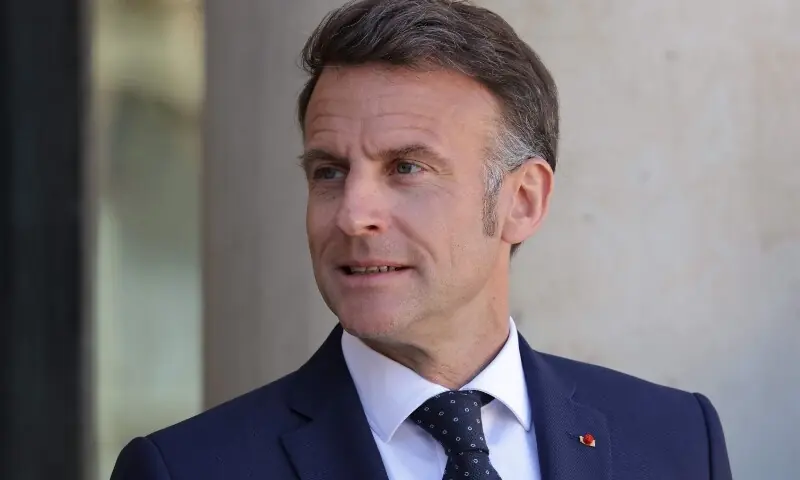
15 nations plan to help restore traffic through Hormuz: Macron
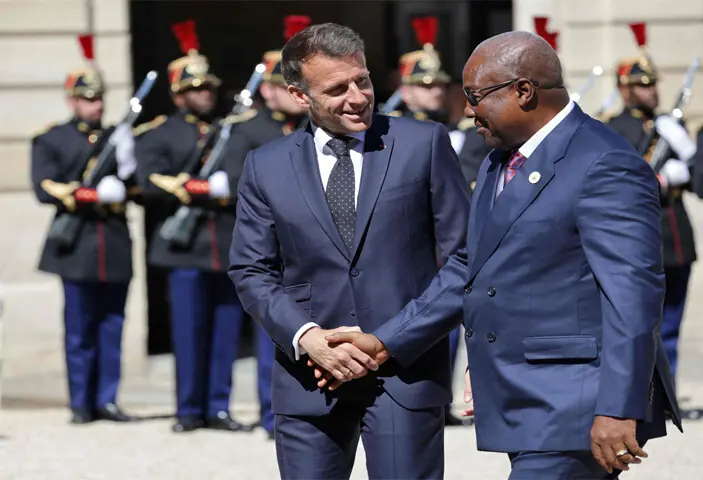
French President Emmanuel Macron welcomes his counterpart from Ghana, John Dramani Mahama, to the Elysee Palace.—AFP
• President says France to lead mission for securing key oil route after US-Iran truce • First ships cross strategic strait; major shipping lines hold back, citing unpredictable risks • Hundreds of vessels remain stranded after month-long blockade slashes traffic by 95pc
PARIS: French President Emmanuel Macron announced on Wednesday that approximately 15 countries are planning to facilitate the resumption of maritime traffic through the Strait of Hormuz, following the announcement of a ceasefire between the United States and Iran.
“About 15 countries are currently mobilised and are participating in the planning, under France’s leadership, to enable the implementation of this strictly defensive mission in coordination with Iran to facilitate the resumption of traffic,” Macron said, speaking at the start of his meeting on defence with advisers and members of his cabinet.
Macron said he welcomed the ceasefire between Iran and the United States, but he added that the situation in Lebanon remained critical and called for Lebanon to be included in the deal. France maintains close ties with Lebanon, a former protectorate.
“Our wish in this context is to be assured that the ceasefire fully includes Lebanon,” Macron said.
Despite the diplomatic push and the fragile ceasefire announced between the United States and Iran, traffic through the Strait of Hormuz remained extremely limited on Wednesday.
However, at least two ships — both bulk carriers — have crossed the crucial waterway since Iran and the US said that the vital maritime passage would reopen, and a third is on course to do the same.
A third vessel — the Botswana-flagged and Chinese-owned Hai Long 1 — coming from Iran, was almost done transiting the strait, according to data provided by the maritime monitor MarineTraffic.
The tally only includes vessels that are navigating with their transponders switched on. Other boats may have also passed through the waterway with their signals switched off.
“The Greek-owned bulk carrier NJ Earth crossed the Strait at 08:44 UTC, while the Liberia-flagged Daytona Beach transited earlier at 06:59 UTC, shortly after departing Bandar Abbas at 05:28 UTC,” MarineTraffic said in a statement on X.
The NJ Earth had already crossed the strait heading into the Gulf between Monday and Tuesday before making the crossing again on Wednesday.
“NJ Earth’s transit may be an early sign of movement, but it is still too soon to tell whether this reflects a broader ceasefire-driven reopening or a previously approved exception,” Ana Subasic, an analyst at Marine Traffic owner Kpler, said.
Several other ships appeared to be on course to cross the strait via the Larak Island route.
Some shipowners and charterers are preparing to move their vessels that have been stuck in the Gulf, the shipping journal Lloyd’s List reported. It estimates that around 800 ships are currently stuck in the Gulf.
However, the ceasefire agreed has not yet brought enough clarity for Norwegian ships to resume sailings through the Strait of Hormuz, the Norwegian Shipowners’ Association said. “We note the signals of a ceasefire, but the situation in the Strait of Hormuz remains unresolved and unpredictable,” Knut Arild Hareide, the CEO of the NSA, said in a statement.
The disruption in one of the world’s most important maritime chokepoints, has forced shipping companies to suspend sailings, reroute cargo, and rely on costly workarounds to keep goods moving.
Denmark’s Maersk, one of the world’s largest container vessel companies, also stated earlier on Wednesday that the ceasefire announcement did not yet provide enough certainty to resume normal operations in the area.
Access to the strait was severely restricted by Iran in retaliation against US and Israeli attacks since Feb 28. From March 1 to April 7, commodities carriers have made just 307 crossings, according to Kpler data, representing a 95pc decrease from peacetime traffic. Around a fifth of global crude oil and liquefied natural gas passes through the waterway in peacetime.
ملاحظة تحريرية | Editorial Note:
نُشر هذا المقال في الأصل بواسطة Dawn.
خبر (Khabr) هي منصة إعلامية أردنية مرخّصة تعمل بالذكاء الاصطناعي.
نضيف قيمة تحريرية من خلال: تحليل ذكي للأخبار، ملخصات تلقائية، رواية صوتية بالذكاء الاصطناعي، ترجمة متعددة اللغات، وتدقيق الحقائق.
هدفنا جعل الأخبار أكثر وضوحاً وسهولةً للقارئ العربي.
This article was originally published by Dawn.
Khabr is a licensed Jordanian AI-powered news platform (Registration #82086).
We add editorial value through: AI-powered news analysis, automated summaries, AI audio narration, multi-language translation (Arabic, English, French, Turkish), and AI fact-checking.
Our mission is to make news more accessible and understandable for Arabic-speaking audiences worldwide.
هذا الخبر ضمن تغطية خبر لقسم سياسة.
نقدّم لك تحليلات ذكية وملخصات يومية لأهم الأخبار من مصادر موثوقة متعددة.
المصدر: Dawn.
يوجد 6 مقالات مرتبطة بهذا الموضوع.
This article is part of Khabr's coverage of Politics.
We provide AI-powered analysis, summaries, and multi-source aggregation to keep you informed.
Source: Dawn.
Tags: traffic, Hormuz, Macron.
🍪 نستخدم ملفات تعريف الارتباط لتحسين تجربتك وعرض الإعلانات المخصصة. باستخدامك للموقع، فإنك توافق على سياسة ملفات تعريف الارتباط وسياسة الخصوصية.
We use cookies to enhance your experience and show personalized ads. By using this site, you agree to our Cookie Policy and Privacy Policy.
🔍
FREEFree 1GB Internet + Free International Calls
$1 trial — eSIM in 190+ countries — No roaming charges